



































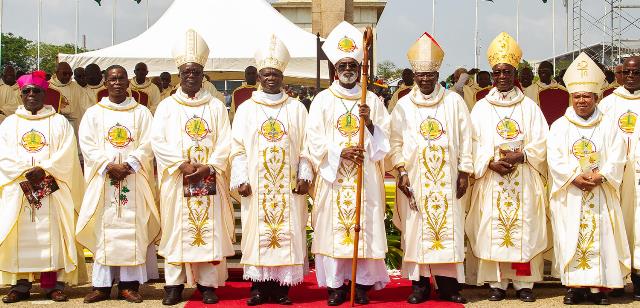
The Ghana Catholic Bishops’ Conference and the Christian Council of Ghana have jointly reaffirmed their commitment to preserving the Christian identity and practices of mission schools, stating that recent public debates over religious accommodation particularly involving Muslim students must be understood within the historical, legal, and philosophical foundations of these institutions.


In a joint statement issued on Tuesday, 25 November 2025, the two bodies emphasized that Christian mission schools were founded long before the establishment of the modern Ghanaian state, and were built, financed, and managed independently by various churches, including the Catholic, Methodist, Presbyterian, and Anglican Churches.
According to the statement, government support for mission schools such as paying salaries and regulating curriculum does not imply state ownership. “State support is a partnership, not a takeover.
The ownership and identity of these schools reside with us,” the groups stressed.
The Christian leaders argued that no student is compelled to attend a Christian mission school and that parents who choose these institutions do so fully aware of their Christian ethos.
They maintained that it is therefore “unreasonable” for anyone to demand changes to a school’s religious character to accommodate different faiths, given the availability of public, Islamic, and private schools.
The statement further insisted that allowing multiple religious practices within mission schools could undermine discipline, unity, and the moral culture for which these institutions are widely known.
They warned that introducing separate prayer schedules, dress codes, or religious facilities would create administrative burdens and fracture communal cohesion.
“A cohesive community—guided by shared values, common worship, and a single code of conduct—has consistently produced graduates whose virtues endure,” the statement noted.
The two Christian bodies also cited constitutional rights to freedom of association and religious liberty, asserting that these rights protect the ability of mission schools to maintain their Christian identity.
They argued that forcing such institutions to dilute their religious character would infringe upon these freedoms.
The statement referenced a Memorandum of Understanding (MoU) validated on 15 April 2024 by Government-Assisted and Private Mission Schools, developed by the Conference of Managers of Education Units (COMEU) with support from the National Peace Council.
The MoU affirms the partnership between the State and Mission bodies and provides guidelines for addressing issues such as fasting, dress codes, and worship spaces while promoting inclusivity and respect.
Preserving the Foundational Mission
The Church bodies reiterated that mission schools were established not only to provide academic instruction but also to offer holistic formation rooted in Christian values.
They cautioned that secularising these institutions would undermine the very mission that led to their creation.
“Defending this heritage is not an act of exclusion,” they stated, “but a vital affirmation of religious freedom, institutional autonomy, and the enduring pursuit of educational excellence.”
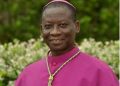
The statement was jointly signed by Most Rev. Matthew Kwasi Gyamfi, President of the Ghana Catholic Bishops’ Conference, and Rt. Rev. Dr. Bliss Divine Agbeko, President of the Christian Council of Ghana.
Source :www.kumasimail.com