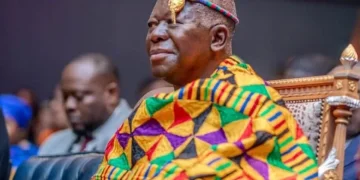




























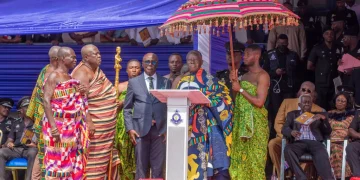



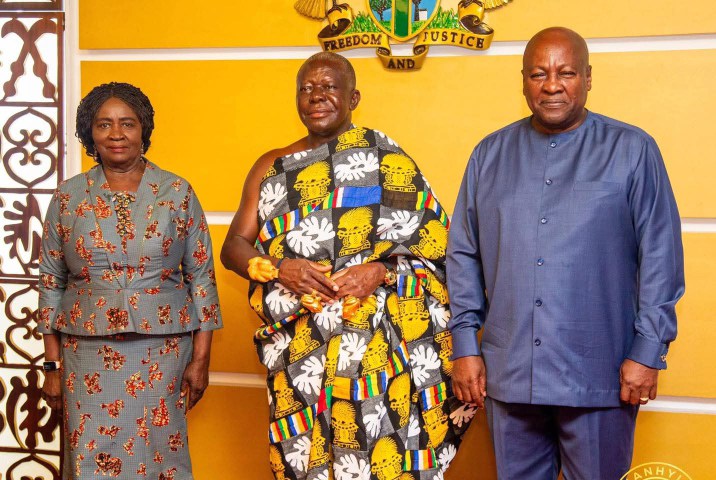
The Asantehene, Otumfuo Osei Tutu II, on Tuesday used symbolism embedded in traditional regalia to reinforce his call for peace as he presented a roadmap aimed at ending the protracted Bawku conflict to President John Dramani Mahama at Jubilee House.


Beyond the formal submission of the mediation report, the Asantehene’s choice of attire carried a profound message of restraint, unity and reconciliation, underscoring the spirit in which the peace process is intended to proceed.
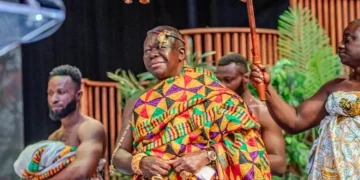
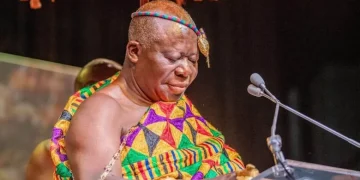
Otumfuo Osei Tutu II was clad in a traditional kente cloth bearing the revered Akan Adinkra symbol Bi Nka Bi also known as (obi nka bi), delicately painted in white.
Literally translated as “no one should bite the other,” the symbol is a strong philosophical statement against conflict, provocation and destructive rivalry.
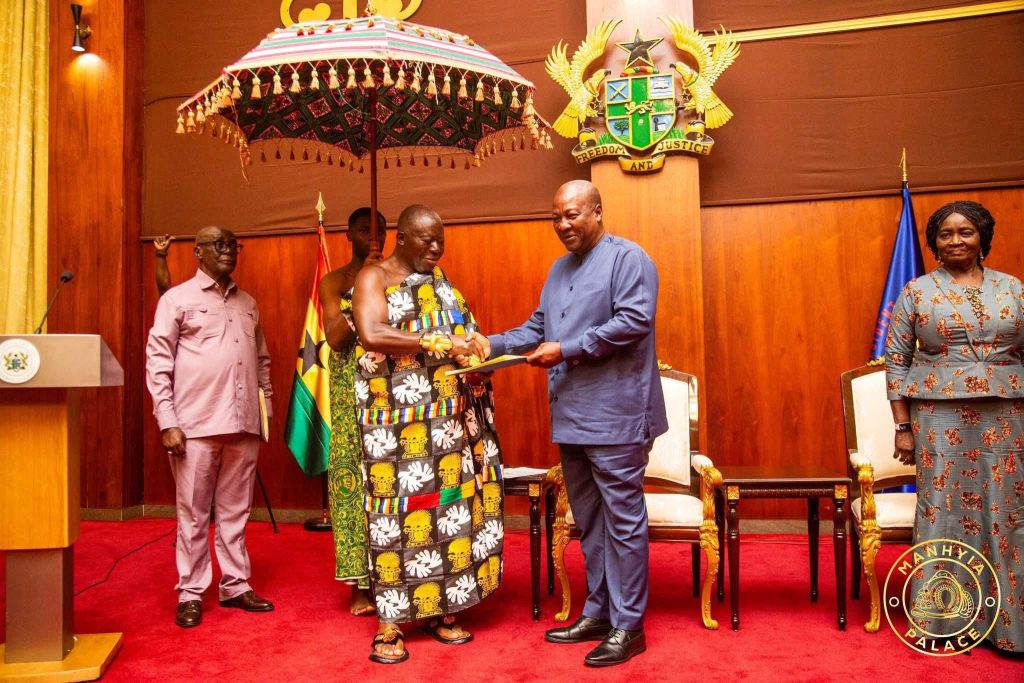
Traditionally represented as two fish or crocodiles biting each other’s tails, Bi Nka Bi emphasizes peace, harmony, fairness and forgiveness.
It serves as a cautionary reminder that when people turn against one another, the ultimate outcome is collective loss.
In Akan thought, disagreement must never escalate into self-destruction, but should instead be managed through restraint and mutual respect.
Observers noted that the symbolism was particularly significant given the context of the Bawku conflict, which has claimed lives and disrupted social cohesion over the years.
By wearing the Bi Nka Bi symbol during the presentation, the Asantehene appeared to be reinforcing the need for calm dialogue and compromise as the foundation for lasting peace.
Complementing the cloth was another powerful emblem: a golden porcupine mounted on a stool.
The porcupine is the traditional totem of Asanteman and symbolizes collective strength, vigilance and unity.
It reflects the philosophy that while an individual quill may be weak, together they form a formidable defense.
The stool, a central symbol in Akan governance, represents legitimate authority, leadership and the soul of the people.
When paired with the porcupine, the imagery conveys authority guided by wisdom, unity anchored in tradition, and strength exercised in defense of peace rather than provocation.
Together, the regalia projected a carefully considered message that peace must be pursued firmly but thoughtfully, unity must be preserved through dialogue, and stability must rest on legitimate and respected authority.
The presentation of the Bawku mediation roadmap was therefore not only a political and diplomatic exercise, but also a cultural statement.
Before any formal remarks were made at Jubilee House, tradition had already spoken.
Through his attire, Otumfuo Osei Tutu II reaffirmed his long-standing role as a custodian of peace and a unifying figure, signaling that the path forward for Bawku and the nation lies in restraint, dialogue and collective responsibility.
The message, woven into cloth and symbol, was clear: peace is the priority, and unity remains the ultimate goal.
Source: www.kumasimail.com / Isaac Justice Bediako