



































The Ghana Arbitration Centre (GAC) has ruled in favour of Ashanti Port Services Limited (APSL) in a protracted contractual dispute over the Boankra Inland Port (BILT) project, ordering Justmoh Construction Limited to refund $33.3 million in outstanding advance mobilisation funds.


The unanimous decision, delivered by a three-member arbitration panel, effectively brings to an end months of legal uncertainty that had clouded the future of the strategically important inland port project.
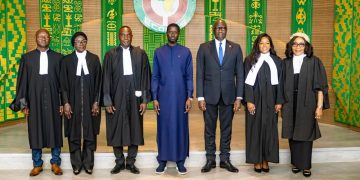
The tribunal, made up of Justice Nene A.O. Amegatcher, Mr. Emmanuel Amofa, and Professor Richard Frimpong Oppong, found that Justmoh Construction was obligated to return the unutilised portion of funds advanced by APSL under the Boankra contract.
Under the award, Justmoh Construction is required to refund the $33.3 million within 30 days, failing which a simple interest of four per cent per annum will accrue on the amount until full payment is made.
In a cross-claim settlement, the tribunal also directed APSL to pay $7,107,456.70 to Justmoh Construction as compensation for earthworks already executed at the project site.
Additionally, Justmoh was ordered to bear 75 per cent of APSL’s legal fees as well as 75 per cent of the arbitration and administrative costs, assessed at $226,875 and GHS 26,250, respectively.
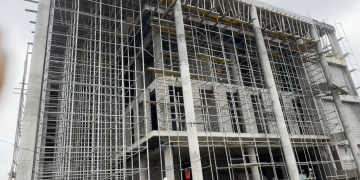
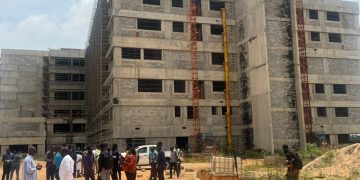
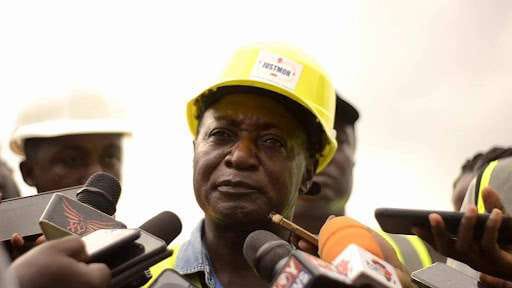
At the heart of the arbitration was a dispute over the valuation of earthworks undertaken at the Boankra site. Justmoh Construction had contended that the works carried out were valued at more than $33 million, relying on internal progress reports and photographic evidence. APSL, however, maintained that the works were worth approximately $4 million.
While the tribunal noted that APSL failed to submit independent expert valuations to directly challenge Justmoh’s claims, it ultimately adopted a balanced approach in determining the final compensation payable for the completed works.
The panel further held that Justmoh Construction had lawfully terminated the Boankra contract, but dismissed all remaining claims brought by both parties, thereby conclusively ending the dispute.
Reacting to the ruling, Nana Afum Dwamena III, Chief Executive Officer of APSL and Kwahu Nkwatia Benkumhene, welcomed the decision, describing it as a triumph for due process and the rule of law.

“Accepting the verdict demonstrates maturity, responsibility, and respect for the rule of law,” he said in an interview with Despite Media, adding that the resolution was vital to restoring investor confidence and preventing prolonged legal disputes from derailing national development projects.
The arbitration was initiated by APSL on December 19, 2023, with the tribunal formally constituted in February 2024. The final award now clears the legal hurdles surrounding the Boankra Inland Port, paving the way for the project’s next phase
Below is the full ruling …
| GAC/COMM/09/2023/SA 10 DECEMBER 2025 ASHANTI PORT SERVICES LIMITED GHANA ARBITRATION CENTRE Ase No 24 Far A Avenue 11 DEC 2025 The Claimant JUSTMOH CONSTRUCTION LIMITED The Respondent FINAL AWARD ON MERITS AND COSTS GHANA ARBITRATION CENTRE Hse No 24 Farrar Avenue Adabraka A c c r a 11 DEC 2025 RECEIVED TABLE OF CONTENT A. INTRODUCTION ..3 B. THE GOVERNING LAW AND ARBITRATION AGREEMENT C. THE FACTUAL BACKGROUND OF THE DISPUTE .6 ..6 D. ISSUES RAISED FOR THE TRIBUNAL’S DETERMINATION .30 E. RELIEFS SOUGHT ..31 F. TRIBUNAL’S ANALYSIS AND DETERMINATION OF THE ISSUES. ..32 WHETHER OR NOT THE RESPONDENT COULD UNDERTAKE EARTHWORKS AT THE BILT SITE BEYOND THE INDEPENDENT CONSULTANT’S GUESS ESTIMATE OF $4,000,000 WITHOUT AUTHORIZATION FROM CLAIMANT?. WHETHER OR NOT EARTHWORKS EXECUTED BY RESPONDENT ARE INDEED WORTH $33,000,000? .. 40 WHETHER THE RESPONDENT WAS CONTRACTUALLY JUSTIFIED IN EXECUTING EXTENSIVE EARTHWORKS (CUT AND FILL) UNDER THE BILT PROJECT, AND CONSEQUENTLY ENTITLED TO BE COMPENSATED BY CLAIMANT ACCORDINGLY…… 43 WHETHER OR NOT IPCS 4 & 5 WERE SUBMITTED TO THE CLAIMANT? AND, WHETHER OR NOT WORKS DESCRIBED IN IPCS 4 & 5 WERE EXECUTED AFTER CLAIMANT HAD WRITTEN TO RESPONDENT TO SEIZE WORK ON THE BILT SITE? . 46 WHETHER THE CLAIMANT IS LIABLE TO PAY THE RESPONDENT FOR THE VALUES OF IPCS 2, 3 AND 4?. 49 WHETHER THE RESPONDENT HAD SOUND CONTRACTUAL BASES FOR TERMINATING THE 30TH OF AUGUST 2022 CONTRACT WITH THE CLAIMANT.. 50 THE LIABILITY OF THE CLAIMANT TO RESPONDENT UNDER SUB-CLAUSE 16.4 OF THE 30TH OF AUGUST 2022 CONTRACT, GIVEN THE RESPONDENT’S TERMINATION OF THE CONTRACT. 55 .65 G. INTEREST . H. COSTS.. .65 I. AWARD … ..67 2 A. INTRODUCTION 1. Pursuant to sections 48-51 of the Alternative Dispute Resolution Act, 2010 (Act 798) (“ADR Act”), the Arbitral Tribunal (the “Tribunal”) issues the following final Award on Merits and Costs in respect of this arbitration. 2. The parties to this arbitration are Ashanti Port Services Limited (the “Claimant”) and Justmoh Construction Limited (the “Respondent”). The Claimant and the Respondent are collectively referred to as the “Parties”. 3. In this arbitration, the Claimant is represented by G.A. Sarpong & Co., and the Respondent is represented by Owusu-Ankomah, Arvoh Mensah, Dzigba & A s s o c i a t e s . 4. On 19 December 2023, the Ghana Arbitration Centre (“GAC”) received the Notice of Arbitration from the Claimant (“NoA”). 5. On 10 January 2024, the GAC received the Respondent’s Answering Statement to the Notice of Arbitration (the “Answer”). 6. On 22 January 2024, the GAC received the Claimant’s Reply to the Respondent’s Answering Statement to the Notice of Arbitration (the “Reply to Answer”). 7. On 12 February 2024, the GAC informed the Tribunal, comprising Mr. Emmanuel Amofa, Professor Richard Frimpong Oppong, and Justice Nene A.O. Amegatcher (Chair) that it had been constituted to resolve the dispute between the Parties. Neither party raised any objection to the appointment of the Tribunal members. 8. On 5 March 2024, the Tribunal held a virtual Arbitration Management Conference. The Parties agreed that the Tribunal should first decide certain preliminary matters they have raised, namely, the Respondent’s challenge to the Tribunal’s jurisdiction and the Claimant’s applications for an interim injunction a n d interim preservation order. 9. On 15 March 2024, the Claimant filed its applications for an interim preservation order and interim injunction. The Respondent filed its legal objection to the jurisdiction of the Tribunal. 10. On 17 March 2024, the Tribunal proposed a virtual oral hearing on 2 April 2024 from 2:00 p.m. to 5:00 p.m. Accra time. Both Parties accepted the invitation to participate in the oral hearing. 11. On 22 March 2024, the Claimant filed its response to the Respondent’s legal objection to the jurisdiction of the Tribunal. The Respondent filed its response to the Claimant’s applications for an interim preservation order and interim injunction. 12. On 27 March 2024, the Claimant sought leave from the Tribunal to file Supplementary Affidavits in support of its applications for an interim injunction and preservation order. 13. Following a comment by the Respondent on 27 March 2024, the Tribunal directed that the parties may rely on further documents, affidavits, evidence or submissions as they deem appropriate at the 2 April 2024 hearing, provided such documents, affidavits and evidence are submitted to the other party and Tribunal on or before 1 April 2024. And that, following the 2 April 2024 hearing, the Parties may make a closing submission by 9 April 2024, following which the Tribunal may exercise its power under section 45 of the ADR Act to close the hearing ahead of its deliberation for decision on the preliminary matters. 14. On 1 April 2024, the Claimant filed its supplementary affidavits in support of their applications for an interim preservation order and interim injunction. 15. On 2 April 2024, the Tribunal held an online oral hearing at which counsel for both Parties were present and made submissions to the Tribunal. 16. On 9 April 2024, the Parties submitted their post-hearing brief on the preliminary matters to the Tribunal. 17. On 11 April 2024, the Tribunal determined that there were no outstanding issues that had not been dealt with in the extant parties’ submissions. On that basis, and under the powers vested in the Tribunal by section 45 of the ADR Act, the Tribunal formally declared the hearing regarding the preliminary matters in the arbitration closed, effective 10 April 2024. 18. On 17 May 2024, the Tribunal issued its Award on Jurisdiction and Interim Relief. 19. On 24 May 2024, in response to the Tribunal’s directive regarding the continuation of the proceedings on the merits, the Parties submitted a schedule for the submissions on the merits. 20. On 12 August 2024, the Parties submitted the statement of their witnesses and accompanying exhibits. 21. On 16 August 2024, following the postponement of a hearing that was scheduled for 20-21 August 2024 and after consultation with the Parties, the Tribunal scheduled the hearing on the merits for 10 and 11 September 2024. 4 22. On 7 September 2024, the Parties submitted their separate memorandum of issues to be determined in this arbitration by the Tribunal. 23. On 10-11 September 2024, the Tribunal held the hearing on the merits in this arbitration. 24. On 1 September 2024, the Tribunal issued Procedural Order No. 3 (Arbitrators and Administrative Fees), wherein, among others, it suspended the arbitration until the Claimant pays its share of the first installment of the Tribunal and administrative fees. 25. On 21 January 2025, the Tribunal emailed the Parties and noted the unusually prolonged period of suspension of this arbitration. It invited the Parties to comment on the current state of things, including their intentions regarding progressing or otherwise terminating this arbitration. 26. On 28 January 2025, the Tribunal issued Procedural Order No. 4 (Resumption of Proceedings) wherein, among others, it directed the resumption of these arbitration proceedings and requested the GAC to do all that is necessary regarding these proceedings, including making available to the Parties the transcripts of the hearing on the merits. It also directed the Parties to liaise and agree on times for the submission of their post-hearing briefs and statements of 27. On 28 May 2025, having not received a date for the Parties to submit their post- hearing briefs and statements of costs, the Tribunal invited the parties to comment regarding their intentions to progress this arbitration, including payment of outstanding fees and submission of their post-hearing briefs and statements of costs. 28. On 4 June 2025, both Parties expressed their desire to progress this arbitration to conclusion and meet their outstanding financial commitments. 29. On 30 July 2025, following proposals from the Parties, the Tribunal directed that they shall submit their post-hearing brief and statement of costs simultaneously on Wednesday, 20 August 2025. 30. On 19 August 2025, following a request by the Claimant and with the agreement of the Respondent, the Tribunal granted them an extension of time until 31 August 2025 to file and submit their post-hearing briefs and statements of costs. 31. On 31 August 2025, the Parties submitted their post-hearing briefs and statements of costs. 5 32. On 8 September 2025, the Tribunal formally declared the arbitration hearing to be closed in accordance with section 45(2) of the Alternative Dispute Resolution Act, 2010 (Act 798). B. THE GOVERNING LAW AND ARBITRATION AGREEMENT 33. Sub-Clause 1.4 of the General Conditions of the Boankra Contract, as supplemented and/or amended by the Special Conditions of the Boankra Contract, provides that “the governing law is that of the Republic of Ghana.” 34. Sub-Clause 20.6 of the General Conditions of the Boankra Contract, as supplemented and/or amended by the Special Conditions of the Boankra Contract, provides that: Any dispute arising out of or in connection with this Contract, including any question regarding its existence, validity or termination, shall be referred to and finally resolved by arbitration under the Ghana Arbitration Centre. The place of Arbitration shall be Accra, Ghana. C. THE FACTUAL BACKGROUND OF THE DISPUTE 35. This factual background is based on the information provided in the Parties’ submissions and does not reflect any findings of the Tribunal; rather, it aims to provide c o n t e x t for t h i s Award. 36. The Tribunal has reviewed all the documents on record and information the Parties provided. The fact that a document has not been recorded here does not mean it has not been reviewed or considered. Although presented in a largely chronological form, using the exhibits the Parties submitted, it does not purport to be a definitive chronicle of all the facts (disputed or otherwise) in the record; indeed, there are instances where the Parties did not put in the record correspondences referenced in some documents. 37. On 14 August 2020, the Parliament of Ghana, by a resolution, approved the Build, Operate and Transfer (BOT) Concessionary Agreement between the Government of the Republic of Ghana (represented by the Ministry of Transport [Ghana Shippers’ Authority]) and Ashanti Port Services Limited (a consortium of Afum Quality Ltd Ghana and DSS Associates of South Korea) for an amount up to Three Hundred and Thirty Million United States Dollars (US$330,000,000.00) for the Development of the B a n k r a Inland Port. 38. This resolution was communicated to the Minister of Transport in a letter from the Clerk of Parliament dated 18 August 2020. 6 39. On 25 September 2020, Ashanti Port Services Limited executed the Concession Agreement between the Ministry of Transport acting through the Ghana Shippers’ Authority and Ashanti Port Services Limited for the Development of the Boankra Integrated Logistics Terminal (BILT) dated September 2020 (the “Concession Agreement”). 40. Under the Concession Agreement, Ashanti was to “design, engineer, finance, procure, construct, operate, and maintain [the BILT] and transfer title to the G o v e r n m e n t of G h a n a in a c c o r d a n c e with t h e t e r m s a n d c o n d i t i o n s of t h e Concession Agreement”. The Concession Agreement contains a multi-layered dispute resolution clause that ultimately culminates in a London-seated arbitration under the UNCITRAL Rules (Article 8.7).’ 41. On 15 October 2021, the GSA wrote to Vision Consult inviting it to come and sign “the agreement for the Independent Consultant for the BILT” on 18 October 2021. The Independent Consultant had been anticipated in the Concession Agreement – Article 4.9 and Schedule 8 of the said agreement provided for the appointment, scope of work, termination, and resolution of disputes related to the work of the Independent Contractor. 42. On 18 October 2021, the Agreement for the Provision of Consultancy Services for the Development of the Boankra Integrated Logistics Terminal (BILT) between the Ghana Shippers’ Authority and Vision Consult Limited was executed. 43. On 22 June 2022, a meeting on the BILT was held at the Ministry of Transport Conference Room. Persons from the Ministry, GSA, GPHA, Ashanti and Vision Consult were in attendance. The issues discussed included the fact that Ashanti had not been able to raise the necessary funds for the project and drafting of a shareholders agreement given that GPHA was to become an design consultants Ashanti had procured, who were said to be based in South Africa. The GSA was also asked to take the necessary steps, “in accordance with the executed Consultancy Agreement between GSA and the Independent ‘ This Award is limited to the rights and obligations of Ashanti Port Services Limited and Justmoh Construction Limited arising under the Boankra Contract. Nothing in this Award shall be deemed or should be taken as determining the rights and obligations between the Ministry of Transport acting through the Ghana Shippers’ Authority and Ashanti Port Services Limited under the Concession Agreement, or the entitlements of any other person working under the Boankra Contract or the Concession Agreement. 2 The initial shareholding structure of Ashanti was 30% for Afum Quality Limited and 70% for DSS Associate. The recital to the shareholders agreement that was ultimately signed recites that “the Minister of Transport by a letter d a t e d 5th May 2022 with reference number SCR/RL/195/376/01 and a subsequent letter dated 24th May, 2022 signed by the Acting Chief Director has directed GPHA to acquire shares in Ashanti Port Services Limited.” 7 Consultant [Vision Consult], to issue a Notice of Commencement of Service to the Independent Consultant indicating their roles and functions, including any delegated authority.” 44. On 6 July 2022, a meeting was held at the Ministry of Transport. The Minister, Hon. Kwaku Ofori Asiamah, persons from the Ministry, GPHA, Afum Quality Limited, Ashanti, and DSS Limited were present at the meeting. In part, the meeting’s minutes record the following: PURPOSE OF MEETING The Minister indicated that he has invited all the parties at the meeting together to advise them on the urgent need for the Project to commence. He indicated further that the Concessionaire is a Ghanaian and should be encouraged. He reminded them that the project has delayed and so it has become necessary to do the various component of the civil works simultaneously. He went on to request Messrs Ashanti Port Services Limited (APSL) to provide details of contractors to enable the various civil works to take place concurrently. He mentioned that the funds made available by Ghana Ports and Harbours Authority (GPHA), shareholder of APSL, can be used to begin the works whilst the other parties make efforts to provide the additional funds within six (6) months of the execution of the new shareholder Agreement. He reminded the parties that the project is behind schedule as a result APSL’s inability to reach financial close but that notwithstanding they should endeavor to raise the necessary funds to complete the project. […] ENGINEERING DESIGNS, DRAWING AND QUANTITIES The Honourable Minister was of the view that this aspect of the project had delayed so he directed the Independent Consultant, Vision Consult Ltd, to undertake up the design of the project. PROJECT ACCOUNTS AND MANAGEMENT OF PROJECT The meeting deliberated on the need to have a Project Account where all funds would be lodged. After deliberations, the consensus was that only GPHA had provided funds for the project and would be advisable for all the parties to make some payment before the 8 project account is opened. It was therefore agreed that GPHA shall hold and disburse the initial cost of the project from its accounts. Before any money is to be paid on the Project, it must be signed by the Consultant and the Consortium will approve it before GPHA will issue the Cheque. Any payment NOT approved by the Consultant shall not be paid. It was also agreed that the GPHA on behalf of the APSL will take over the initial management of the project and appoint the contractors among others prior to assessment of the capabilities of the contractors by the Independent Consultant. CONTRACTORS The Chairman called [Ashanti] to submit the profile of their contractors to the Independent Consultant for pre-qualification by Tuesday, 12 July 2022. 45. On 25 July 2022, Ashanti gave Justmoh notice to commence work on the BILT. It invited Justmoh to mobilise to the site to commence work by Monday, 8 August 2022. It noted that all necessary contractual arrangements will be further discussed and signed. 46. On 27 July 2022, Justmoh wrote to Ashanti regarding a notice to commence work on the BILT. It noted the importance of putting in place the following: the acceptable lines of communication among the project concessionaire, financers and consultant, the specific date for handing over the site to Justmoh as the project contractor, and a contractual document to enable them to access performance bonds, insurance, and advance mobilisation guarantees to run the project smoothly. 47. On 2 August 2022, the Ghana Shippers Authority, having been informed that Justmoh has been directed by Ashanti to commence work, wrote to Ashanti and drew their attention to the fact that it needs certain Financial Close documents and evidence that Conditions Precedent in the Concession Agreement have been satisfied prior to the commencement of work. It noted further that these are necessary to enable them to issue a commencement notice to the Independent Consultant. 48. On 8 August 2022, Ashanti issued a letter of award to Justmoh. In part, the letter s t a t e d a s follows: Further to our letter to you dated 25th July, 2022, we would like to state that the Phase 1 of Boankra Integrated Logistics Terminal (BILT) 9 Project cost is estimated at One Hundred and Thirty-Seven Million United States Dollars (US$137,000,000.00). We would like to notify you that pursuant to the resolution of the Board of Directors of Ashanti Port Services Limited, at its meeting held on 5th August, 2022, Ashanti Port Services Limited has approved of the construction works in the contract sum of One Hundred a n d Eleven Million United States Dollars (US$111,000,000.00) for the Phase 1A of the development of the Boankra Integrated Logistics Terminal Project subject to the terms and conditions of contract between Ashanti Port Services Limited and Messrs Justmoh Construction Limited as well as the quotations mutually agreed to in writing. You are to proceed immediately with the works as diligently as possible and complete within a period of Twenty-four (24) Calendar Months from the Commencement Date stated in the Contract. All communications and correspondence relating to the Project shall be between your company and Ashanti Port Services Limited. The Independent Consultant, Messrs Vision Consult, shall perform its role and functions stipulated under Clause 4.9 of the Concession Agreement. Your valuation of the works shall be certified by the Independent Consultant and approved and honoured by Ashanti Port Services. 49. The letter of award went on to note the need for Justmoh to submit a Contractors All-Risk Insurance and a Performance Guarantee in the amount of 10% of the contract sum. The letter also noted that Justmoh may be required to assign some of the construction work to Messrs High Brain Company Limited and other entities that Ashanti may recommend. 50. The Tribunal pauses here to note that there is a similarly worded letter of award dated 8 August 2022 with some slight differences. For instance, while the above letter states the amount approved to be $111,000,000, this letter states the amount to be $101,600,000. While the letter above states that the project must be completed within 24 months, this letter states that it must be completed within 18 months. While the letter above stipulates an advance mobilization sum of 30%, this letter provides for 20%. 51. On 11 August 2022, Justmoh responded to Ashanti’s letter of award in these terms: GHANA ARBITRATION CENTRE Hse No 24 Farrat Av e n u e A d a b r a k a • Accro 1 DEC 2025 CERTIFIED TRUE COPY 10 This is to acknowledge receipt of your letter dated 8 August, 2022 with reference APSL/JC/0001/2022 awarding the above-stated contract to us for which we express delight at being offered the opportunity to execute this all-important national project. We accept the offer given our company and intend to implement the contract according to the terms & conditions yet to be executed. However, we shall be grateful if the following concerns we have with aspects of the letter of award would be addressed going forward. Given the expedition with which the contract is expected to be implemented, and by our past experience the time period it takes to procure a Bank Guarantee and a Performance Bond from a bank, we rather propose to obtain the contractor’s all-risk insurance cover of 10% of the contract value as well as the bank guarantee for advance mobilization and performance bond from a reputable insurance company which can happen quicker. Instead of advance mobilization of 20% of the contract value (per paragraph 8 of the letter under reference), we would rather it be increased to 30% to enable us procure some of the essential imported supplies. The period of 18 months for the execution of the entire contract is rather tight given the need to procure critical supplies from outside the country which are not within our control. The lead time for such items of equipment would have an impact on the period for completion, and As the main contractor, we would suggest that any other contractor who would implement any part of the contract under the same contract document to be executed by us could be selected following evaluation by the Project Consultant out of our nomination of a minimum of three (3) contractors (for specialized works). With respect to sub-contractors to be engaged by us under the contract document whose works we would still be responsible for, they would be subject to our instructions and directions to ensure that they would not cause or contribute to any delay to the completion of the entire project. In order to show good faith and commitment to the speedy implementation of the contract, we have moved to the project site, as expected. 1 52. In another letter of the same date, 11 August 2022, Justmoh wrote to Ashanti as follows: This is to acknowledge receipt of your letter dated 8th August, 2022 with reference APSL/JC/0001/2022 awarding the above-stated contract to us for which we express delight at being offered the opportunity to execute this all-important national project. We accept the offer given our company and intend to implement the contract according to the terms & conditions yet to be executed. In order to show good faith and commitment to the speedy implementation of the contract, we have already moved to the project site, as expected. We count on your cooperation, as ours is always assured, Kindly note that this supersedes all previous mails with same subject matter. 53. On 30 August 2022, Ashanti Port Services Limited and Justmoh Construction Limited executed a contract between themselves with Ashanti designated as “the Employer” and Justmoh as “the Contractor” (the “Boankra Contract”. The Boankra Contract recites as follows: The Employer is the Concessionaire for the DEVELOPMENT OF THE BOANKRA INTEGRATED LOGISTICS TERMINAL (BILT) (“the Project”) per a Concession Agreement dated the 25th day of September 2020 and executed between the Ghana Shippers Authority and the Employer; The Employer intends to develop the Project in p h a s e s a n d requires the construction services of the Contractor, who has relevant technical expertise for Phase IA of the Project and has, therefore, by a letter dated 8th August, 2022, awarded to the Contractor [Justmoh Construction Limited] for the execution and completion of the construction works and the remedying of any defects therein as stipulated in the accompanying Bills of Quantities subject to the terms and conditions stipulated hereunder. By a letter dated 11th day of August 2022, the Contractor has accepted the award by the Employer for the execution and completion of the construction works and the remedying of any defects therein as stipulated in the Bills of Quantities subject to the terms and conditions stipulated hereunder. 12 * 54. The Boankra Contract comprises General Conditions, Special Conditions and a series of Specifications. In this Award, unless otherwise specified, references to clauses in the Boankra Contract are to the General Conditions. Where reference is made to the Special Conditions, it will be so denoted. 55. On 31 August 2022, Vision Consult wrote to the Ghana Shippers’ Authority acknowledging the latter’s letter of 18 July 2022 in which it submitted specified documents to Vision Consult. It provided its preliminary comments on certain submissions made by Ashanti and noted that: Generally, the drawings are schematic and inadequate to be used for the construction of the permanent works. The submissions were not supported by engineering studies and design basis for our review. The Box Culvert drawings were without the requisite design information. The purported overpass design is a schematic layout without any supporting traffic studies and modelling reports, geometric design and geotechnical investigation information to enable us to do a comprehensive review. 56. It also referred to GSA’s letter dated 2 August 2022 and requested that Ashanti formally issue the Notice for the Commencement of the Independent Consultant’s Services. 57. On 1 September 2022, Justmoh submitted its Performance Bond to Ashanti in the amount of $33,000,000. On the same day, in separate letters, it submitted to Ashanti its Advance Mobilization Guarantee and Contractor All Risk Insurance. All t h e s e were procured from the State Insurance Company. 58. On 5 September 2022, Justmoh wrote to Ashanti and Vision Consult requesting the sum of $33,000,000 as advance mobilization. 59. On 5 September 2022, Vision Consult submitted to Ashanti Interim Payment Certificate (“IPC”) No. 1 in the sum of $33,000,000 in favour of Justmoh as advance mobilization. 60. On 5 September 2022, the GSA responded to Vision Consult’s letter of 31 August 2022 to it. It referenced a kick-off meeting held on 12 December 2021 and stated that, per agreement during that meeting, the process for serving letters is that the Independent Contractor should write directly to the Concessionaire, Ashanti, with the GSA in copy. 61. On 7 September 2022, Ashanti wrote to the GSA requesting payment of $33,000,000, stated in IPC 1 to Justmoh as advance mobilization on behalf of Ashanti. 13 62. On 11 September 2022, the Share Purchase Agreement between Ashanti Port Services Limited and the Ghana Ports and Harbours Authority (the “Share Purchase Agreement”) was executed. Under it, 49,140,000 ordinary shares of Ashanti Port Services Limited were sold to the Ghana Ports and Harbours Authority (GPHA) for a purchase price of $49,140,000. The Share Purchase Agreement provides that an initial payment of $33.3 million is payable within ten days of closing the agreement, and the outstanding balance shall be paid upon call. The Share Purchase Agreement is subject to the jurisdiction of the Ghanaian courts (Article 10). The Share Purchase Agreement chronicles the events leading to its execution as follows: The Minister of Transport by a letter dated 5th May 2022 with reference number SCR/RL/195/376/01 and a subsequent letter dated 24th May, 2022 signed by the Acting Chief Director has directed GPHA to acquire shares in Ashanti Port Services Limited. Ghana Ports and Harbours Authority by a letter addressed to the Board of Directors of Ashanti Ports Services Limited (“APSL”) dated 20th July, 2022 with reference no DG/HQ/C3/V.21/59l requested to acquire shares in APSL. Afum Quality Limited by a shareholders resolution dated 5th August 2022 consented to the Company granting shares to GPHA. By a Board of Directors of APSL resolution dated 5th August 2022, the Company consented to grant shares to GPHA. By a resolution passed by the shareholders of APSL dated 5th August 2022 the authorised shares of APSL was increased from ten million (10,000,000) ordinary shares to four hundred million (400,000,000) ordinary shares. The governing Board of GPHA has by a resolution passed on 2nd September, 2022 and a letter numbered BS/BD/RES/V.1/97/22 also dated 2nd September 2022 authorised the acquisition of commensurate shares in Ashanti Port Services Limited. 63. On 27 September 2022, Justmoh wrote to Ashanti to acknowledge receipt of the sum of $33,000,000 transferred into its account as payment for IPC 1 in respect of advance mobilization. 64. On 27 September 2022, GSA wrote to Ashanti, stating in part as follows: We refer to your letter No. APSL/GPHA/0002/2022 dated 22nd September, 2022, together with its attachment wherein you requested GPHA to effect payment of Thirty-Three Million Three 14 Hundred Thousand United States Dollars (US$33,300,000.00) to Justmoh Construction Limited on behalf of APSL which is part payment for Forty-Nine Million One Hundred and Forty Thousanc (49,140,000) Ordinary Shares acquired in APSL. 65. It invited Ashanti to furnish it with confirmation of receipt of the amount from Justmoh. 66. In January 2023, Ing. Michael Owusu prepared for Vision Consult a Preliminary Report – Geotechnical Investigation for Construction of Boankra Inland Port, Boankra, Of Kumasi-Accra Road, Ashanti Region, Ghana. 67. In January 2023, Vision Consult issued its Monthly Progress Report No. 1. Thereafter, Vision Consult submitted Monthly Progress Reports for February, March, April, May, June, July, August, September and October 2023 (Exhibits R- 014 to R-014i) 68. On 2 February 2023, the first Monthly Site Meeting was held. Thereafter, site meetings were held on 24 March, 28 April, 26 May, 23 June, 28 July, 25 August and 27 October (R-013 Series). 69. On 16 March 2023, Vision Consult made a presentation to Ashanti’s Board on the Earth Works with expected costs for detailed designs. Among others, the presentation noted that the BILT occupied a designated area of 413.52 acres with 64 acres earmarked for the “FIRST 1A Development under the Current Contract”. Under a slide entitled Progress of physical works, it is indicated that certain earthworks were in progress, with percentages on progress provided. 70. On 22 May 2023, Vision Consult submitted IPC 2 to Ashanti for an amount of $6,452,046,94. Under “Valuation Summary” is Bill Ref E in respect of which it is indicated that no part of the contract amount has been allocated to “Bill No. 5 – Earthworks – Operational Area (Yet to be Quantified and Priced)”. Total work done in respect of Bill No. 5 is indicated as $5,967,253.67. IPC 2 is dated 8 February 2023. 71. On 22 May 2023, Vision Consult submitted IPC 3 to Ashanti for an amount of $22,394,159.71. Under “Valuation Summary” is Bill Ref E in respect of which it is indicated that no part of the contract amount has been allocated to “Bill No. 5 – Earthworks – Operational Area (Provisional)”. Under “Gross to Date” in respect of Bill No. 5 is indicated as $28,879,385.91, with “Gross Previous Month” indicated as $5,967,253.67. IPC No. 3 is dated 10 May 2023. 72. On 25 May 2023, Ashanti informed Vision Consult, copied to Justmoh, the Ministry of Transport, GSA, and GPHA that renovation works on the Boankra Office Complex “should be put on hold for now.” 15 73. On 20 June 2023, Vision Consult wrote to Ashanti as follows: DEVELOPMENT OF THE BOANKRA INTEGRATED LOGISTICS TERMINAL (BILT) – PHASE 1 SUBMISSION OF DETAILED DESIGN DRAWINGS AND DESIGN INFORMATION BACKGROUND Further to our original Scope of Services, we were assigned the task of undertaking the Design Services for the Project Infrastructure as well, thereby resulting in the omission of the Design Review Services. It is noteworthy that the Design Services commenced on 28th September, 2022, i.e., immediately after the tentative agreement by the Parties at a meeting held on 5th August, 2022. As you are aware, the site was handed over to the Contractor on 8th August, 2022 and Contract was signed on 30th August, 2022. The Design Services therefore were being undertaken concurrently with the Construction Supervision. Against the above background, we wish to inform you that we have completed the detailed design for the works, and we deem it opportune to submit the Design Drawings and other relevant Design Information, as detailed below, for your review and approval. DETAILED DESIGN CONCEPT AND DESIGN DRAWINGS As you are aware, the Design of the facilities involved the Engineering Studies and Field Investigations leading to Detailed Designs and Cost Estimations. The provisions made in the Contract document for the project facilities, including the earthworks, were therefore deemed provisional, pending the final project concept and the completion of the full detailed design and cost analyses. Please also note that we had, during our presentation to the Ashanti Port Services Limited (APSL) Board on 16″ March, 2023, detailed the challenges encountered with respect to the topographical constraints and geotechnical conditions on the project site. In order to address the topographical challenges to achieve a profile to enable the development of the formation level, series of iterative cut and fill options were undertaken to arrive at an optimised 16 74. topographical profile. The optimised layout is as presented in the Masterplan Layout. Having achieved the optimised layout, it was realised that provisions made in the Contract Bills of Quantities for some bill items, especially for the earthworks, were significantly much higher than provided for. The Concessionaire’s Business Plan/Project Feasibility, largely served a s basis for the preparation of the Bills of Quantities, which preceded the design process and, as already explained above, this largely accounted for the unforeseen large volumes of earthworks. 3. COMPLETION AND SUBMISSION OF MASTERPLAN LAYOUT AND DETAILED DESIGNS We have now completed the Detailed Design of the facilities based on the Final Masterplan and herewith submit the soft copies of Draft Final Report on the following: (i) Masterplan Layout (ii) Design Reports (iii) Detailed Design Drawings (iv) Specific Technical Specifications (v) Detailed Bills of Quantities (BOQ) and Cost Estimates The detailed list of design information submitted is attached as Appendix 1. Hard copies of the above will be submitted later. On 30 June 2023, Ashanti responded to Vision Consult’s letter as follows: We acknowledge receipt of the Detailed Design Drawings and Design Concept. The documents are being reviewed and would give you a r e s p o n s e in due course In order to review the Certificates, can you please confirm the Construction Drawings the Contractor is currently working to, as the design and construction are being undertaken concurrently. This is very necessary as you stated in your said letter, that you cannot submit the full Scope of Works and costing prior to the completion of the Design Phase. In the meeting of 8th November, 2022, you 17 informed us of the omission of the Earthworks in the BoQ and that there w a s the n e e d to introduce a Variation Order. We a c c e p t that the work needs to be done, however based on your interim assessment of US$4,000,000.00, the board gave an interim approval. From the Certificates to date the value of work executed is in excess of US$28.5 Million and Management needs to seek approval from the Board before any payment can be made in excess of that amount. It must be noted that even upon a careful study of the four Monthly Progress Reports, the value of work executed on Earthworks alone is in excess of US$36,000,000.00. The details are therefore required, including base survey data and the iterative cut and fill options, as stated in your design submission, which was undertaken to arrive at the optimised topographical profile. This would be appreciated as it would ensure the design being implemented is economical, thus easily accepted by the Board. On the assessment of new rates, as you are yet to advise us on negotiations of these rates, it is hoped that the Contractor has been informed that they are interim. In the said Certificates, we also noted that payment to the Consultant has been made from the Design and Construction Supervision Phases of the Work. This is surprising because: For the Design Phase, there has been no agreement between the two parties, Vision Consult Limited and APSL. So what was the basis for this payment. We would also need a copy of the instruction from APSL for it to be included in the Contractor’s submission. Similarly, for the Construction Supervision, the Contract is between Vision Consult and Ghana Shippers Authority. For any payment to be effected, there is the need for Instructions from the Ghana Shippers Authority requiring APSL or APSL through the Contractor to pay. It is when APSL informs the Contractor to pay that same can be included in the Contractor’s submission. We would therefore need a copy of the advice from the Ghana Shippers Authority to APSL to pay. We hope to receive the requested information by 10 July 2023 or we would review accordingly based on what we deem acceptable. 75. On the same day, 30 June 2023, Ashanti wrote to Vision Consult on the design drawings and design information that the latter had submitted. It requested additional information and documents to facilitate its review of the drawings. It also stated that, considering prior correspondences between them, it cannot 18 76. “vouch that [Vision Consult] commenced the Design Services on 28th September, 2022.” On the same day, 30 June 2023, Ashanti wrote to the GSA as follows: NOTICE OF VARIATION INITIAL INVESTMENT OF THE BILT PROJECT AND INVESTIGATIONS INTO INTERIM PAYMENT CERTIFICATES SUBMITTED BY THE INDEPENDENT CONSULTANT We bring you greetings from the Management of Ashanti Port Services Limited. We have been served with interim Payment Certificates (IPCs) Numbers 2 and 3 by the Independent Consultant, Vision Consult Limited’s letters dated 22nd May, 2023 with reference numbers VCL/APSL/GSA-BILT/JCL/2023/03 and VCL/APSL/GSA- BILT/ICL/2023/03 showing a total amount in excess of Sixty-two Million United States Dollars (US$62,000,000.00) payable to Justmoh Construction Limited, the Contractor on site of which about Thirty- one Million, Eight Hundred Thousand (US$31,800,000.00 deemed to have been procured by the Contractor. From the IPC No. 3, the total work done to date is Thirty-six Million, Two Hundred and Twenty-two Thousand One Hundred and Forty United States Dollars and Sixty-four United States Cents (US$36,222,140.64). We are therefore baffled with the liability to the Contractor with the amount submitted by the Independent Consultant We have also been served with the Monthly Progress Reports Numbered 1, 2, 3 and 4 filed by the Independent Consultant. We found that the Independent Consultant and the Contractor, without recourse to us or our approval, have incurred the cost of Thirty-six Million, Seven Hundred and Ninety-three Thousand, Six Hundred and Forty-one United States Dollars and Fifty-four United States Cents (US$36,793,641.54) on Earthworks alone so far per the Progress Reports Numbers 1, 2, 3 and 4. That expenditure or cost did not form part of the Contract with JCL. When on 2nd November, 2022, we met with the Independent Consultant, we raised the issue of the Earthworks ongoing at the site and we were informed that it had become necessary to undertake the Earthworks. However, the cost would not exceed Four Million United States Dollars (US$4,000,000.00) since the sand required to 19 77. 78. do the cut and fill to formation level would not be bought but would be gotten from the same project site. The Independent Consultant has at least on two different occasions re-emphasized the fact that the Earthworks would not be too costly to the Project during separate site inspection meetings with the Board of the Ghana Ports and Harbours Authority and the Ghana Shippers Authority where we were present on both occasions. Due to some matters including those raised in this letter and arising from the IPCs mentioned above as well as the Monthly Progress Reports which matters we consider very serious and material to the Contract with the Contractor, it has become imperative to investigate so as to apprise ourselves of the cost of the construction, its impact on the Bill project and financial and investment implications. We are concerned that per Clause 5.l of the Concession Agreement, the initial investment was estimated at the sum of One Hundred and Twenty-six Million United States Dollars (US$126,000,000.00). It was upon that basis that Phase 1A, the Contract for the construction works, which was estimated at the sum of One Hundred and Eleven Million United States (US$111,000,000.00) was awarded to the Contractor We are therefore shocked with the Work-In-Progress cost of Thirty- six Million, Seven Hundred and Ninety-three Thousand, Six Hundred and Forty-one United States Dollars and Fifty-four United States Cents (US$36,793,641.54) solely on Earthworks which did not form part of the Construction Contract. That means that with this figure, the agreed Initial Investment of the BILT Project of US$126,000.000.00 cannot be sufficient to do the project. By this letter, we write to bring to your attention the nature of variation that has serious impact on the Concession Agreement for your consideration. On 20 July 2023, Ashanti wrote to Vision Consult inviting it to a meeting on 24 July 2023 to discuss its two letters of 30 June 2023. On 21 July 2023, Vision Consult wrote to Ashanti as follows: DEVELOPMENT OF THE BOANKRA INTEGRATED LOGISTICS TERMINAL (BILT) – PHASE 1 NOTICE OF VARIATION OF INITIAL INVESTMENT OF BILT PROJECT AND INVESTIGATIONS INTO INTERIM GHANA ARBITRATION CENTRE He Nobiao A Arenue 11 DEC 2025 20 ICEDTICIEN THE MADV . PAYMENT CERTIFICATES SUBMITTED BY THE INDEPENDENT CONSULTANT We make reference to your letter on the above dated 30th June, 2023, on the above, of which we were in copy. We also make reference to the following letters we sent to you: 1. Submission of Draft Detailed Design Drawings and Information, with reference no. VCL/APSL/GSA-BILT/2023/09A-R dated 16*h May, 2023, by which we submitted our Draft Final Design Drawings and other relevant information. 2. Submission of Interim Payment Certificates (IPC) Nos. 2 and 3, with reference nos. VCL/APSL/GSA-BILT/JCL/2023/02 and VCL/APSL/GSA-BILT/JCL/2023/03, both dated 22nd May, 2023, in response to yours on the same subject, dated 30th June, 2023 and received on 3ª July, 2023. In the two letters referenced above, we detailed the methodology employed in the design process by which we developed the Masterplan Layout and Facility Requirements. We also highlighted the iterative processes employed to obtain an optimised layout which precluded the need to borrow fill materials from off-site, thereby attaining a cost-effective solution to the constraints posed by the adverse topography and site conditions. As severally indicated to you in our Monthly Reports, we hereby reiterate that the a s s e s s m e n t of the earthworks (Cut a n d Fill) was based on the following: 1. Topography of the site 2. Physical surface conditions of the site, including the existing stream and the swampy nature of the adjoining areas of the stream 3. Geotechnical conditions, requiring: (i) Deep excavations to remove unsuitable materials to reach a stable layer (ii) Surcharging some underlying areas of the site with boulders imported from off-site As you are aware, the design of the facilities involved the following processes; 21 (i) Preparation of a Masterplan Layout; ii) Engineering Studies; (iii) Field Investigations; (iv) Preliminary Design; and (v) Detailed Design As at 2nd November, 2022, the Design of the Works had barely commenced, when placed within the time frame of the re- assignment of the Design Services to us. Any cost projections during the Preliminary Design Stage, as it was at the time, was proffered as a rough guess estimate of Four Million United States Dollars (USD 4,000,000.00), without the benefit of the final Masterplan Layout or the full details of the Field Investigations and Engineering Studies. In your acknowledgement of the concurrent design and construction methodology and processes being undertaken, you gave an interim approval for Four Million United States Dollars (USD 4,000,000.00) based on the interim assessment, obviously because the development of the full scope was considered work in progress. We have since submitted the Draft Final Report for the detailed Design and Cost Estimates for your review and approval. We are also happy to note that you have taken cognisance of the fact that we have since the above provisional and interim estimates, we have been apprising you with updates on the evolving design process and volume of the earthworks and estimated costs as the designed progressed, in our Monthly Reports from January to May, 2023. We have since not received your feedback until now. We confirm that, as at IPC no. 3 dated 10th May, 2023, the total Value of Works completed was Thirty-Six Million, Two Hundred and Twenty-two Thousand, One Hundred and Forty United States Dollars, Sixty-four Cents (USD 36,222, 140.64). We acknowledge that your validation and approval processes may require your own evaluation of the works. We are available and more than happy to offer any assistance in this regard. 22 82. 79. On 7 August 2023, Ashanti wrote to Vision introducing China Engineering Company Limited and requesting it to give access to it to drill for soil investigation on 8-11 August 2023. 80. On 8 August 2023, Vision Consult wrote to GSA referencing Ashanti’s letter of 7 August 2023 and stated as follows: “We are writing to you as the Client to seek advice on how to handle the request from APSL”. 81. On 8 August 2023, Ashanti wrote to the GSA as follows: DEVELOPMENT OF THE BOANKRA INTEGRATED LOGISTICS TERMINAL (BILT) – PHASE 1 RE: INTRODUCTION OF CHINA HARBOUR ENGINEERING COMPANY LIMITED TO DRILL FOR SOIL INVESTIGATION We bring you greetings from Ashanti Port Services Limited We wish to bring to your attention that yesterday we sent an engineer from China Harbour Engineering Company Limited to undertake a soil drilling investigation exercise. Upon reaching the site today, the site manager for Justmoh lodged a complaint to the Ejisu police to arrest and take them to the police station even though a letter had gone ahead of them to Vision Consult and same copied to Justmoh Construction Limited. As the concessionaire who handed the site over to Justmoh construction Limited and as the company that pays the consultant (Vision Consult Limited), we wish to know from your good self whether our right to access the site truncates when we engage others to work for us especially when a letter preceded their visitation and/or upon our instruction? We are asking because of the response from Vision Consult seeking your advice before they act upon our letter. On 21 August 2023, the GSA wrote to Ashanti as follows: RE CONCESSION AGREEMENT BETWEEN MINISTRY OF TRANSPORT ACTING THROUGH THE GHANA SHIPPERS’ AUTHORITY AND ASHANTI PORT SERVICES LIMITED FOR THE DEVELOPMENT OF THE BOANKRA INTEGRATED LOGISTICS TERMINAL (BILT), DATED 257H SEPTEMBER 2020 – TERMINATION NOTICE 23 83. We make reference to our Preliminary Notice of Termination of the above Concession Agreement, communicated to you by our letter with reference GSACEO23)/C11/011/0706, dated 5th July, 2023. Pursuant to Clauses 2.3.4, 7.3.1 (q) and (s), we issued you a Termination Notice granting you one month to cure all relevant breaches and/or defaults, including any Concessionaire Event of Default under the Concession Agreement Further reference is made to the addendum dated March 14th, 2023, issued at the beginning of the final extension. As you are aware, you have failed to cure the relevant breaches and/or defaults, Including failure to achieve Financial Close within the Cure Period. In this regard, we advise that the Concession Agreement stands terminated effective 5′ August 2023. Consequently, pursuant to Clause 7.3.2(c), we have instituted the following measures: (i) GSA has taken possession and control of the project infrastructure forthwith. (ii) GSA has taken possession and control forthwith of any materials, construction plant, implements, stores etc on or about the Project Site (ili) We hereby notify you to comply with the provisions of Clause 7.3.2()(iii) and abstain from entering the Project Site or any part of the Project infrastructure (iv) Pursuant to Clause 7.3.2(c)(iv), GSA reserves the right to succeed, without the necessity of any further action by the Concessionaire, to the interests of the Concessionaire under any Project Agreement, as GSA may deem appropriate. We hereby notify you that the Termination of the Concession Agreement and the above measures are without prejudice to any other rights or remedies which GSA may have in respect thereof under the Agreement. On 1 September 2023, the GSA wrote to Vision Consults as follows: TERMINATION OF THE BOANKRA INTEGRATED LOGISTICS TERMINAL (BILT) CONCESSION AGREEMENT BETWEEN THE 24 84. MINISTRY OF TRANSPORT ACTING THROUGH THE GHANA SHIPPERS’ AUTHORITY AND ASHANTI PORT SERVICES LIMITED We bring you compliments from the Ghana Shippers’ Authority. We wish to advise that the Ghana Shippers Authority has terminated the Concession Agreement with Ashanti Port Services Limited, effective August 5th, 2023. In the interim, the implementation (or Management) of the project has been handed over to the Ghana Ports & Harbours Authority (GPHA) pending further arrangements for the management of the project, going forward. Consequently, you are to liaise with the Ghana Ports & Harbours Authority for the smooth implementation of the project during this transitional period. Meanwhile, kindly prepare and submit to GPHA a detailed status report and all necessary information to ensure a seamless transition. On 7 September 2023, Ashanti wrote to Justmoh as follows: DEVELOPMENT OF THE BOANKRA INTEGRATED AND LOGISTICS TERMINAL (“BILT” SUSPENSION OF WORKS 1. Following the resolution of the Board of Directors at its meeting held on 5th September 2023 / write to notify you to SUSPEND works or any further works or progress of work being undertaking on the Boankra Integrated Logistics Terminal site or are being done pursuant to the Contract executed between Ashant Port Services Limited and Justmoh Construction Limited for the construction phase of the BILT until further notice. 2. This notice has arisen due to some technical hitches and misunderstandings between the Ministry of Transportation acting through the Ghana Shippers’ Authority and us, the Concessionaire. 3. In view of that you are requested to submit details and value of work done as of today, 7 September 2023 being the date of notice. 4. We bring you this notice in the absence of an appointed Engineer by the Concessionaire to exercise such duties under Clause 8.8 of the General Conditions of the Contract executed between your company, Justmoh Construction Limited and us, Ashanti Port Services Limited. 5. Kindly take note and act accordingly. 25 85. 86. 87. 6. Counting on your cooperation. On 18 September 2023, Justmoh wrote to Vision Consult as follows: THE DEVELOPMENT OF THE BOANKRA INTEGRATED LOGISTICS TERMINAL (BILT) – PHASE 1A SUSPENSION OF WORKS We have received the letter of “Suspension of Works” from Ashanti Port Services Limited dated 7h September 2023, under clause 8.8 of the General Conditions of the Contract (Copy attached). The letter mentioned that the notice had arisen due to some technical hitches and misunderstandings. We write to seek your instructions under clause 3.3 and your determination on the suspension of works pursuant to clause 3.5 of the General Conditions of the Contract. Thank you for your continued cooperation and support throughout the duration of the project. On 19 September 2023, Vision Consult wrote to the GSA as follows: DEVELOPMENT OF THE BOANKRA INTEGRATED LOGISTICS TERMINAL (BILT) – PHASE 1 SUSPENSION OF WORKS We are in receipt of letter as per attached from Messrs Justmoh Construction Limited, on Suspension of Works directed by Ashanti Port Services Limited (APSL). In view of your directive as per letter number GSACE023/C11/012/0901 dated 1 September, 2023 to proceed with the supervision of the works, please advise us on how to address the Suspension of Works letter issued by APSL to Messrs Justmoh Construction Limited. On 1 October 2023, the GSA wrote to Justmoh as follows: CONSTRUCTION OF THE BOANKRA INTEGRATED LOGISTICS TERMINAL (BILT) – TERMINATION OF CONCESSION AGREEMENT BETWEEN THE MINISTRY OF TRANSPORT ACTING THROUGH THE GHANA SHIPPERS’ AUTHORITY AND ASHANTI PORT SERVICES LIMITED We bring to you the compliments of the Ghana Sippers’ Authority and write to advise you that the Ghana Sippers’ Authority has 26 88. 89. terminated the Concession Agreement with Ashanti Port Services Limited, effective August 5th, 2023. On 18 October 2023, Justmoh wrote to Ashanti as follows: NOTICE OF TERMINATION: BOANKRA INTERGRATED LOGISTICS TERMINAL(‘BILT) – PHASE I CONTRACT We refer to your company’s letter of 8th of August 2022 reference APSL/JC/000/2022 awarding to our company the above captioned contract to carry out the works under the written contract executed between your company (as Employer) and our company (as Contractor). Among many other contractual breaches, your company has failed under Sub-Clause 14.7 (b) of the contract to carry out its payment obligations within fifty-six (56) days of 10th and 18th May 2023 (when the Engineer/Consultant certified the amount in each Interim Payment Certificate for payment for works executed under the contract). Additionally, our company has not received the amount certified as due under each Interim Payment Certificate within forty-two (42) days after the expiry of the time stated in Sub-Clause 14.7. Please take notice that without prejudice to our entitlements under the executed contract, in law, and in equity, we invoke the Contractor’s Termination Clause Sub-Clause 16.2 (c) and (d) of the contract between Ashanti Port Services Limited and Justmoh Construction Limited to terminate the contract fourteen (14) day from date of receipt of this notice. In due course, we will demand all that is due us from your company accordingly. On 24 October 2023, Ashanti wrote to Justmoh as follows: RE: NOTICE OF TERMINATION: BOANKRA INTEGRATED AND LOGISTICS TERMINAL (“BILT” – PHASE 1 CONTRACT We acknowledge receipt of your letter dated 18th October, 2023 on the above subject matter. Contrary to your allegation there are no other contractual breaches on our part, we also deny being in breach of Sub-Clause 14.7(b) of 27 the General Conditions under the Contract executed between your company a n d ours. In line paragraph 6 of the Letter of Award dated 8th August, 2022, we reserve the right to approve of your valuation of works even following its certification by the Independent Consultant. As a result, upon receipt of Interim Payment Certificates (IPCs) numbers 2 and 3, for the purpose of our approval requested for certain details from the Independent Consultant and based on the information received found out that the IPCs Nos. 2 and 3 were substantially developed on works, i.e. Earthworks /Cuts and Fill) which did not form part of the scope of works or the BOQs comprised in the Schedules to the Contract and provided for under the Special Conditions of Contract (specifically GCC1.5 at page 108 of the Contract). We would like to reiterate that under Clause 3.1 of the General Conditions of the Contract, the Engineer does not have any authority to amend the Contract, thus, including its duties as well as the scope of works. It was the Independent Consultant acting as the Engineer who informed us that it has become necessary to undertake Earthworks (Cuts and Fill) which would not cost more than Four Million United States Dollars (US$4,000,000.00). However, per the IPCs Nos. 2 and 3 submitted by Independent Consultant and your company, the value of Earthworks far exceeded the supposed US$4,000,000.00 which now the Independent Consultant claims it was a guess estimate figure. In further breach of the Contract, you, having become informed of the increase in the cost of the Contract Price due to cost of the Earthworks which did not form part of the Contract, you failed to copy us of any warning to the Project Manager contrary to GCC8.5 of the Special Conditions of the Contract. You also acknowledge that till date there has not been any executed terms of variation Agreement between both parties upon which the valuation of the Earthworks has been agreed to. In the circumstances, we are dissatisfied with IPC Nos. 2 and 3 as we cannot approve of same. That notwithstanding, we acknowledge that you are entitled some payments. In the circumstances, we invoke clause 20.4 of the General Conditions of the Contract to determine the due and proper claim you are entitled to as the Contractor. Thus, in line with Sub-Clause 28 20.2 of the General Conditions of the Contract, a Dispute Adjudicating Board should be constituted. 90. On 2 November 2023, Justmoh wrote to Ashanti as follows: CONFIRMATION OF TERMINATION: BOANKRA INTERGRATED LOGISTICS TERMINAL(‘BILT’) – PHASE / CONTRACT We refer to our letter dated 18th October, 2023 by which your company was notified of our company’s termination of the Boankra Integrated Logistics Terminal (BILT) – Phase / contract executed between our two companies. The letter dated 18th October, 2023 was delivered to you on 18th October, 2023 (and received for and on behalf of Ashanti Port Services Limited). This is to confirm that since 2nd November, 2023 which is after fourteen days of your receipt of our letter, our company has ceased to consider and treat itself as being bound by any or all of the terms of the contract under reference. As previously advised, we have not waived any of our rights to the amounts and reliefs which have accrued to us under that contract, in law, in equity and by virtue of other legitimate claims. Take notice accordingly. 91. On 21 November 2023, the Ministry of Transport wrote to Justmoh as follows: TERMINATION OR CONCESSION AGREEMENT. CONTINUATION OF CONSTRUCTION WORK ON THE BOANKRA PROJECT I refer to your letter dated 2 November, 2023 addressed to Ashanti Port Services Ltd (APSL) and copied the Ministry on the termination of the Contract Agreement with the APSL on the construction of the Phase 1A of Boankra Integrated and Logistics Terminal Project. I write to confirm that the Concession Agreement between the Ghana Shippers’ Authority (GSA) acting on behalf of the Ministry of Transport and the Ashanti Port Services Limited (APSL) has been terminated with effect from 5th August, 2023. As the Sector Minister responsible for the project, I am requesting you to continue with the works pending the resolution of the post termination issues on-going between the parties to avoid any delay of the project. 29 As per the Agreement, the Ghana Shippers’ Authority has taken over the project and its liabilities. In this regard, the outstanding certificates have accordingly been paid to you. The Ministry will ensure that the Ghana Shippers Authority takes the necessary processes to regularize your re-engagement. I count on your cooperation. D. ISSUES RAISED FOR THE TRIBUNAL’S DETERMINATION 92. The Claimant set out these issues for the Tribunal to determine: Whether or not the Respondent could undertake earthworks at the BILT site beyond the Independent Consultant’s guess estimate of $4,000,000 without authorization from Claimant? Whether or not earthworks executed by Respondent are indeed worth $33,000,000? Whether or not IPCs 4 & 5 were submitted to the Claimant? Whether or not works described in IPCs 4 & 5 were executed after Claimant had written to Respondent to seize work on the BILT site? Whether or not the Respondent is liable to repay the entire Advance Mobilisation contract? provided by Claimant upon termination of the 93. The Respondent set out these issues for the Tribunal to determine: Whether the Respondent was contractually justified in executing extensive earthworks (Cut and Fill) under the BILT project, and consequently entitled to be compensated by Claimant accordingly. Whether the Respondent had sound contractual bases for terminating the 30th of August 2022 contract with the Claimant The liability of the Respondent to the Claimant under Sub-Clause 16.4 of the 30th of August 2022 contract, given the Respondent’s termination of the contract. Whether the Claimant is liable to pay the Respondent for the values of IPCs 2, 3 and 4? Whether the Respondent is liable to pay the Claimant US$49,000,000.00? GHANA ARBITRATION CENTRE se No 24 farral Avenu d a b r a k a • Acci 11 DEC 2025 ICEDTICIEN TOIE CADY 30 94. The Tribunal notes that some of the issues the parties separately set out are related and could be addressed together. The Tribunal will determine the issues together, and also not in the sequence in which the Parties presented them. It will make cross-references where necessary. E. RELIEFS SOUGHT 95. In the Notice of Arbitration filed with the Centre on 19 December 2023 the Claimant sought the following reliefs: a. Recovery of the sum of Forty-Nine Million United States Dollars (US$49,000,000.00) being the monetary value of Claimant’s shares paid to the Justmoh Construction Limited, Respondent herein. b. Interest on the said US$49,000,000.00 at the prevailing Bank of Ghana interest rate till date of final payment. c. An order directed at the Respondent to assign thirty percent 30% of the denoted contract sum to High Brains Copany limited. d. Interim injunction restraining the Respondent from carrying on any works at the BILT project site pending the hearing and determination of the Arbitration pursuant to section 38 of the Alternative Dispute Resolution Act, 2010 (Act 798). 96. e. Damages for breach of the Contract Agreement dated August 30, 2022 by the Respondent. f. A declaration that the unilateral termination of the Contract by the Respondent is unlawful. These reliefs were revised (and some abadoned) in the witness statement of Mr. Isaac Afum, wherein the Claimant sought the following reliefs a. Recovery of the sum of Thirty-Three Million, Three Hundred Thousand United States Dollars (US$33,300,000.00) expended by the Respondent and owed to the Claimant. b. Interest on the said US$33,300,000.00 with interest as provided for under the Contract Agreement or at the prevailing Bank of Ghana interest rate till date of final payment. c. The recovery of the Sixteen Million United States Dollars (USD16 million) being the balance of Claimant’s share value paid to Respondent by GPHA. 31 97. d. Interest on the said US16,000,000 with interest as provided for under the Contract Agreement at the prevailing Bank of Ghana interest rate till date of final payment. e. Damages for breach of the terms of the Contract Agreement by Respondent. f. A declaration that the unilateral termination of the Contract by Respondent is null and void. g. An order directing Respondent to take immediate steps to restore the integrity of the Agreement by doing what is required under the Contract Agreement. h. An order directed at Respondent to desist from carrying out unauthorised works outside the purview of the BILT Project. The Respondent did not state in one easily accessible submission the reliefs it seeks. The following could be gleaned from its pleadings. In its Answer to the Notice of Arbitration, the Respondent stated that “the Claimant is not entitled to any reliefs or reliefs at all.” In the witness statement of Mr. Justice Amoh, it is stated that the Claimant is “liable to the Respondent for the following: loss of profit, demobilisation of equipment and personnel and cost of materials on site. These heads of loses were further developed in the Respondent’s Post- Hearing Brief. F. TRIBUNAL’S ANALYSIS AND DETERMINATION OF THE ISSUES 98. 99. Whether or not the Respondent could undertake earthworks at the BILT site beyond the Independent Consultant’s guess estimate of $4,000,000 without authorization from Claimant? The Claimant maintains that the relationship between the parties is regulated by the Boankra Contract, under which the Respondent undertook to execute and complete the works limited to Phase 1A of the project in accordance with the Bill of Quantities and subject to the terms of the contract. It notes that the contract stated the consideration due the Respondent, but did not authorise unilateral execution of Earthworks at the BILT site. The Claimant asserts that the Letter of Award expressly limited the functions of the Independent Contractor under Sub-Clause 4.9 of the Concession Agreement, and that no Engineer was appointed under Sub-Clause 3.1 of the Boankra Contract. 32 100. The Claimant argues that the Boankra Contract established a clear procedural framework for variations and approvals. It asserts that the Respondent disregarded these by proceeding without an appointed Engineer, variation order, and the Claimant’s consent. To the Claimant, the Respondent acted outside the four corners of the Boankra Contract. 101. The Claimant challenges the testimoney of Repondent Witness, Dr. Koranteng- Yorke, that Vision Consult was appointed the Engineer of the BILT project. Basing itself on the evidence from the hearing, the Claimant asserts that Vision Consult was unable to provide proof that the Claimant so appointed it. To the Claimant, Vision Consult had no authority under the Boankra Contract and could not vary the contractual obligations between the Claimant and the Respondent. 102. The Claimant asserts that while Clause 13 of the Boankra Contract provided for variation of the contract, such variation required formal orders and could not be effected unilaterally. It states that, in the instant dispute, no variation order was ever issued. In this regard, the Claimant asserts that Dr. Yorke’s testimony supports its position that a change in the scope of the BILT project required a variation order. The Claimant asserts that informal oral discussions and estimates cannot displace contractually mandated variation procedures. 103. The Claimant argues that the Earthworks were carried out in a manner inconsistent with the Boankra Contract and outside the estimated cost initially provided by the Independent Consultant. It notes that the Independent Consultant communicated to the Claimant that the Earthworks will not exceed $4 million. It asserts that IPCs 2 and 3, which the Respondent submitted far exceeded the contractually provided for physical and contingencies amount of $7,107,456.70. It further asserts that Phase 1A of the Boankra Contract covered 64 acres, and t h e Respondent was expressly required to confine its activities to that parcel of land. However, the Respondent extended the Earthworks to over 278 acres. 104. The Claimant asserts that the Independent Consultant’s conduct was irregular in the sense of moving from its design review role to undertaking the design itself. The Claimant asserts that this was done because of financial gain. It chastises the Independent Consultant for rejecting the two designs the Claimant submitted, only to submit its own designs without the Claimant’s approval. The Claimant charges Vision Consult with a conflict of interest because it carried out the designs, certified those designs and paid itself for the designs, all without the Claimant’s approval. 105. The Claimant rejects the Respondent’s invocation of The Moorcock (1889) 14 PD 64 to imply a term into the Boankra Contract. It argues that reliance on The Moorcock is misplaced. It submits that while the law allows implication of 33 terms necessary for business efficacy, such implication cannot override the express provisions of a contract. In this instance, Clause 13 of the Boankra Contract sets out prescribed variations procedures. 106. Based on the above, the Claimant invites the Tribunal to reject all claims for costs incurred outside the agreed contractual scope and without the Claimant’s consent. The Claimant asserts that Parliament approved $111 million for the BILT project based on the Bills of Quantities and figures presented to it. It asserts that excess expenditures required parliamentary approval. It requests the Tribunal to hold that the Respondent is either not entitled to payment for Earthworks, or at the very most, it can only recover an amount not exceeding USD 4 million – the provisional sum originally earmarked for contingencies. 107. The Respondent argues that the Earthworks it executed were justified and must be paid for. It cites Sub-Clause 4.1 and Clause 3 of the Boankra Contract. Sub- Clause 4.1 provides that the Respondent, as the Contractor, shall “execute and complete t h e works in accordance with the Contract and with the Engineer’s instructions.” Clause 3 deals with the appointment of the Engineer, its authority and the limits thereon. It cites the Claimant’s Letter of Award to Vision Consult, wherein it stated that Vision Consult “shall perform its roles and functions stipulated under clause 4.9 of the Concession Agreement.” It cites the Special Conditions of the Bonkra Contract wherein it is stated that “the Engineer is Vision Consult Limited.” It cites Sub-Clause 4.9.1 of the Concession Agreement and its Schedule 8, which sets out the Independent Consultant’s role. 108. The Respondent states that the Claimant was aware of the appointment of the Engineer for the project, as evidenced by the Claimant’s witness’s admission at the hearing. It asserts that there were several communications between the Claimant and Vision Consult, wherein the Respondent was copied. From these, the Respondent states that it can reasonably be inferred that Vision Consult was “authorized to issue instructions to the Respondent/Contractor who was obliged to comply.” 109. The Respondent states that it was the Claimant who authorised it to move to the Project site and introduced it to Vision Consult as the entity from which it must take instructions. It states that upon arrival on site and commencement of it became clear that the BILT project could not proceed without Earthworks. Consequently, Vision Consult instructed it to undertake the necessary Earthworks to facilitate project execution. 110. The Respondent argues that the execution of Earthworks was an implied term of the Boankra Contract and cites The Moorcock. It submits that Earthworks was 3 Claimant’s Post-Hearing Brief at para 58. The Tribunal notes that the amount earmarked in the contract for contingencies is $7,107,456.70. 34 fundamental to the execution of the BILT project, and the omission was only d i s c o v e r e d w h e n t h e R e s p o n d e n t m o v e d to t h e BILT site. 111. The Respondent argues that a contract can be formed through the conduct of the parties. It cites several actions by the Claimant to argue that it accepted the Respondent’s continuing work with respect to Earthworks. The Respondent a r g u e s t h a t extrinsic e v i d e n c e of t h e C l a i m a n t ‘ s c o n d u c t s h o u l d b e a d m i t t e d to modify or add to the terms of the agreement between them. 112. The Tribunal begins its analysis and determination of this issue by noting that the Engineer occupies a central place in the tripartite relationship among the Employer, Contractor, and Engineer established in the Boankra Contract. The Parties dispute the status of Vision Consult in this regard. To the Claimant, it was not the Engineer, but only accepted as an Independent Consultant. To the Respondent, it was both the Engineer and the Independent Consultant. 113. Vision Consult’s role in the BILT project predated the Boankra Contract. Sub- Clause 4.9.1 of the Concession Agreement provides that “GSA shall in consultation with the Concessionaire appoint a Consulting engineering firm or body corporate as the Independent Consultant to undertake and perform the duties, work, services and activities set forth in Schedule 8.” On 18 October 2021, the Agreement for the Provision of Consultancy Services for the Development of the Boankra Integrated Logistics Terminal (BILT) between the Ghana Shippers’ Authority and Vision Consult Limited was executed. 114. Sub-Clause 1.1.2.4 of the General Conditions of the Boankra Contract provides that “Engineer” means “the person appointed by the Employer to act as the Engineer for the purposes of the Contract and named in the Appendix to Tender, or other person appointed from time to time by the Employer and notified to the Contractor under Sub-Clause 3.4 [Replacement of Engineer].” 115. The Special Conditions of the Boankra Contract state that those conditions “shall supplement and/or amend the General Conditions of the Contract (GCC). Whenever there is a conflict, the provisions herein shall prevail over those in the GCC.” In respect of GCC 1.1.2.4, it is provided in the Special Conditions that “The Engineer is Vision Consult Limited […]. 116. Therefore, the Claimant is wrong to challenge Vision Consult’s status as the Engineer under the Boankra Contract, including to argue that it had not been appointed in accordance with Clause 3 of the Boankra Contract. To the extent that there is any conflict between the Clause 3 appointment process and the Special Conditions, the Special Conditions “shall prevail.” That is the plain meaning and effect of the preamble to the Special Conditions of the Boankra Contract. As the Supreme Court stated in Volta Aluminium Co Ltd v Akuffo [2003-2005] 1 GLR 502 at 526, “it is entirely beyond the function of a Court to 35 discard the plain meaning of any term in the agreement unless there can be found within its four corners other language and other stipulations which necessarily deprive such term of its primary significance.” 117. Accordingly, the Tribunal determines that Vision Consult was the Engineer under t h e B o a n k r a C o n t r a c t . 118. After signing the Boankra Contract, the Parties acknowledged that the site’s topography would require additional Earthworks, which were not included in the original design and, therefore, were not budgeted for in the Boankra Contract. 119. The Respondent moved to the project site before the Boankra Contract was executed on 30 August 2022. In its letter of 1 August 2022 to the Claimant, the Respondent stated that “in order to show good faith and commitment to speedy implementation of the contract, we have already moved to the project site, as expected.” Its pre-contract presence at the site provided the Respondent the opportunity to inspect the site to ensure that any concerns it had about the topography of the land, the impact of such topography on its execution of the project, and related costs were addressed in the contract that was yet to be e x e c u t e d . 120. Vision Consult would also have been aware of the topography of the BILT project site, given its long association with the project, which equally predate the Boankra Contract, even though it was not a party to it. 121. Despite these, the Boankra Contract made no provision for the costs of Earthworks. In this regard, the Tribunal notes that the Concession Agreement, in its Schedule 1 – Scope and Description of Project, stated that “the site area is L-shaped with a fairly flat terrain and a stream running through the site. Some major works including land preparation, fencing and office buildings have been completed.” 122. The fact that the Boankra Contract made no provision for Earthworks is acknowledged in the IPCs 2 and 3. In IPC 2, under Bill Reference E – Bill No. 5 – Earthworks – Operation Area (Yet to be Quantified and Priced), no “Contract Sum (USD)” is indicated for this item, even though as at the date of IPC 2, that is 8 February 2023, “Total Work Done to Date” is indicated as valued at $5,967,253.67. This was five months before the Respondent terminated the Bonkra Contract on 18 October 2023. IPC 3, dated 10 May 2023, also confirmed the lack of provision for Earthworks in the Boankra Contract. It, however, indicated additional work done to the value of $22,912,132.24, bringing the total work done regarding Earthworks to $28,879,385.91. 123. The Respondent argues that even though the Boankra Contract made no express provision for Earthworks, the same should be considered an implied 36 term. A term can be implied either because a s a matter of fact it falls to be included in a contract to give effect to the unexpressed intention of the parties or because the contract is one of a class into which the law implies a term. In this arbitration, the Respondent argues for the former category – a term implied in fact. 124. Implied terms of a contract are as good as the express terms even though their provenance and journey into a contract differ. The latter is the express creation of the parties. The latter are a judicial (sometimes statutory) creation following a dispute between the parties, provided that strict rules guide such judicial creation. 125. The law on implied terms appears to be established with reasonable clarity in Ghanaian law. In Thome v. Barclays Bank (D.C.O.) [1976] 2 GLR 126, the court held that in considering whether a term ought to be implied in an agreement between parties, the first thing to consider is the express words the parties used. Secondly, a term is not to be implied merely because the court thinks it is a reasonable term, but only if the court thinks it is necessarily implied in the nature of the contract the parties have made, and that it is so obvious that “it goes without saying.” 126. An implied term cannot vary or contradict the terms of an agreement. Thus, Bartholomew & Co. Ltd. v. Adu-Gyamfi [1962] DLSC 1394, the Supreme Court was emphatic that “All the implied terms however are subject to the express terms of the agreement.” Equally important, Lord Atkin cautioned in Bell v Lever Brothers Ltd [1932] A.C. 161 at p. 226 that, “Nothing is more dangerous than to allow oneself liberty to construct for the parties contracts which they have not in terms made by importing implications which would appear to make the contract more businesslike or more just.” Thus, the implication of terms into a contract cannot be made willy-nilly – it must be done with great care and circumspection. 127. In the instant arbitration, the Boankra Contract denied the Engineer the authority to amend the contract. Sub-Clause 3.1 provides that “the Engineer shall have no authority to amend the Contract.” The contract also did not give the Engineer the authority to execute Earthworks outside the contractually agreed scope of works, which covered 64 acres. It is common ground that the Earthworks executed extended to 128 acres. 128. A term cannot be implied into a contract to contradict an express term of the contract. However, the term the Respondent invites this Tribunal to imply will have exactly that effect. The Tribunal declines the Respondent’s invitation. 4 Danquah v. Timber & Transport Co Ltd. [1971] 2 GLR 383 37 129. The Tribunal finds that the Parties were aware, at the time when they executed the Boankra Contract, that it m a d e no express provision for the costs of Earthworks. The Tribunal accepts, based on the available evidence, that Vision Consult provided a rough estimate of $4 million for the additional Earthworks, and the Claimant verbally and in writing granted approval based on the said estimate. In the Claimant’s letter of 30 June 2023 to Vision Consult, it stated, “We accept that the work needs to be done, however based on your interim assessment of US$4,000,000.00, the board gave an interim approval.” On that same date, the Claimant wrote to the GSA expressing concern about IPC 2 and 3, citing the estimated $4 million as the cost of Earthworks, and expressing dismay that $36,793,641.54 had been spent “solely on Earthworks which did not for part of the Construction C o n t r a c t . “ 130. Given Earthworks were not provided for in the Boankra Contract, undertaking and spending on it should have followed the laid down contractual procedure in Clause 13, subject to the other terms of the contract. In this regard, the Parties are a d idem that the variation procedure set out in Clause 13 of the Boankra Contract was not followed. Further, Sub-Clause 3.1 provides that “the Engineer shall have no authority to amend the Contract.” Also, the Engineer’s authority to authorise variations is expressly limited to “Works” as defined in the Boankra Contract. Sub-Clause 1.1.6.9 provides that “variation” means any changes to the Works, which is instructed or approved as a variation under Clause 13 [Variation and Adjustments].” 131. Given that the Boankra Contract did not provide for Earthworks, the Tribunal finds that authorising such works was outside the scope of the Engineer’s authority. Indeed, given Earthworks were executed outside the land allocated for Phase 1 of the BILT project, only an amendment to the Boankra Contract could have legitimised that exercise. 132. Further, even if Earthworks were within the scope of the Boankra Contract, any such variation regarding its extent could not result in costs exceeding the sum set aside for contingencies in the contract, that is $7,107,456.70. 133. Accordingly, the Tribunal determines that neither Vision Consult nor the Respondent was authorised to undertake Earthworks in terms of the Boankra Contract. They could not incur expenditures on such work without an amendment to the Boankra Contract to make appropriate provision for such work. The law on implied terms cannot be used to achieve these results. 134. As a final attempt to ground the execution of Earthworks in contract, the Respondent posits the existence of a separate contract dealing with Earthworks when it argues that a contract can be formed through the conduct of parties. In other words, the Respondent argues for what is, in essence, a collateral 38 contract to the main contract, the Boankra Contract, created through the Parties’ conduct. 135. In Heilbut, Symons & Co. v. Buckleton [1913]1 A.C. 30 at 47, the following perceptive observations were m a d e o n collateral c o n t r a c t s : It is evident, both on principle and on authority, that there may be a contract the consideration for which is the making of some other contract. “If you will make such and such a contract I will give you one hundred pounds,” is in every sense of the word a complete legal contract. It is collateral to the main contract, but each has an independent existence, and they do not differ in respect of their possessing to the full the character and status of a contract. But such collateral contracts must from their very nature be rare. The effect of a collateral contract such as that, which I have instanced would be to increase the consideration of the main contract by 100 f., and the more natural and usual way of carrying this out would be by so modifying the main contract and not by executing a concurrent and collateral contract. Such collateral contracts, the sole effect of which is to vary or add to the terms of the principal contract, are therefore viewed with suspicion by the law. They must be proved strictly. Not only the terms of such contracts but the existence of an animus contrahendi on the part of all the parties to them must be clearly shewn. Any laxity on these points would enable parties to escape from the full performance of the obligations of contracts unquestionably entered into by them and more especially would have the effect of lessening the authority of written contracts by making it possible to vary them by suggesting the existence of verbal collateral agreements relating to the same subject-matter. 136. Be that as it may, the question of whether a collateral contract was concluded between the Parties is determined objectively. Since it is common ground that no contract variation or amendment in writing was executed with respect to Earthworks, any contractual consensus must have involved either an oral statement of offer or acceptance or conduct which, viewed objectively, demonstrates that consensus has been reached. In Professor Hugh Beale eds., Chitty on Contracts, 35th Edition (Sweet & Maxwell, 2023) at [4-035]-[4-036], the applicable principles are summarised as follows: An offer may be accepted by conduct. […]. But conduct will only amount to acceptance if it is clear that the offeree’s alleged act of acceptance was done with the intention (ascertained in accordance with the objective principle) of accepting the offer. […]. A fortiori, there is no acceptance where the offeree’s conduct clearly indicates an intention to reject the offer. 39 • 137. In the instant arbitration, the evidence is overwhelming that the Claimant rejected the provision of Earthworks costing more than the $4,000,000 guess estimate of Vision Consult. The Claimant did so in its letter of 30 June 2023 to Vision Consult, and its letter of the same date to GSA. 138. On these premises, the Tribunal determines that the Parties did not enter into a separate agreement through their conduct regarding Earthworks. Tribunal’s Finding 139. In conclusion, on this issue the Tribunal determines that the Respondent could not undertake Earthworks at the BILT site since the Boankra Contract did not provide for it. While there were contractual mechanisms to achieve this results, the Parties did not resort to those mechanisms. Whether or not earthworks executed by Respondent are indeed worth $33,000,000? 140. The Claimant addressed this issue as part of four issues that it combined for submissions. It did not provide independent evidence or testimony to demonstrate the true value of Earthworks the Respondent undertook. It appears to have been content to argue that the cost of Earthworks did not exceed the $4,000,000 Vision Consult guess estimated. 141. The Respondent argues that in the Claimant’s letter of 30 June 2023 to the GSA, it “acknowledged that the value of works done by the Respondent at the BILT project site was (from its examination of IPCs 2 and 3 together with the Monthly Progress Report (at least four of them) up till the date of the letter (30th June 2023)) US$36,222,140.64.” It states that Vision Consult also confirmed this amount in its letter of 21 July 2023 to the Claimant. 142. The Repondent argues that in light of the Claimant’s own confirmation of the value of Earthworks done by the Respondent as reflected in the reports it had received from the Independent Consultant and the opportunity given it to carry out an independent verification of the stated value, it does not lie in the Claimant mouth to question the value of works done, especially when there is no evidence that it did carry out an independent verification of the valuation of the works. 143. The Respondent asserts that additional pieces of evidence on record, including reports, designs, and photographs, affirm the Earthworks and their valuation by the Respondent. It states the IPCs that were prepared by Vision Consult in line with contractual requirements confirmed that the value of Earthworks was more than US$33 million. The Respondent cites several monthly reports, the number of pages of such reports, and a presentation Vison Consult made to the board of directors of Ashanti on 16 March 2023, which showed the progress of GHANA ARBITRATION CENTRE Hse No 24 Farrar Av e n u e A d a b r a k a • Accra 1 DEC 2025 40 CERTIFIED TRUE COPY physical works as at the end of February 2023. It also references a pen drive that was sent to the Claimant that contained information, including a detailed list of design information. 144. The Tribunal finds that there is no evidence on record that t h e Claimant conducted an independent examination of the costs of Earthworks that the Respondent undertook. The Claimant was unable to provide the Tribunal with its assessment of the costs of Earthworks. At the same time, the amount of $33,000,000, the Respondent states as the costs of the Earthworks and confirmed by Vision Consult, is unknown to the Boankra Contract because Earthworks were not provided for in the contract. 145. The Tribunal declines to rely on IPCs 2 and 3 for the value of Earthworks that the Respondent executed. This is because, first, the Tribunal finds that Vision Consult, which doubled as an Independent Consultant under the Concession Agreement and the Engineer under the Boankra Contract, placed itself in a compromising position by performing both roles. Indeed, from the evidence and testimony at the hearing, Vision Consult appears to have developed a close relationship with the Respondent, thus compromising its role under the Boankra Contract. On this basis, the Tribunal finds its valuation in IPCs 2 and 3 unreliable for the purpose of determining the value of Earthworks. Second, the Claimant has challenged the IPCs, but the Parties did not follow the contractual procedure for resolving the challenge before the Boankra Contract was terminated. Thus, the pre-termination contractual procedure of first resort for independent adjudication of the value of Earthworks was lost. 146. In Agbosu v. Kotey [2003-2005] 1 GLR 685, Brobbey JSC held as follows: In considering the case of the defendants, the view of the Court of Appeal was that the defendants had no obligation to prove their defence. For that opinion, the court relied on the principles enunciated in the cases of Oppong Kofi v Fofie [1964] GLR 174, SC; Banga v Djanie [1989-90] GLR 510, CA; Malm v Lutterodt [1963] GLR 1, SC and the Evidence Decree, 1975 (NRCD 323), s 14. It is important to point out that in the evolution of jurisprudence in this country, much caution is called for when relying on some of the popular common law principles, particularly where those principles have been affected by statute law in Ghana. The rule on proof is a particular case in point. The hackneyed common law principle has always been that a defendant in a civil case assumes no onus of proof and, indeed, is said to be under no obligation to prove his defence. Serious inroads have however been created in this principle by two sections in NRCD 323. The first is section 11(1) which states that: 41 “11. (1) For the purposes of this Decree, the burden of producing evidence means the obligation of a party to introduce sufficient evidence to avoid a ruling against him on the issue.” The second is section 14 which reads: “14. Except as otherwise provided by law, unless and until it is shifted a party has the burden of persuasion as to each fact the existence or non-existence of which is essential to the claim or defence he is asserting.” These sections of NRCD 323 clearly require a defendant who wishes to win his case to lead evidence on issues he desires to be ruled in his favour. The effect of sections 11(1) and 14 and similar sections in NRCD 323 may be described as follows: A litigant who is a defendant in a civil case does not need to prove anything; the plaintiff who took the defendant to court has to prove what he claims he is entitled to from the defendant. At the same time, if the court has to make a determination of a fact or of an issue, and that determination depends on evaluation of facts and evidence, the defendant must realise that the determination cannot be made on nothing. If the defendant desires the determination to be made in his favour, then he has the duty to help his own cause or case by adducing before the court such facts or evidence that will induce the determination to be made in his favour. The logical sequel to this is that if he leads no such facts or evidence, the court will be left with no choice but to e v a l u a t e t h e entire c a s e o n t h e b a s i s of t h e e v i d e n c e b e f o r e t h e court, which may turn out to be only the evidence of the plaintiff. If the court chooses to believe the only evidence on the record, the plaintiff may win and the defendant may lose. Such loss may be brought about by default on the part of the defendant. In the light of the statutory provisions, literally relying on the common law principle that the defendant does not need to prove any defence and therefore does not need to lead any evidence may not always serve the best interest of the litigants, even if he is a defendant. 147. Prof. Mensa-Bonsu (Mrs.) (JSC) recently reiterated this position in the Supreme Court’s majority opinion in Expom Ghana Limited v. Vanguard Assurance Company Ltd. and Tm-Star Insurance Services Ltd. [2022] DLSC 11718. Owusu (Ms.) JSC (as she then was) did the same in Linda Akoto v. Bright Kwasi Manu [2022] DLSC 11680. 42 Tribunal’s Finding 148. The Parties have not provided the Tribunal satisfactory proof of the value of Earthworks undertaken. The need for clear and satisfactory proof is especially important in the instant arbitration, given the alleged substantial value of Earthworks done, the fact that the Boankra Contract made no provision for it, and the Claimant’s challenge of the IPCs. 149. In the circumstances, on this issue, the Tribunal is left with no choice but to find that the Respondent has not proved that the value of Earthworks executed is $33,000,000. Even if the said amount was proven which the Tribunal disagrees, the said amount of $33,000,000 incurred as Earthworks done was unauthorised under the Boankra Contract as already determined. Whether the Respondent was contractually justified in executing extensive earthworks (Cut and Fill) under the BILT project, and consequently entitled to be compensated by Claimant accordingly. 150. The Tribunal has determined that there was no contractual basis for the Respondent to undertake Earthworks under the Boankra Contract. To recall, the Tribunal has determined that the Earthworks could not be grounded in either the express terms or an implied term of the Boankra Contract. It further determined that a collateral contract in respect of the Earthworks could not be grounded in the conduct of the Parties. Accordingly, the Respondent’s claim for compensation for the said works cannot be grounded in the Boankra Contract. 151. Is there a legal basis outside the Boankra Contract that entitles the Respondent to compensation? In Barton v Morris [2023] UKSC 3, the following observation w a s m a d e : A claimant who has performed a service for the defendant and wants now to be paid something for those efforts has to establish a legal entitlement to the money claimed. There are, broadly, two ways in which such an entitlement can be established. The first is where the parties are in a contractual relationship and the terms of their binding agreement define if and when the defendant will be bound to pay for the service. If there is no contract between them, the claimant may base a claim on the assertion that if the defendant does not pay, then the defendant will have been unjustly enriched at the claimant’s expense. 152. Thus, unsurprisingly, the Respondent puts its alternative case on the basis of the doctrine of quantum meriut. Specifically, the Respondent submits that it should be compensated for the reasonable value of the services it rendered to the Claimant. The Respondent states that the Claimant has indeed acknowledged that the Respondent is “entitled to some payments.” The 43 Respondent states that the value of the services undertaken for Earthworks is captured in IPCs 2, 3 and 4. The Respondent states that Vision Consult inspected and verified the earthworks before the IPCs were issued, so it is actually entitled to the “full value of the earthworks done by the Respondent” and its quantum meriut argument is only an alternative in the event the Tribunal r e j e c t s its f o r m e r p l e a . 153. The Claimant rejects the Respondent’s case for compensation on the basis of quantum meruit. It argues that quantum meruit applies where no enforceable contract exists, or the contract is frustrated or void. It asserts that in this case, there is a valid, enforceable contract, which provides a complete mechanism for addressing variations. It states that under Ghanaian law and international arbitration practice, restitutionary claims cannot override express contractual stipulations where parties have allocated risk and established procedures, It asserts that allowing quantum meruit in this case would nullify Clause 13 (Variations) and Clause 14 (Contract Price and Payment), which stipulate that only agreed or determined variations form part of the Contract Price. 154. Compensation based upon quantum meruit (literally “what he deserves”) is an important and surprisingly frequent feature of the construction industry. It often arises in one of two particular situations, which are important to distinguish. In Benedetti v Sawiris [2013] UKSC 50 at para 9, the UK Supreme Court set out this distinction with characteristic clearness when it held as follows: It is common ground that the correct approach to the amount to be paid by way of a quantum meruit where there is no valid and subsisting contract between the parties is to ask whether the defendant has been unjustly enriched and, if so, to what extent. The position is different if there is a contract between the parties. Thus, if A consults, say, a private doctor or a lawyer for advice there will ordinarily be a contract between them. Often the amount of his or her remuneration is not spelled out. In those circumstances, assuming there is a contract at all, the law will normally imply a term into the agreement that the remuneration will be reasonable in all the circumstances. A claim for such remuneration has sometimes been referred to as a claim for a quantum meruit. In such a case, while it is no doubt relevant to have regard to the benefit to the defendant, the focus is not on the benefit to the defendant in the way in which it is where there is no such contract. In a contractual claim the focus would in principle be on the intentions of the parties (objectively ascertained). 155. In the instant arbitration, there is a contract between the Parties, but there is no contract for the provision of Earthworks at issue in this arbitration. Further, Earthworks were undertaken to the knowledge of the Claimant, albeit outside 44 the scope of the Boankra Contract and costing more than the $4 million estimate of Vision Consult. In these circumstances, the Tribunal ask whether the Claimant has been unjustly enriched by Earthworks the Respondent undertook and, if so, to what extent in order to determine reasonable compensation to the Respondent? 156. The Tribunal considers these circumstances as relevant. First, the Respondent knew and was aware that the Boankra Contract made no provision for Earthworks. The Respondent knew that the budget for “physical and price contingencies” under the Boankra Contract was $7,107,456.70. Together with other costs, it added up to the total estimated project cost of $111,000,000. 157. As of the date of IPC 2, that is 8 February 2023, the total work done regarding Earthworks was stated as $5,967,253.67. Thus, the Respondent was aware that, already, just about $1,140,203.03 was left regarding the physical and price contingencies, if the project was to be undertaken within budget, and even if it was assumed that all the contingencies’ amount could be spent on Earthworks. However, as at the date of IPC 3, that is 10 May 2023, an additional $22,912,132.24 had been added to Earthworks. 158. In the face of these, the Tribunal is compelled to find that the Respondent was content to assume significant risk regarding Earthworks and the probability that it will not be paid for it, given there was no provision in the Boankra Contract for such significant excess expenditure. It is a remarkable and not credibly explained feature of this arbitration that such gargantuan sums of money and efforts could be spent on an activity that both the Respondent and Engineer knew was not provided for in the Boankra Contract. The fact that the Engineer authorised Earthworks which involved significant out-of-contract-budget expenditures should have provided no comfort to the Respondent given the Boankra Contractor had a limited budget approved by Parliament. The risk on non-payment was too grave for the Respondent, acting reasonably, to miss. 159. Second, both the Boankra Contract and the Concession Agreement have been terminated, and the Claimant has been ejected from the BILT site. Accordingly, the Claimant derives no ongoing benefit from the Earthworks, such as using it to continue to develop the infrastructure of the BILT site to ultimately make a profit on the project. Indeed, it appears it was the Claimant’s protest at the ballooning costs of the Earthworks and refusal to pay the IPCs related to them that set in motion processes that led to the termination of both agreements. The Earthworks became a poisoned chalice for the Claimant and its fortunes with the BILT project. Thus, the Tribunal takes into account the fact that this is not the typical quantum meriut case where a person “keeps” a healthy benefit conferred on him, her or it, subject to paying compensation. 45 160. Third, the Tribunal notes that while disputing the contractual basis of the Respondent’s demand for payment for Earthworks, the Claimant has maintained as far back as its letter to the Respondent dated 24 October 2023 that “we acknowledge that you are entitled to some payments.” 161. Fourth, in deciding what amount is reasonable to compensate the Respondent for Earthworks, the Tribunal is mindful not to decree a sum that would undermine the financial underpinnings of the Boankra Contract, that is, the project cost of $111,000,000, or redistribute the risks of the projects as contractually allocated. The courts are slow to interfere with an agreement by which the parties had determined the circumstances in which a sum of money will be payable by granting relief which amounts to imposing an obligation to pay in different circumstances. Thus, in Barton v Morris [2023] UKSC 3, at para 96, Lady Rose held as follows: When parties stipulate in their contract the circumstances that must occur in order to impose a legal obligation on one party to pay, they necessarily exclude any obligation to pay in the absence of those circumstances; both any obligation to pay under the contract and any obligation to pay to avoid an enrichment they have received from the counterparty from being unjust. The “silence” of the contract as to what obligations arise on the happening of the particular event means that no obligations arise. Tribunal’s Finding 162. On the basis of the preceding analysis and the considerations set out above, the Tribunal determines that the Respondent was not contractually justified in executing extensive Earthworks under the BILT project. Consequently, the Respondent is not entitled to be compensated by Claimant as a matter of contract. 163. The Tribunal, however, accepts the Respondent’s alternative case founded on the doctrine of quantum meruit, and determines that the Claimant shall compensate the Respondent with the amount of $7,107,456.70 for the Earthworks the Respondent executed. Whether or not IPCs 4 & 5 were submitted to the Claimant? And, whether or not works described in IPCs 4 & 5 were executed after Claimant had written to Respondent to seize work on the BILT site? 164. The Claimant argues that the Respondent did not submit IPCs 4 and 5 to it, and that those IPCs only came to its attention during this arbitration. It asserts that the Claimant cannot be said to have failed to pay when it had not received those IPCs. It asserts that IPC 5 in particular covered the period where the 46 Claimant had requested the Respondent to suspend all works, and, in any event, those IPCs cover works that the Claimant did not sanction. 165. The Claimant argues that the burden of proof is on the Respondent to demonstrate valid submission and approval, and having failed to do so, the Respondent cannot now shift that burden to the Claimant. The Claimant requests the Tribunal to hold that the Respondent has no entitlement under IPCs 4 and 5, and all claims based thereon must be dismissed in their entirety. 166. The Respondent argues that the issue of who the IPCs were submitted to does not arise a s an issue between the Claimant and the Respondent. It states that the Respondent followed the laid-down contractual procedure in submitting its statement containing the valuation of works rendered over the relevant periods to Vision Consult for certification. It argues that once the works were certified by Vision Consult, the Claimant was contractually bound to approve and honour the payments, and that the only condition specified before payment is certification by Vision Consult. In this regard, it cites paragraph 6 of the Letter of Award the Claimant sent to the Respondent on 8 August 2022. 167. Regarding the period the IPCs covered, the Respondent asserts that IPC 4 was certified on 14 July 2023, demonstrating that the works described in it were executed before 7th September 2023, being the date of the notice of s u s p e n s i o n . 168. Regarding IPC 5, the Respondent states that it covers the period of work executed between 01/08/2023 and 30/11/2023, and that such work relates to the Respondent’s contractual duty “to protect, store, and secure such part or the Works against deterioration, loss or damage” during a period where work has been s u s p e n d e d under Sub-Clause 8.8 of the Boankra Contract. 169. The issues whether IPCs 4 and 5 were submitted to the Claimant, and whether works described in IPCs 4 and 5 were executed after Claimant had written to Respondent to cease work on the BILT site, are issues of pure fact that invite the Tribunal to traverse through the evidence on record. 170. IPC 4 is for work valued at $12,958,960.47. It is dated 30 August 2023; thus, prima facie, it covers work done prior to this date. The cover letter dispatching IPC 4 is dated 26 September 2023. It is addressed to the Chief Executive of the GSA and copied to the Minister of Transport. The Claimant is not copied. There is no evidence in the record that the Claimant received IPC 4. 171. Accordingly, the Tribunal finds that IPC 4 was not submitted to the Claimant. The Tribunal also finds that the works described in IPC 4 were executed before the Claimant wrote to Respondent on 7 September 2023 to suspend work on the BILT site. 47 172. IPC 5 is for work valued at $5,711,060.83. It is dated 30 November 2023; thus, prima facie, it covers work done prior to this date, specifically 30 August 2023 (the date of IPC 4) and 30 November 2023. The cover letter dispatching IPC 5 is dated 22 January 2024. It is addressed to the Chief Executive of the GSA and copied to the Minister of Transport. The Claimant is not copied. Unlike IPC 4, there is a received stamp from the Ministry of Transport dated 22 January 2024 and a signature of receipt from one Christian at the GSA dated 22 January 2024. There is no evidence in the record that the Claimant received IPC 5. 173. The Tribunal finds that IPC 5 was not submitted to the Claimant. The Tribunal also finds that the works described in IPC 5 were mostly executed after the Claimant wrote to the Respondent on 7 September 2023 to suspend work on the BILT site. 174. Before moving on to this issue, the Tribunal notes that on 21 August 2023, the GSA terminated the Concession Agreement between it and the Claimant and the former immediately took possession and control of the project site together with the materials, plants, stores and implements thereon, and prohibited the Claimant from entering the project site. The GSA informed Vision Consult of the termination on 1 September 2023. Given the Respondent’s presence at the p r o j e c t s i t e a n d t h e c h a n n e l s of comm- u n i c a t i o n b e t w e e n it a n d Vision Consult, the Tribunal deems it reasonable to infer that the Respondent was aware of these developments before it received the Claimant’s notice to it to suspend work on 7 September 2023. The Tribunal does not find it credible that the Respondent’s assertion that it was unaware of the termination until the GSA officially communicated the same to it on 11 October 2023.5 Tribunal’s Finding 175. In conclusion, on the issue whether IPCs 4 and 5 were submitted to the Claimant. The Tribunal finds that IPC 4 and 5 were not submitted to the Claimant. 176. On the issue whether works described in IPCs 4 and 5 were executed after Claimant had written to Respondent to suspend work on the BILT site, the Tribunal finds that the work described in IPC 4 were executed before the Claimant’s notice of suspension to the Respondent. Regarding IPC 5, the Tribunal find that the work described in IPC 4 were mostly executed after the Claimant’s notice of suspension to the Respondent. 5 Respondents PHB, at pp. 45-46 48 Whether t h e Claimant is liable to pay the Respondent for the values of IPCs 2, 3 and 4? 177. The Claimant’s liability to pay the Respondent for work done at the BILT site and certified by Vision Consult is strict to the extent that it is based on the Boankra Contract and provided the relevant contractual conditions are satisfied. However, in this regard, to the extent that the Respondent’s case regarding Earthworks is based on the Boankra Contract, the Tribunal has determined that the relevant conditions for contractual liability were not met: to recall, the Tribunal has reasoned that there was no provision in the Boankra Contract for Earthworks, the Engineer had no authority to amend the contract, the relevant variation procedures were not followed, and a term cannot be implied into the contract to permit Earthworks. The Tribunal has also rejected the Respondent’s argument that the Parties created a contract regarding the Earthworks through their conduct. 178. The IPC is the contractual instrument through which payment for the Contractor’s work within the scope of the Boankra Contract was to be processed and paid. A claim for payment of an IPC is, therefore, necessarily contractual. 179. In light of the Tribunal’s determination that the relevant conditions for contractual liability in respect of the Earthworks were absent, the Tribunal determines that the Claimant is not liable to pay the Respondent for the values of IPCs 2, 3 and 4 to the extent that such values relate to work done in respect of Earthworks. 180. In this regard, the Tribunal notes that IPCs 2, 3 and 4 cover services other than Earthworks. Liability for services other than Earthworks is addressed below in this Award. 181. To the extent that the Respondent’s case regarding Earthworks is based on quantum merit, the Tribunal has determined that the Respondent shall be compensated with the amount of $7,107,456.70 for Earthworks executed. Tribunal’s Finding 182. In conclusion, on this issue, the Tribunal determines that the Claimant is not liable to pay the Respondent for the values of IPCs 2, 3 and 4 to the extent that such values relate to work the Respondent did in respect of Earthworks as a matter of contract law. However, the Claimant is liable to compensate the Respondent with the amount of $7,107,456.70 for Earthworks executed on the basis of quantum meriut. 49 Whether the Respondent had sound contractual bases for terminating the 30th of August 2022 contract with the Claimant. 183. The Respondent argues that it had sound contractual b a s e s for terminating the Boankra Contract. The Respondent anchors its right to terminate on two grounds. First is the Claimant’s failure to pay IPCs 2 and 3 within the contractually agreed timelines. To the Respondent, this breached Sub-Clause 14.7 of the Contract and triggered the Respondent’s right to terminate under Sub-Clause 16.2(c) and (d). Second is the Claimant’s direction to the Respondent to suspend work. The Respondent argues that this directive was a fundamental breach of the Boankra Contract as the authority to suspend is solely vested in the Engineer under Sub-Clause 8.8 of the Boankra Contract. To the Respondent, the Claimant had no right to usurp the Engineer’s authority by arguing that no Engineer had been appointed. 184. The Claimant disputes the Respondent’s proffered legal bases for terminating the Boankra Contract. The Claimant argues that non-payment of IPCs 2 and 3 did not justify termination because the payment obligation was contingent on certification and the non-existence of a dispute about the IPC. It asserts that it raised concerns about the IPCs. It argues that under Sub-Clause 2.5 of the Boankra Contract, the Claimant could withhold payment in good faith where there is a genuine dispute on certification. It argues that the Respondent failed to provide proper information to ground the certification, and, in any event, the Respondent waived its right to terminate for non-payment by continuing to work. 185. The Claimant rejects the Respondent’s argument that its directive to the Respondent to suspend work was a fundamental breach entitling it to terminate the Boankra Contract. It asserts that the suspension was justified under the principles of force majeure and contractual necessity. It argues that, with no Engineer in place, the Claimant acted prudently and in good faith. Finally, the Claimant argues that the Respondent’s termination was premature in failing to comply with the contractually defined timelines for termination, the issuance of a notice of non-payment, and failure to resort to the Dispute Adjudication Board. 186. The Tribunal begins its analysis and determination of this issue by recalling that it has determined that Vision Consult was the Engineer under the Boankra Contract. 187. Further, the parties to a contract may expressly provide in their contract that either or one of them is to have an option to terminate the contract. This right of termination may be exercisable upon a breach of contract by the other party or upon the occurrence or non-occurrence of a specified event other than breach, or simply at the wil of the party upon whom the right is conferred. The scope of GHANA ARBITRATION CENTRE Ase No 24 Farrat Avenue Adabraka. Arcra 11 DEC 2025 50 CERTICIEN TRIIF COPY – the right to terminate will depend upon the interpretation of the particular term and the principles ordinarily applicable to the interpretation of contracts are therefore applicable to the interpretation of express termination clauses. Thus, it is to Ghanaian principles of interpretation of contract law applied to the right to terminate provided in Sub-Clause 16.2 of the Boankra Contract and the factual matrix of this dispute that the Tribunal turns. 188. In Osei v Ghanaian Australian Goldfields Ltd [2003-2004] 1 SCGLR 69, the Ghanaian Supreme Court held that, when interpreting contracts, the courts must examine the contract’s wording to determine the parties’ intention. It stated as follows: (…] the basic rules of interpretation of documents, namely that the interpretation must be nearly as close to the mind and intention of the maker as is possible, and the intention must be ascertained from the document as a whole, with the words used being given their plain and natural meaning and within the context in which they are used. 189. Similarly, in P.Y. Atta & Sons Ltd. v. Kingsman Enterprises Ltd. [2007-2008] SCGLR 946, the Supreme Court held that: In considering every agreement, the paramount consideration was what the parties themselves intended or desired to be contained in the agreement. The intentions should prevail at all times. The general rule was that a document should be given its ordinary meaning if the terms u s e d therein were clear and unambiguous. 190. The Parties are ad idem that the Respondent bears the burden of proving that it had sound contractual bases for terminating the Boankra Contract under Sub- Clause 16.2 of the contract. Although the Respondent bears this burden, it is trite that where there are multiple non-cumulative bases for terminating a contract, a party need only establish one to legally ground their termination. 191. Clause 16.2 provides as follows: The Contractor shall be entitled to terminate the Contract if: (a) the Contractor does not receive the reasonable evidence within 42 days after giving notice under Sub-Clause 16.1 [Contractor’s Entitlement to Suspend Work] in respect of a failure to comply with Sub-Clause 2.4 (Employer’s Financial Arrangements], (b) the Engineer fails, within 56 days after receiving a Statement and supporting documents, to issue the relevant Payment Certificate, 51 (c) the Contractor does not receive the amount due under Interim Payment Certificate within 42 days after the expiry of the time stated in Sub-Clause 14,7 (Payment] within which payment is to be made (except for deductions in accordance with Sub-Clause 2.5 (d) the Employer substantially fails to perform his obligations under the Contract, (e) the Employer fails to comply with Sub-Clause 1.6 [Contract Agreement] or Sub-Clause 1.7 [Assignment]. (t) prolonged suspension affects the whole of the Works as described in Sub-Clause 8.11 [Prolonged Suspension], or (g) the Employer becomes bankrupt or insolvent, goes into liquidation, has a receiving or administration order made against him, compounds with his creditors, or carries on business under a receiver, trustee or manager for the benefit of his creditors, or if any act is done or event occurs which (under applicable Laws) has a similar effect to any of these acts or events. In any of these events or circumstances, the Contractor may, upon giving 14 days’ notice to the Employer, terminate the Contract. However, in the case of sub-paragraph (D or (g), the Contractor may by notice terminate the Contract immediately. The Contractor’s election to terminate the Contract shall not prejudice any other rights of the Contractor, under the Contract or otherwise. 192. Regarding its right to terminate for non-payment of IPCs 2 and 3, the Respondent invokes Sub-Clause 16.2(c) and (d) of the Boankra Contract. Clause 16.2 gives the Contractor an unconditional right to terminate if any one of the enumerated non-cumulative circumstances prevails. In this regard, the Tribunal notes it uses the word “shall”, which it interprets as conferring a right without conditions. 193. There is no dispute that the Claimant did not pay IPCs 2 and 3 to the Respondent prior to the termination of the Boankra Contract. The Claimant argues that because it disputed the IPCs, the Respondent could not trigger Sub- Clause 16.2, and the Parties should rather have resorted to the Dispute Adjudication Board process. 194. The Claimant positon is not supported by the express words of Sub-Clause 16.2, which provides that “the Contractor shall be entitled to terminate the Contract if […] the Contractor does not receive the amount due under Interim Payment Certificate within 42 days after the expiry of the time stated in Sub- 52 Clause 14.7 [Payment] within which payment is to be made (except for deductions in accordance with Sub-Clause 2.5.” 195. Neither the fact that an Employer disputes an IPC nor the prospect of resorting to the Dispute Adjudication Board is stated as a condition that negates the right of the Contractor to terminate under Sub-Clause 16.2(c). Acceding to the Claimant’s position will amount to reading words into the provision, contrary to established principles of contractual interpretation in Ghana. 196. The Tribunal’s interpretation of Sub-Clause 16.2(c) is consistent with reading the Boankra Contract as a whole. The fact that a matter is referred to the DAB or even arbitration does not automatically freeze progress of the works or truncate the Parties’ obligation. In this regard, the Tribunal notes that under Sub-Clause 20.4, “unless the Contract has already been abandoned, repudiated or terminated, the Contractor shall continue to proceed with the Works in accordance with the Contract.” Without the necessary funds from the Employer, the Contractor cannot discharge this obligation. Similarly, Sub- Clause 20.6 provides that “arbitration may be c o m m e n c e d prior to or after the completion of the Works. The obligations of the Parties, the Engineer and the DAB shall not be altered by reason of any arbitration being conducted during the progress of the Works”. 197. The procedures of termination are as important as the substantive basis for termination. The Claimant faults the Respondent for premature termination. Sub-Clause 14.7 provides that “the Employer shall pay to the Contractor […), the amount certified in each Interim Payment Certificate within 56 days after the Engineer receives the statement and supporting documents.” On a combined reading of Sub-Clauses 14.7 and 16.2(c), the Employer has up to 98 days to pay an interim payment certificate from the date the Engineer receives the Statement and supporting documents, before risking the Contractor’s right to terminate. 198. In the instant arbitration, there is no evidence in the record when the Engineer, Vision Consult, received the Statement and supporting documents – the date when time starts running under the Boankra Contract. IPC 2 is dated 8 February 2023, but was sent to the Claimant on 22 May 2023. IPC 3 is dated 10 May 2023, but was sent to the Claimant on 22 May 2023. In the absence of evidence of when the Engineer received the Statement and supporting documents, the Tribunal takes 22 May 2023 as the relevant date. This date does not prejudice the Employer – the Claimant; it is the latest date possible, thus deferring the Contractor’s (Respondent’s) right to terminate to the latest date. On that basis, the Claimant had up to Monday, August 28, 2023, to pay IPCs 2 and 3, but the Claimant made no payment. 53 199. The Tribunal determines that the Claimant’s failure to pay IPCs 2 and 3 gave the Respondent the right to terminate the Boankra Contract under Sub-Clause 16.2(c). 200. The obligation of the Employer to pay is a fundamental obligation under the Boankra Contract. Without its discharge, the Contractor cannot execute the project, pay its staff or perform its obligations under the contract. Thus, by failing to pay the IPCs 2 and 3, the Claimant breached its payment obligation. 201. The Tribunal determines that this failure entitled the Respondent to terminate on the basis of Sub-Clause 16(2)(d), that is, that “the Employer substantially fails to perform his obligations under the Contract”. 202. The preceding is enough to dispose of the issue whether the Respondent had sound contractual bases for terminating the Boankra Contract. 203. However, for completeness, the Tribunal briefly addresses the Respondent’s argument that the Claimant’s directive to it to suspend work was a fundamental breach of the Boankra Contract as the authority to suspend is solely vested in the Engineer under Sub-Clause 8.8. 204. Sub-Clause 8.8 provides that “the Engineer may at any time instruct the Contractor to suspend progress of part or all of the Works.” The meaning of this provision is plain. There is no provision in the Contract that allows the Employer to suspend part or all of the Works. The Employer’s right is exercised through the Engineer, not unilaterally. In the instant arbitration, the Claimant proceeded on the basis that no Engineer had been appointed. However, as this Tribunal has determined, that was wrong – Vision Consult was the Engineer under the Boankra Contract. 205. The Respondent was, however, unable to ground its argument in any of the provisions of Sub-Clause 16.2. A party relying on a contractual right to terminate must bring itself strictly within the terms of the provision granting such right. Tribunal’s Finding 206. The Tribunal determines that the Respondent had no right to terminate the Bonkra Contract under Sub-Clause 16.2 on the basis of the Claimant’s directive to it to suspend its work on the BILT project. 207. In conclusion, on this issue, the Tribunal determines that the Respondent had sound contractual bases for terminating the Boankra Contract it executed with the Claimant. 54 – CONTRACT PROVISION (Exhibit R-006) LIABILITY ASSOCIATED COST Sub-Clause 16.4(c) Loss of profit or other loss or damage US$10,109,948.37 (Exhibit R-019a) Sub-Clause 19.6(a) IPCS 2,3 & 4 US$ 41,805,167.12 Sub-Clause 19.6(b) Plant and Materials GHS56,965,051.62 Converted to (US$ 5,225,214.49) 1GHS to US$0.09 (Exhibit R-019c) Sub-Clause 19.6(d) Sub-Clause 19.6(e) Cost of removal of Temporary Works and Equipment. Repatriation of staff and labour US$1,634,685.37 (Exhibit R-019b) Sub-Clause 14.8 Compounding monthly charges on IPCs 2, 3 & 4 (Subject to arithmetic (Annual rate of 3% above the discount rate of the Federal Reserve System of the United States of America) Indeterminate calculation) The liability of the Claimant to Respondent under Sub-Clause 16.4 of the 30th of August 2022 contract, given the Respondent’s termination of the contract. 208. In addition to its claim for payment of IPCs 2, 3 and 4, the Respondent claims various amounts invoking Clause 16.4 and 19.6 of the Boankra Contract. It states that there are five heads of cost under Clause 19.6. It sets out the costs as follows, noting related exhibits and provisions in the Contract: 209. The Claimant reject these claims.6 210. The Tribunal addresses each of these claims after setting out the stated provisions of the Boankra Contract. 211. Sub-Clause 14.8 provides as follows: If the Contractor does not receive payment in accordance with Sub- Clause 14.7 [Payment], the Contractor shall be entitled to receive * Claimant’s PHB at pp. 48-49 55 financing charges compounded monthly on the amount unpaid during the period of delay. This period shall be deemed to commence on the date for payment specified in Sub-Clause 14.7 (Payment], irrespective (in the case of its sub-paragraph (b) of the date on which any Interim Payment Certificate is issued. Unless otherwise stated in the Particular Conditions, these financing charges shall be calculated at the annual rate of three percentage points above the discount rate of the central bank in the country of the currency of payment, and shall be paid in such currency. The Contractor shall be entitled to this payment without formal notice or certification, and without prejudice to any other right or remedy. 212. Sub-Clause 16.4 provides as follows: After a notice of termination under Sub-Clause 16.2 [Termination by Contractor] has taken effect, the Employer shall promptly: (a) return the Performance Security to the Contractor, (b) pay the Contractor in accordance with Sub-Clause 19.6 [Optional Termination, Payment and Release], and (c) pay to the Contractor the amount of any loss of profit or other loss or damage sustained by the Contractor as a result of this termination. 213. Sub-Clause 19.6 provides as follows: If the execution of substantially all the Works in progress is prevented for a continuous period of 84 days by reason of Force Majeure of which notice has been given under Sub-Clause 19.2 [Notice of Force Majeure], or of multiple periods which total more than 140 days due to the same notified Force Majeure, then either Party may give to the other Party a notice of termination of the Contract. In this event, the termination shall take effect 7 days after the notice is given, and the Contractor shall proceed in accordance with Sub-Clause 16.3 (Cessation of Work and Removal of Contractor’s Equipment). Upon such termination, the Engineer shall determine the Value of work done and issue a Payment Certificate which shall include: 56 (a) the amounts payable for any work carried out for which a price is stated in the Contract; (b) the Cost of Plant and Materials ordered for the Works which have been delivered to the Contractor, or of which the Contractor is liable to accept delivery: this Plant and Materials shall become the property of (and be at the risk of) the Employer when paid for by the Employer, and the Contractor shall place the same at the Employer’s disposal; (c) any other Cost or liability which in the circumstances was reasonably incurred by the Contractor in the expectation of completion the Works; (d) the Cost of removal of Temporary Works and Contractor’s Equipment from the Site and the return of these items to the Contractor’s works in his country (or to any other destination at no greater cost); and (e) the Cost of repatriation of the Contractors’ staff and labour employed wholly in connection with the Works at the date of termination. 214. An important factual context the Tribunal notes before its analysis are events following the termination of the Concession Agreement and the Boankra Contract. The Respondent’s witness, Mr. Justice Amoh, testified that “following the termination, the Ministry of Transport sent a letter of comfort to the Respondent to continue work at the project site under an entirely new arrangement. This letter is referenced Exhibit R-018.” 215. At the hearing, Mr Amoh was challenged on the authenticity of this testimony but he was adamant that it is true. The following exchange ensued among counsel, the tribunal and the witness: Mr. Amoh, I am putting it to you that as a subcontractor. You have taken over the job of your employer a n d your basis is that you have a comfort letter as you state in your Exhibit R-018. RW3. No. My Lord, that is not true. I haven’t. CC. You see, the Claimant gave you a job by a subcontract. You have bypassed procurement procedures, you have now become the main contractor. T1. Counsel, this question is overruled. Leave it for the Tribunal’s consideration. You can address on that in your closing speech, but you can put things to him. 57 CC. Very well. I am putting it to you that your paragraph 17 of your witness statement is untrue as there is no contract between your company and the Ministry of Transport to continue works on the site. CR. Objection. If the question is stemming from paragraph 17 of the witness’s statement, then it is only fair that the facts are stated constitute the basis of the question. But the question here is saying the Respondent has no contract with Ministry of Transport. But that is not what is stated. That is the basis of my objection, just for fairness. T2. You ask that he has no reason to be on site because there is no contract by reference to paragraph 17. But look at paragraph 17. He says that “Following the termination, the Ministry of Transport sent a letter of comfort to the Respondent to continue works at the project site under an entirely new arrangement”. Then they refer to a letter, but so it is not a contract. CC. Very well OK. So, I will just change the contract to entirely new arrangement. So, I am putting it to you that you have no new arrangement with the Ministry of Transport to continue the works. RW3. My Lord, as I have stated, I have new arrangement with the new client as I have stated. CC. Have you Exhibited the said new arrangement? RW3. My Lord, no, and I think it is a different or separate arrangement from what we are having at the arbitration here. CC. So, Mr. Amoh, you are still on the site, not so? RW3. Yes, my Lord. I am still on the site under a different arrangement. CC. Can you tell this Tribunal what that arrangement is? RW3. My Lord, I have a signed contract with the client which is Ghana Shippers Authority. CC. I am putting it to you that you have no signed contract and that is why you have not Exhibited it. RW3. My Lord, what I am saying is true, I have. CC. And if you had a signed contract, you would not have made reference to a letter in your paragraph 17, and I am putting that to you. 58 • RW3. My Lord, that is not true. If you read through, the letter was issued for a procedure to be followed and as of now, I am talking to you, I have a contract. CC. Mr. Amoh, you have also not gone through procurement procedures. I am putting it to you. CR. My Lord, with all due respect, / object to this question. A witness may not be asked about breaching an illegality, procurement is under a statute that constitutes a crime, and he cannot be asked that question. T1. Counsel, can you reframe your question, you can put it to him that he has contravened the law or so. But you cannot ask him a legal question. So, reframe the question. CC. Mr. Amoh, did you go through procurement processes? RW3. My Lord, yes. I went through procurement processes. CC. You have attached no evidence in verification of that because you never went through procurement process, I am putting it to you. RW3. My Lord, that is not true. CC. You see, Mr. Amoh, the only concessionaire known to the Parliament of Ghana under this project is the Claimant. I am putting RW3. My Lord, what / know is I have a contract signed with Ghana Shippers Authority, with regards to the concessionaire issue, I am not privy to that. CC. Mr. Amoh, paragraph 18 of your witness statement is totally untrue. RW3. My Lord, it is true. CC. Mr. Amoh, you see, you have breached the contract agreement between APSL and Justmoh, I am putting it to you. RW3. My Lord, that is not the case. CC. Mr. Amoh, I am putting it to you that you have rather breached the agreement, contrary to what you have stated in paragraph 18 of your witness statement. RW3. My Lord, that is not true. 59 216. The Tribunal accepts Mr. Amoh’s testimony, which remained unshaken under cross-examination as true. Exhibit-018 states in parts: As the Sector Minister responsible for the project, I am requesting you to continue with the works pending the resolution of the post termination issues on-going between the parties to avoid any delay of the project. As per the Agreement, the Ghana Shippers’ Authority has taken over the project and its liabilities. In this regard, the outstanding certificates have accordingly been paid to you. The Ministry will ensure that the Ghana Shippers Authority takes the necessary processes to regularize your re-engagement. 217. The Respondent claims $41,805, 167.12 on the basis of Sub-Clause 19.6(a) of the Boankra Contract in respect of IPCs 2, 3 and 4. The Tribunal has determined that, to the extent that the Respondent’s case is based on the Boankra Contract with respect to Earthworks, the relevant conditions for contractual liability were n o t m e t . 218. Specifically, in respect of IPC 2, Bill No.1 – Preliminaries/General Conditions indicates work done to the value of $1,347,805.00. Bill No. 5 – Earthworks indicate work done to the value of $5,967,253.67. This Tribunal has determined that there is no contractual basis for the Claimant to be liable for Earthworks the Respondent undertook. Accordingly, in respect of IPC No 2 and in line with the terms of Sub-Clause 14.2, $1,347,805.00 would have been due to the Respondent, but for the fact that the Respondent tendered a letter from the Minister for Transport (Exhibit 18) in which it was stated that GSA had taken over the assets and liabilities of the project and that “the outstanding certificates have accordingly been paid to [it].” 219. In respect of IPC 3, Bill No.1 – Preliminaries/General Conditions indicates work done to the value of $251,495.00. Bill No. 3 – External Works indicates work done to the value of 5,743,454.73. Bill No. 5 – Earthworks indicate work done to the value of $5,967,253.67. This Tribunal has determined that there is no contractual basis for the Claimant to be liable for the Earthworks the Respondent undertook. Accordingly, in respect of IPC 3, the sum of Bill No. 1 and Bill No. 3, that is $5,994,949.73 would have been due to the Respondent, but for the fact that the Respondent tendered a letter from the Minister for Transport (Exhibit 18) in which it was stated that GSA had taken over the assets and liabilities of the project and that “the outstanding certificates have accordingly been paid to [it].” 220. Regarding IPC 4, the Tribunal has found that IPC 4 was not submitted to the Claimant. The Tribunal also found that the works described in IPC 4 were GHANA ARBITRATION CENTRE Hse No 24 Farrat Avenue Adabraka – Accra 11 DEC 2025 60 executed before the Claimant wrote to the Respondent on 7 September 2023 to seize work on the BILT site. However, the Tribunal notes that IPC 4, which, excluding the cover letter, is only four pages long, is very different in form and substance from IPCs 2 and 3, which are 128 and 289 pages long, respectively. IPC 4 lacks all the supporting documentation provided for under Sub-Clause 14.3 of the Contract. Accordingly, the Tribunal determines that nothing is due from the Claimant to the Respondent in respect of IPC 4. Tribunal’s Finding 221. Accordingly, in respect of IPCs 2, 3 and 4, the Tribunal determines that the Respondent is due nothing from the Claimant because the Respondent tendered a letter from the Minister for Transport (Exhibit 18) in which it was stated that GSA had taken over the assets and liabilities of the project and “the outstanding certificates have accordingly been paid to [it].” To determine otherwise would be to unjustly enriched the Respondent by allowing it to claim t w i c e for t h e s a m e w o r k done. 222. The Respondent claims for compounding monthly charges on IPCs 2, 3 and 4 on the basis of Sub-Clause 14.8 of the Boankra Contract. The Tribunal has found that in respect of IPCs 2, 3 and 4, the Respondent is due nothing from the Claimant because “the outstanding certificates have accordingly been paid to [it].” 223. Accordingly, the Tribunal determines that the Claimant is not liable to pay financing charges to the Respondent. 224. The Respondent claims $5,225,214.49 on the basis of Sub-Clause 19.6(b) of the Boankra Contract. The claim relates to 80MM 50N paving blocks, gutter kerbs, and non-mountable kerbs said to have been “purchased to the site for the works”. There is, however, no evidence that the Respondent has placed these materials “at the Employer’s disposal” following the termination of the Boankra Contract. 225. On the contrary, the evidence proves that the GSA took “possession and control forthwith of any materials, construction plant, implements, stores etc on or about the Project Site.” Thus, the conditions for the contractual liability under Sub-Clause 19.6(b) are absent. 226. Accordingly, the Tribunal determines that the Respondent’s claim for $5,225,214.49 on the basis of Sub-Clause 19.6(b) of the Boankra Contract is dismissed. 227. The Respondent claims $1,634,685.37 on the basis of Sub-Clause 19.6(d) and (e) of the Boankra Contract. The Respondent submits a table of costs in support of this claim, but with no evidence of receipts, invoices, the names of the 61 persons to whom said costs were incurred, or the basis for calculating the number of persons some of the claims relate to. The Tribunal finds that a table of costs, without more, is not satisfactory proof to found a claim under Sub- Clause 19.6(d) and (e) of the Boankra Contract. 228. Accordingly, the Respondent’s claim for $1,634,685.37 on the basis of Sub- Clause 19.6(d) and (e) of the Boankra Contract is dismissed. 229. The Respondent claims $10,109,948.37 on the basis of Sub-Clause 16.4(c) of the Boankra Contract as lost profit or other loss or damages. It supports this claim with a one-page table indicating various values. The Respondent provides no further evidence regarding the stated values. 230. In Ghanaian law, a person who claims to have suffered loss or incurred cost in the performance of a contractual obligation and seeks to recover that loss or cost from the other contracting party must prove their losses. Damages or lost profits cannot be presumed. In Esseney Socrates Kwadjo v Speedline Stevedoring Co. Limited [2018] DLSC 4129, pp. 3-4, the Supreme Court emphasied that alleged damages must be “strictly proved”: there must be “sufficient, strict and credible evidence” of damages incurred. Lord Goddard C.J. once noted in Bonham-Carter v Hyde Park Hotel Ltd., that “[p]laintiffs must understand that, if they bring actions for damages it is for them to prove their damage; it is not enough to write down particulars, and, so to speak, throw them at the head of the court, saying: ‘This is what I have lost, I ask you to give me these damages.’ They have to prove it”.? 231. The Tribunal finds that a table of values, without more, is not satisfactory proof to found a claim under Sub-Clause 16.4(c) of the Boankra Contract. 232. Accordingly, the Respondent’s claim for $10,109,948.37 on the basis of Sub- Clause 16.4(c) of the Boankra Contract is dismissed. Whether or not the Respondent is liable to repay the entire Advance Mobilisation provided by Claimant upon termination of the contract? 233. The Claimant seeks a return of the entire Advance Mobilisation payment made to the Respondent. It argues that the sum of $33.3 million was made to the Respondent by the GSA at the Claimant’s request. It asserts that this was an interest-free loan that was to be repaid through set-offs against IPCs, or repaid in the event it had not been repaid before termination of the Boankra Contract. It asserts that following termination of the contract, the Respondent has failed to refund the outstanding balance of the Advanced Mobilisation. Bonham-Carter v Hyde Park Hotel Ltd (1948) 64 TLR 177 at 178. 62 234. The Respondent rejects the Claimant’s claim for repayment of the entire Advance Mobilisation. It asserts that even though the Claimant instructed the GSA to pay it $33.3 million as Advance Mobilisation, what it actually received was $31.8 million because the Independent Consultant, Vision Consult, received $1.5 million towards design and construction supervision pursuant to the Special Conditions of the Boankra Contract. It asserts that the Claimant confirmed this in its letter of 30 June 2023 to the GSA. 235. The Respondent argues that the Claimant’s contention that the outstanding Advance Mobilisation a m o u n t must be repaid without considering the Respondent’s contractual entitlements relative to extensive earthworks and other expenditure it incurred relative to the project is clearly wrong and must be rejected. It argues that the Advanced Mobilisation amount was “liquidated” prior to the termination of the Boankra Contract, that is, it was fully repaid, and indeed it is the Claimant that owes the Respondent as the values of IPCs 2, 3 and 4 exceed the Advance Mobilisation. 236. The Parties dispute the amount of the Advance Mobilisation the Respondent received. The Respondent contends that it received only $31.8 million of the $33.3 million Advance Mobilisation. There is no evidence on record that the Claimant instructed the Respondent to pay part of this money to Vision Consult or that the Claimant actually paid any money to Vision Consult. 237. Given the evidence on record, the Tribunal finds that the Respondent received the amount of $33.3 million. This is supported by the Respondent’s letter of 27 September 2022 to the Claimant which stated as follows: “We wish to acknowledge receipt of Thirty Three Million, Three Hundred Thousand Dollars (USD 33,300,000.00) transferred into our accounts number 4011600000263 on 26th Sept, 2022 as payment of IPC no 1 in respect of the agreed advance mobilization on the above mentioned project.” 238. Is the Respondent liable to return the entire $33.3 million to the Claimant following the termination of the Boankra Contract? Sub-Clause 14.2 of the Boankra Contract provides as follows: [ . ] The advance payment shall be repaid through percentage deductions in Payment Certificates unless other percentages are stated in the Special Conditions of Contract. (a) deductions shall commence in the Payment Certificate in which the total of all certified interim payments (excluding the advance payment and deductions and repayments of retention) exceeds ten per cent (10%) of the Accepted Contract Amount less Provisional Sums, and 63 (b) deductions shall be made at the amortization rate of one quarter (25%) of the amount of each Payment Certificate (excluding the advance payment and deductions and repayments of retention) in the currencies and proportions of the advance payment, until time as the advance payment has been repaid. If the advance payment has not been repaid prior to the issue of the Taking-Over Certificate for the Works or prior to termination under Clause 15 [Termination by Employer], Clause 16 [Suspension and Termination by Contractor] or Clause 19 [Force Majeure (as the case may be), the whole of the balance then outstanding shall immediately become due and payable by the Contractor to the Employer. 239. Thus, the advance payment was to be repaid through set-offs against IPCs, and following termination, “the whole of the balance then outstanding shall immediately become due and payable by the Contractor to the Employer.” 240. The Tribunal has found that, per the Respondent’s admission, “the outstanding certificates have accordingly been paid to [it]” by the Ministry of Transport. Accordingly, there is nothing due to the Respondent that can be used to repay all or part of the Advance Mobilisation through percentage deductions in Payment Certificates under Sub-Clause 14.2 of the Boankra Contract. Tribunal’s Finding 241. Accordingly, on this issue, the Tribunal determines that the whole of the outstanding Advance Mobilisation, that is $33,300,000 is immediately due and payable by the Contractor – the Respondent – to the Employer – the Claimant. Whether the Respondent is liable to pay the Claimant US$49,000,000.00? 242. The Claimant states that it has not made a claim for $49 million from the Respondent, and therefore it is not necessary for the Tribunal to determine this Issue. Tribunal’s Finding 243. The Tribunal notes that even though this claim was included in the reliefs the Claimant sought in the Notice of Arbitration, it was not pursued in its subsequent submissions. 244. The Tribunal finds that this issue is moot. 64 G. INTEREST 245. The Claimant seeks interest on “the said US$33,300,000.00 with interest as provided for under the Contract Agreement or at the prevailing Bank of Ghana interest rate till date of final payment.” 246. The Respondent did not make any direct submissions on the appropriateness of the Claimant’s claim for interest. 247. In Butt v Chapel Hill Properties Ltd [2003-2004] SCGLR 636, the Supreme Court held that “justice and commercial sense require that different rates apply to the sterling and cedi amounts. The bank rate applicable to sterling today should rule in relation to the sterling amount, whilst the bank rate applicable to cedis today should apply to the cedi amount.” Tribunal’s Finding 248. In this regard, the Tribunal takes judicial notice of the fact that as of November 2025, the US Dollar Secured Overnight Financing Rate (SOFR) is 4.05%. 249. Taking this into account the Tribunal awards simple interest calculated from thirty (30) days after the Respondent receives this Award until full payment at the rate 4% per annum. H. COSTS 250. The Parties made very brief submissions on costs. The Claimant lists its costs as comprising the cedi equivalent of $137,499.99 for Arbitrators’ Fees, GHS 35,000 for the Arbitration Centre’s Fees, and legal fees pegged at 0.5% of the claim.® 251. The Respondent, on the other hand, states that the legal costs it incurred in prosecuting this arbitration, as agreed between counsel and the Respondent, are $200,000 for the interlocutory or preliminary stage of the arbitration and $400,000 for the hearing of the arbitration on the merits.? 252. The allocation of costs is within the Tribunal’s discretion under both the Rules of Arbitration of the Ghana Arbitration Centre and the ADR Act. Section 55(2) of the ADR Act provides that “unless the parties otherwise agree or the arbitrator • Claimant’s Post-Hearing Brief at para 86 * Respondent’s Post-Hearing Brief at p. 76 65 includes an expense in the award against a party, all expenses of the arbitration shall be paid for equally by the parties.” 253. In exercising its discretion, the Tribunal notes that the Respondent is the unsuccessful party in this arbitration. For instance, it did not prevail on its main challenge to the Claimant’s claim for a return of the Advance Mobilisation. At the same time, the Respondent succeeded on some of the issues raised in this arbitration, including that the Respondent had a contractual right to terminate the Boankra Contract. This win was somewhat attenuated by the fact that the Respondent’s financial claims founded on the said termination failed. 254. Further, the Parties and counsel conducted these proceedings professionally. Although there were some delays in the proceedings, they were not significant delays and were well accommodated by both Parties. 255. The Claimant does not state an exact figure for its legal fees – it states “0.5% of the claim” without indicating the claim value it is using. Assuming the amount of the Advanced Mobilisation ($33,000,000) as the claim value, that is legal fees of $165,000. Thus, on any measure, the Claimant’s legal fees will be far lower than the Respondent’s $600,000. 256. In its Award on Jurisdiction and Interim Reliefs dated 22 April 2024, the Tribunal reserved its decision on costs pending the final Award in this arbitration. The Tribunal recalls that in that Award, the Respondent was the unsuccessful party as its jurisdictional objection was dismissed and an interim preservation order made against it. 257. Regarding the arbitrators’ fees and administrative fees, the Tribunal recalls the Terms of Appointment dated March 2024, which provides that “the Parties shall cover the arbitrators’ fees and administrative expenses in equal shares, without prejudice to the final decision of the Tribunal as to the allocation of costs.” 258. The Tribunal has considered all these circumstances to determine the most appropriate allocation of costs in this arbitration. Tribunal’s Finding 259. The Tribunal determines that the Respondent shall pay to the Claimant 75% of the Claimant’s legal fees to its counsel, that is. $123,750 (i.e. 0.5% of 165,000). The Respondent shall also pay 75% of the Claimant’s share of the Arbitrators’ fees and administrative fees that is the equivalent in cedis of $103,125 and GHS 26,250. 260. Thus, in total regarding legal fees, arbitrators’ fees and administrative fees, the Respondent shall pay to the Claimants $226,875 and GHS 26,250. 66 261. No interest shall accrue on this costs award. 1. AWARD 262. For the reasons set out above, the Tribunal: (a) DECLARES that the Respondent lawfully terminated the Boankra Contract. (b) ORDERS the Respondent to pay to the Claimant the amount of $33,300,000 as repayment of the outstanding balance of the Advance Mobilisation, together with interest thereon as simple interest calculated from thirty (30) days after the Respondent receives this Award until full payment at the rate of 4% per annum. (c) ORDERS the Claimant to pay the Respondent the amount of $7,107,456.70 as compensation for the Earthworks the Respondent executed, together with interest thereon as simple interest calculated from thirty (30) days after the Claimant receives this Award until full payment at the rate of 4% per annum. (d) ORDERS the Respondent to pay the Claimant the equivalent in cedis of $226,875 and GHS 26,250 as the Claimant’s legal fees, the Claimant’s share of the Arbitrators’ fees and administrative fees. (e) DISMISSES all other requests for relief. Seat: Accra, Ghana Date: 10 December 2025 Emmanuel Amofa (Co-Arbitrator) Professor Richard Frimpong Oppong (Co-Arbitrator) Justice Nene A.O. Amegatcher inakeith Tribunal. GHANA ARBITRATION CENTRE Hse. No 24 Farrar Avenue Adabraka – Accra 11 DEC 2025 CERTIFIED TRUE COPY |
Source: www.kumasimail.com