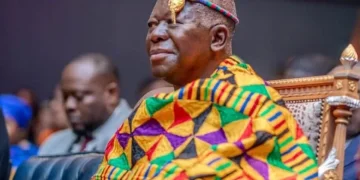




























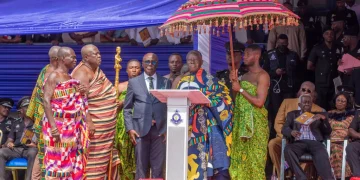
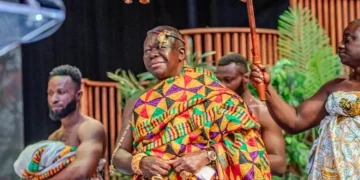
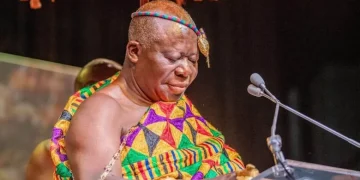
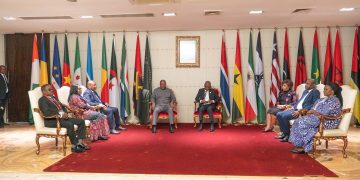
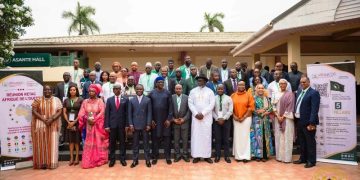



The Asantehene, Otumfuo Osei Tutu II, has firmly opposed a proposal to grant queenmothers formal participation in the sittings of the National and Regional Houses of Chiefs, describing the move as a threat to Asante custom and traditional governance.


Speaking at the final 2025 meeting of the Ashanti Regional House of Chiefs on Friday, December 19, Otumfuo Osei Tutu II rejected proposed amendments to the Chieftaincy Act, 2008 (Act 759), which seek to create a “Chamber of Queenmothers” and allow their inclusion in deliberations alongside chiefs.
The proposal is being advanced by the National House of Chiefs under the leadership of Ogyeahoho Yaw Gyebi II, with proponents citing gender equity and inclusiveness.
Asantehene cautioned that the proposal amounts to a dangerous overreach that could undermine long-established customs of the Asante Kingdom.
While acknowledging the vital role queenmothers play particularly within the matrilineal Asante system where they hold the authority to nominate and select chiefs Otumfuo insisted that tradition clearly distinguishes their advisory role from the public leadership exercised by chiefs.
“In Asante, the queenmother is the mother of the stool, but the chief is the public voice,” he said. “We must not collapse different traditional systems into a single law that ignores our customs.”
Speaking in Twi, Otumfuo stressed that customs vary across Ghana and should not be subjected to uniform legislation. “We have to let Ghanaians know that traditions and customs differ from place to place. No one should create rules that bind everyone,” he said. “Our tradition is that queenmothers give advice behind closed doors. I will not allow anyone in Ghana to change my culture.”
He added that all chiefs owe their positions to queenmothers, but that respect, he argued, does not require altering the structure of the Houses of Chiefs. “We respect them for selecting chiefs. All of us in this room were selected by women who are queenmothers,” he explained.
The Asantehene’s position comes amid increasing advocacy for greater inclusion of queenmothers in traditional governance. The All Regions Queenmothers Association, led by Nana Otubea II, has been campaigning for representation on the Judicial Committees of the Houses of Chiefs, arguing that it is discriminatory for disputes involving queenmothers to be adjudicated by all-male panels.
Their demands have gained traction following the passage of the Affirmative Action (Gender Equity) Act, 2024 (Act 1121), which mandates a minimum 30 percent representation of women in decision-making bodies.
Legal analysts say Otumfuo’s comments signal a potential constitutional confrontation, particularly between proposed changes to the Chieftaincy Act and Article 270 of the Constitution, which protects the institution of chieftaincy as defined by customary law.
Should the government proceed with the amendments, observers warn it could provoke strong resistance from the Ashanti Region, widely regarded as the most influential traditional authority in the country.
For now, Otumfuo Osei Tutu II has drawn a clear line: the formal sittings of the Houses of Chiefs, as practiced in Asante, will remain the preserve of chiefs alone.
Source: www.kumasimail.com