


























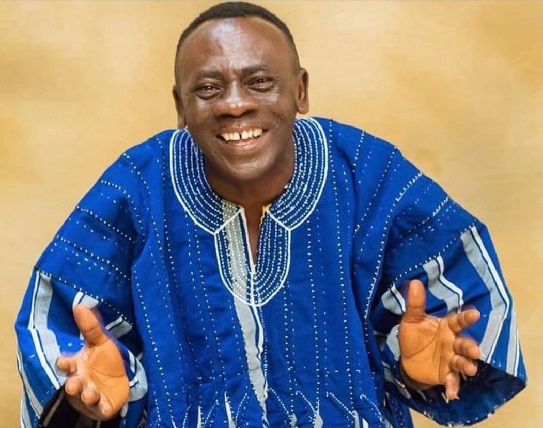
A popular video of Ghanaian comedian Kwasi Boadi popularly known as Akrobeto’s distinctive laughter has reignited debate about copyright protection in the digital age, with legal experts arguing that while laughter itself cannot be owned, its recorded form may qualify for copyright protection under Ghanaian law.


In a legal analysis, lawyers Emmanuella Osardu and Olivia Fuachiewah Mintah say the issue highlights growing challenges around creative ownership as digital content spreads rapidly across social media platforms.
Under Ghana’s Copyright Act, 2005 (Act 690), copyright protects original works such as literary, musical and audiovisual productions, but not ideas or natural phenomena. According to the lawyers, this distinction is central to understanding why Akrobeto’s laughter, as a spontaneous human reaction, cannot itself be copyrighted.
However, they argue that once the laughter is recorded in a television broadcast or video production, it may become a protected audiovisual work.
“The law does not protect the laughter itself, but the creative and technical effort involved in capturing and presenting it,” the authors explain.
They note that audiovisual recordings involve deliberate choices, including camera angles, sound capture, editing and presentation. These elements, they argue, reflect skill and judgment, meeting the legal requirement of originality.
Ghanaian copyright law requires three key conditions for protection: originality, fixation in a tangible form, and a connection to Ghana or an international treaty to which the country is a party. The lawyers cite the 1916 UK case of University of London Press v University Tutorial Press, which established that originality does not require novelty, only independent intellectual effort.
Under Act 690, audiovisual works are protected for 70 years from the date they are created or first made available to the public, whichever is later. In most cases, the copyright owner would be the production company or broadcaster responsible for the recording.
The Act also allows limited use of copyrighted material without permission, including for teaching, research, quotation and news reporting, provided such use follows fair practice. These exceptions, set out in Sections 19 to 23 of the law, aim to balance creators’ rights with freedom of expression and public interest.
The lawyers say the Akrobeto example illustrates how copyright law seeks to protect creative expression without granting ownership over everyday human experiences.
As digital platforms continue to amplify and monetise content, they argue that understanding copyright principles is becoming increasingly important for creators, broadcasters and audiences alike.
Read this …
Source: www.kumasimail.com