































Ghana’s government has announced a series of reforms aimed at restoring the financial health of the cocoa sector and strengthening local processing.


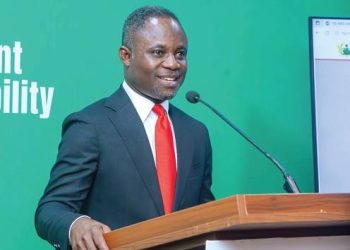
Speaking to the media, Finance Minister Dr Cassiel Ato Forson said Cabinet had directed that, from the 2026/27 crop season, at least 50% of Ghana’s cocoa beans must be processed locally.
He said the state-owned Cocoa Processing Company (CPC) would be revived “as a matter of priority” to become the leading processor of cocoa beans in the country.
Dr Forson added that he and the Minister for Trade, Agribusiness and Industry had met domestic cocoa processors earlier in the day. According to him, the processors indicated they have the capacity and willingness to handle more than half of Ghana’s cocoa output. An agreement has been reached for the immediate implementation of the new policy.
Debt restructuring plans
To address COCOBOD’s financial difficulties, Cabinet has directed the Finance Minister to seek parliamentary approval to convert part of the organisation’s legacy debts — estimated at about GH¢5bn — into equity.
COCOBOD currently owes the Ministry of Finance GH¢3.7bn, stemming from the conversion of non-marketable cocoa bills into a loan, and GH¢1.38bn to the Bank of Ghana under a 10-year facility.
Dr Forson said converting the debt to equity would restore COCOBOD’s positive balance sheet and improve confidence in both international and domestic markets, enabling the board to implement a new financing model for cocoa purchases.
Cocoa roads liabilities transferred
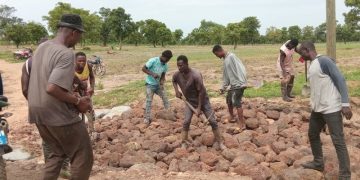
Cabinet has also approved the transfer of cocoa roads liabilities amounting to GH¢4.35bn to the Ministry of Roads and Highways.
Between 2014 and 2024, COCOBOD awarded cocoa road contracts worth GH¢26.5bn, with GH¢21.5bn of that amount awarded during the 2018/19, 2019/20 and 2020/21 crop years.
Although an agreement under Ghana’s 2023 International Monetary Fund (IMF) programme required COCOBOD’s commitments to be reduced from GH¢21.7bn to GH¢6.9bn, Dr Forson said the previous board and management failed to carry out the rationalisation.
He said the Ministry of Roads and COCOBOD have since completed the exercise under the supervision of the Ministry of Finance, reducing total exposure from GH¢21.7bn to GH¢4.35bn.
Cabinet noted that road construction had accounted for a significant portion of COCOBOD’s financial strain.
Under a new COCOBOD Bill, the organisation will be prohibited from undertaking quasi-fiscal expenditures and non-core activities, the minister said.
Dr Forson also announced that the government has secured a $500m World Bank facility to construct agricultural roads, including those in cocoa-growing areas, as outlined in the 2026 Budget.
The reforms form part of broader efforts to stabilise the cocoa sector and restore COCOBOD’s financial sustainability.
Source: www.kumasimail.com