
















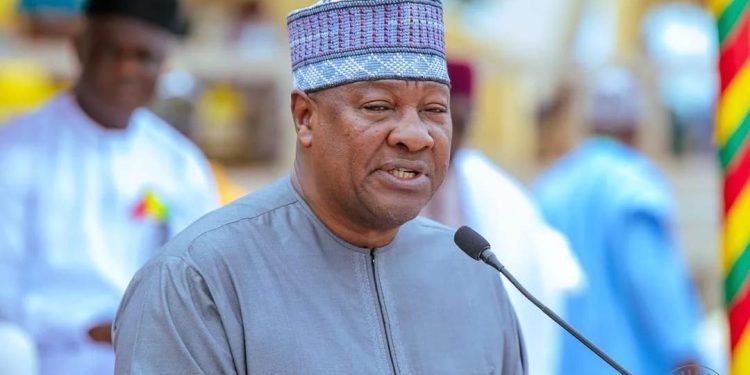
President John Dramani Mahama says he has begun processes to table a resolution at the United Nations General Assembly (UNGA) in March, seeking formal global recognition of the transatlantic slave trade as the gravest crime against humanity.


In a statement posted on Facebook, Mr Mahama said he first announced the initiative during the 80th Session of the United Nations General Assembly in September last year. The proposed resolution, he said, aims to advance international acknowledgment of the historical injustices of the slave trade and strengthen calls for reparatory justice.
“Reparatory justice will not be handed to us. Like independence, it must be secured through unity and determination,” he wrote.
Mr Mahama also told the Assembly of Heads of State and Government of the African Union that 2025 — designated as the African Union Year of Justice through Reparations — marks what he described as a turning point in the campaign for justice and compensation for Africans and people of African descent.
According to him, significant steps have already been taken to coordinate efforts across the continent and beyond. These include the establishment of an African Union Coordination Team and a Committee of Experts on Reparations, as well as engagements with global institutions such as the United Nations and UNESCO.
He said African representatives had led discussions at major international forums across four continents and had reframed the reparations debate as a forward-looking effort focused on justice and equity.
However, Mr Mahama acknowledged that more work remains.
He called on African Union member states to strengthen their institutions, establish national reparations commissions, and intensify engagement with the international community to secure formal apologies, restitution and binding agreements.
The push for reparations for the transatlantic slave trade and colonialism has gained renewed momentum in recent years, with several African and Caribbean leaders urging former colonial powers to address the legacy of slavery through compensation and other restorative measures.
It is not yet clear how member states at the United Nations will respond to the proposed resolution when it is tabled in March.