




























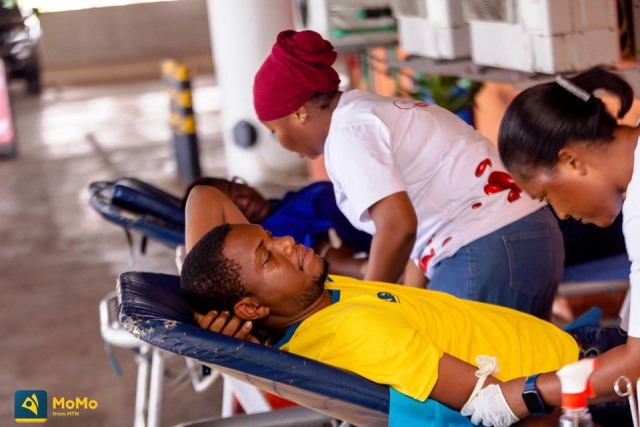
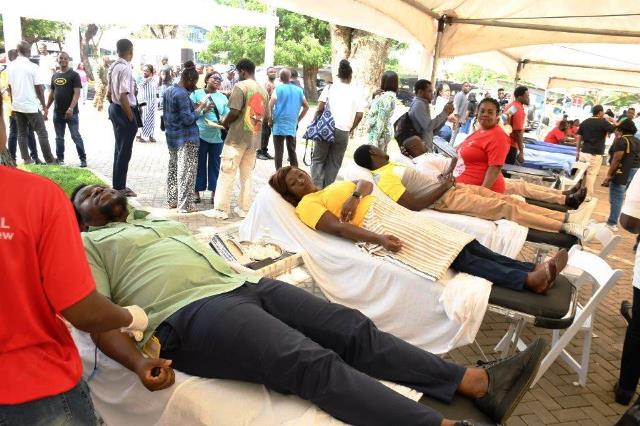
On Friday morning at Tamale Senior High School (Tamasco), students stood in quiet lines, sleeves rolled up, some laughing nervously, others deep in thought.


Among them was Jamil Anta, the school’s Health Prefect.
Last year, he was turned away.
“They said my blood level was low,” he recalled. “I was disappointed because I really wanted to help.”
This year, he returned determined.
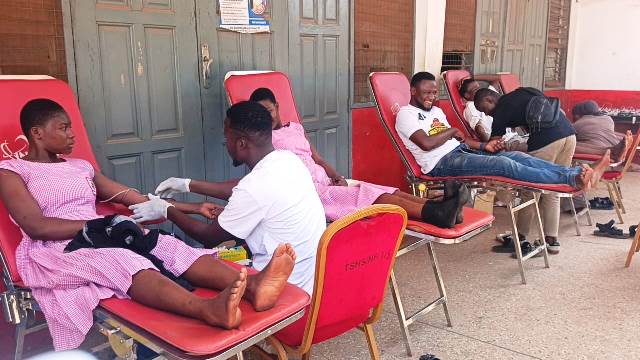
“I am back again today because I want to donate and help the needy,” he said, moments before joining hundreds of students participating in MTN Ghana Foundation’s 2026 Save A Life blood donation campaign.
By the end of the exercise in the Northern Region, 589 units had been collected — 273 from Tamasco, 200 from Tamale Islamic Senior High School, and 116 from Bimbilla Senior High School.
But what happened in Tamale was only part of a much larger national story.
Across 47 designated centres in all 16 regions of Ghana, a total of 7,020 units of blood were collected in a single day — surpassing the ambitious 7,000-unit target.
Behind that figure are thousands of emergency surgeries, childbirth complications, accident cases, and children battling severe anaemia who may now have a fighting chance.
A Region Under Pressure
At the Tamale Teaching Hospital (TTH) Blood Bank, the urgency never stops.
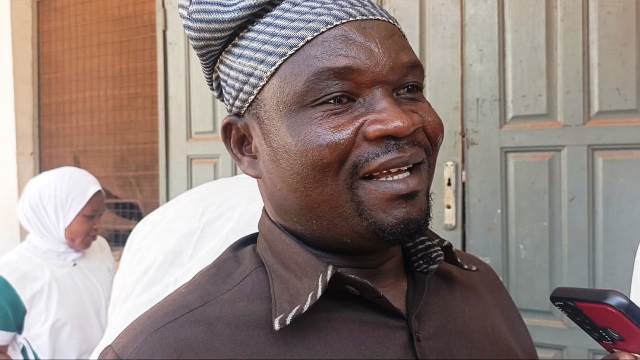
“We meet only about 30 percent of our annual blood demand,” said Ziblim Adam, Chief Blood Donor Organiser at TTH. “The rest depends on family replacement, which we do not encourage. It is through voluntary programmes like this that we save lives.”
The northern sector — covering Upper East, Upper West and Krachi in the Oti Region — relies heavily on the Tamale facility. During the Ramadan fasting season, shortages become even more acute.
“It becomes difficult to convince people to donate because it is not advisable to donate on an empty stomach,” Mr. Adam explained. “So the timing of this programme is excellent for the hospital.”
Blood, he stressed, has no substitute.
“You cannot buy blood from a pharmacy. Until science finds a replacement, we must rely on voluntary donation.”
One unit, he added, can save up to three lives — especially among pregnant women and babies.
A National “Game Changer”
The scale of this year’s success drew praise from the National Blood Service.
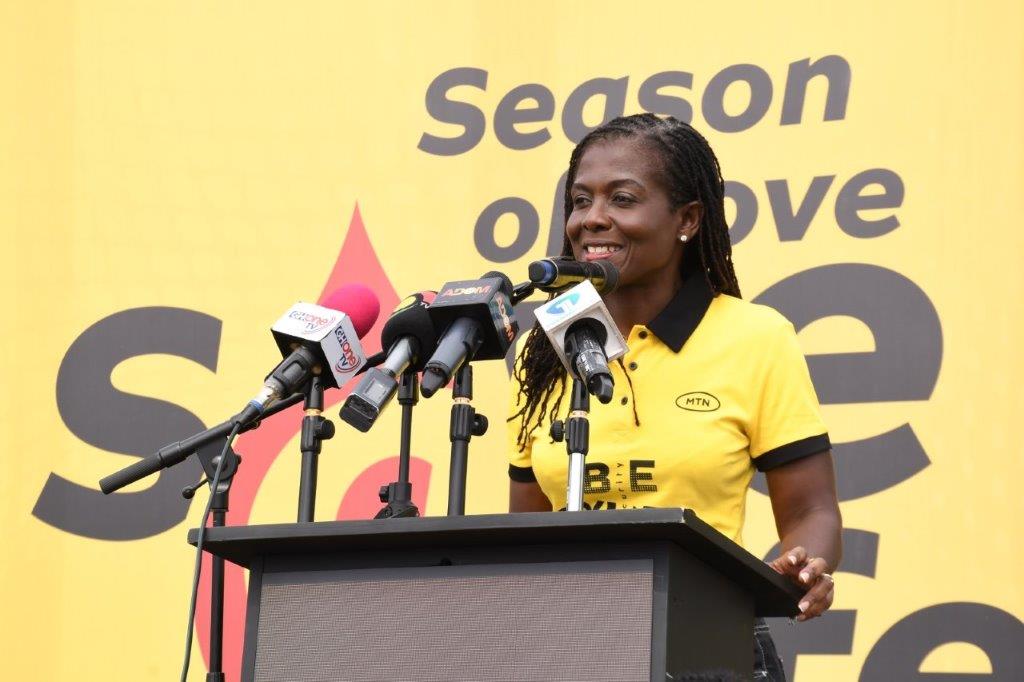
Shirley Phyllis Owusu-Ofori, Chief Executive Officer of the National Blood Service, described the partnership between MTN Ghana Foundation and CalBank as a “game changer” for Ghana’s healthcare sector.
“Our vision is to create a system built entirely upon voluntary blood donation, since regular voluntary donors represent the safest and most reliable blood supply,” she said. “I am genuinely gratified by the MTN Ghana Foundation’s ongoing dedication over the years to advancing the internationally recognised gold standard in blood donation.”
Since its launch in 2011, the Save A Life campaign has collected tens of thousands of units of blood nationwide, supporting facilities such as Korle Bu Teaching Hospital, Ridge Hospital, Tamale Teaching Hospital and numerous regional hospitals.
This year’s campaign, strengthened by the inaugural partnership with CalBank, has become one of the largest coordinated voluntary blood drives in Ghana.
Beyond Corporate Responsibility
For Stephen Blewett, CEO of MTN Ghana, the exercise carries personal significance.
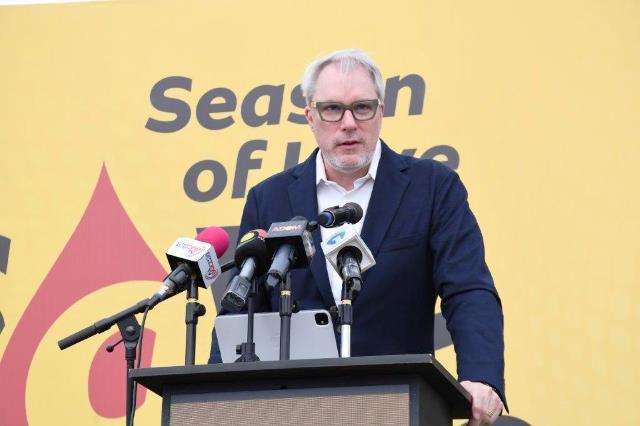
“We all understand that a reliable blood supply is essential for managing emergencies, disaster preparedness and maintaining high standards of healthcare,” he said. “Even routine medical procedures can become hazardous if blood is not readily available.”
While the initial goal was 7,000 units, Mr. Blewett has now set his sights higher — challenging MTN customers and the wider public to aim for 10,000 units in future campaigns.
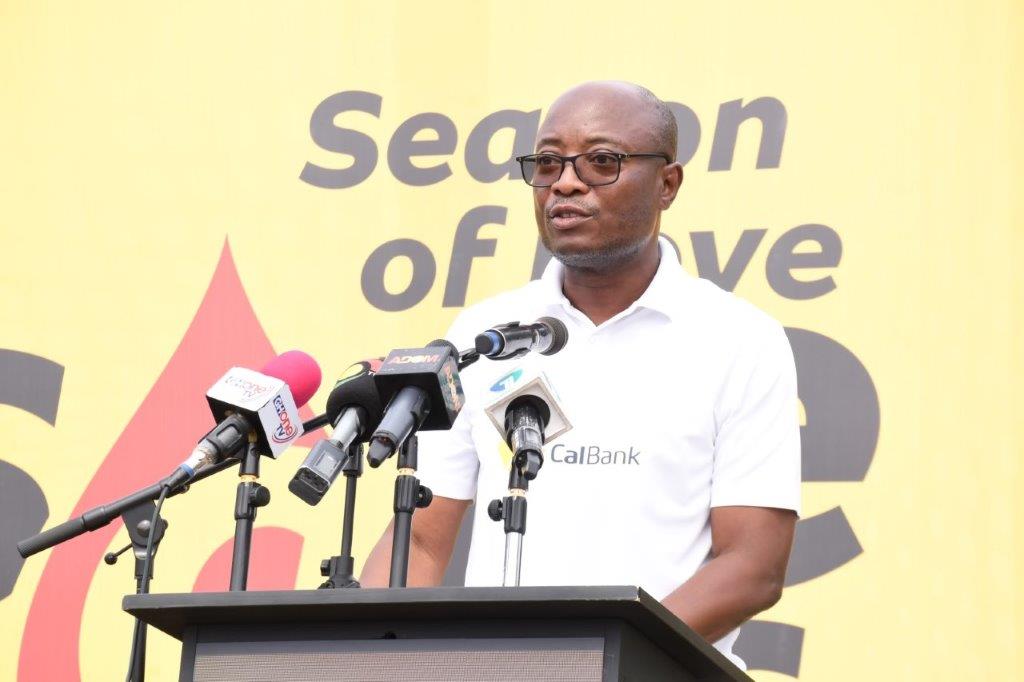
CalBank’s CEO, Carl Asem, described the collaboration as a natural alignment of shared values.
“This is not just corporate social responsibility. We are actively strengthening Ghana’s public health infrastructure,” he said. “CalBank is fully committed to growing this initiative into an even more impactful annual intervention.”
Adwoa Wiafe, MTN Ghana’s Chief Corporate Services and Sustainability Officer, underscored the collective spirit behind the success.
“Donating blood can save a life tomorrow, perhaps even your own,” she said. “Meaningful change is seldom achieved in isolation. Our partnership with CalBank truly made a tangible difference.”
The Generation that Gives
Back in Tamale, the numbers may not feel historic to students like Jamil. For them, it is about something simpler — compassion.
“If you donate and later need blood yourself, you are given a donor card and can receive blood free of charge,” he said. “But beyond that, it is important for our society.”
Across Ghana, thousands of young people like him stood up on February 13 and offered a part of themselves to strangers they may never meet.
In hospital wards tonight — in Tamale, Accra, Kumasi, Bolgatanga and beyond — some of those 7,020 units may already be sustaining fragile lives.
And somewhere, a student who was once turned away has quietly become part of Ghana’s lifeline.
Source: www.kumasimail.com