





















The provisional Monthly Indicator of Economic Growth, released on February 12, 2026, shows that economic activity grew by 4.2 percent year on year in November 2025. This compares with a stronger 7.1 percent expansion recorded in November 2024, signaling a cooling in the pace of growth.


According to the official release, “The MIEG index for November 2025 is 122.7. This compares to an index figure of 117.7 in November 2024. The yearly growth rate of the index is therefore 4.2 percent” (Graphic Online, Business News, Feb. 12, 2026, 13:11).
The First Republican President of Ghana, Osagyefo Dr. Kwame Nkrumah, a visionary leader, recognized the need to industrialize the economy. His vision for industrialization included the establishment of the University of Science and Technology, University College of Education, and University of Cape Coast to provide the necessary manpower for the industries. Among the industrial facilities he established were Black Star Lines, Tema Oil Refinery (TOR), Akosombo Dam, Farmers Brigades, VALCO (in partnership), Tema Housing Projects, and a Meat Factory in the Upper East Region. All these homegrown initiatives were pursued between 1960 and 1966.
Another industrialist, Colonel Kutu Acheampong, introduced the “Operation Feed Yourself” initiative, which created bumper harvests that fed the Rice Mill, a processing factory in Tamale, for domestic consumption and export. He also established the Tema Housing Project for industrial workers, along with other housing facilities in the country.
Subsequent governments have also contributed to the industrialization drive, implementing projects such as the Komenda Sugar Factory, the establishment of fiber optics, the Kumasi Shoe Factory, improvements to potable water access in Tamale, the enhancement of the road network, the extension of the national grid to the northern sector, and the establishment of the University for Development Studies, among others.
The sheanut sector is a key foreign exchange earner that holds significant potential to enhance the economic fortunes of the country. It creates livelihoods for approximately 600,000 women in the Northern Region and attracts $600 million annually, with the potential to earn $2 billion for the country each year. Challenges facing this sector include the uncoordinated nature of the pickers, marketing difficulties, and a lack of warehousing for storage. The government has initiated Tree Crop Development to increase production capacity in the sector. There is also a strategy to establish floor pricing, manage external buyers and supplies, and create linkages between them. Commodities such as edible oil and cosmetics are produced locally from shea (Source: Shea Network in Tamale).
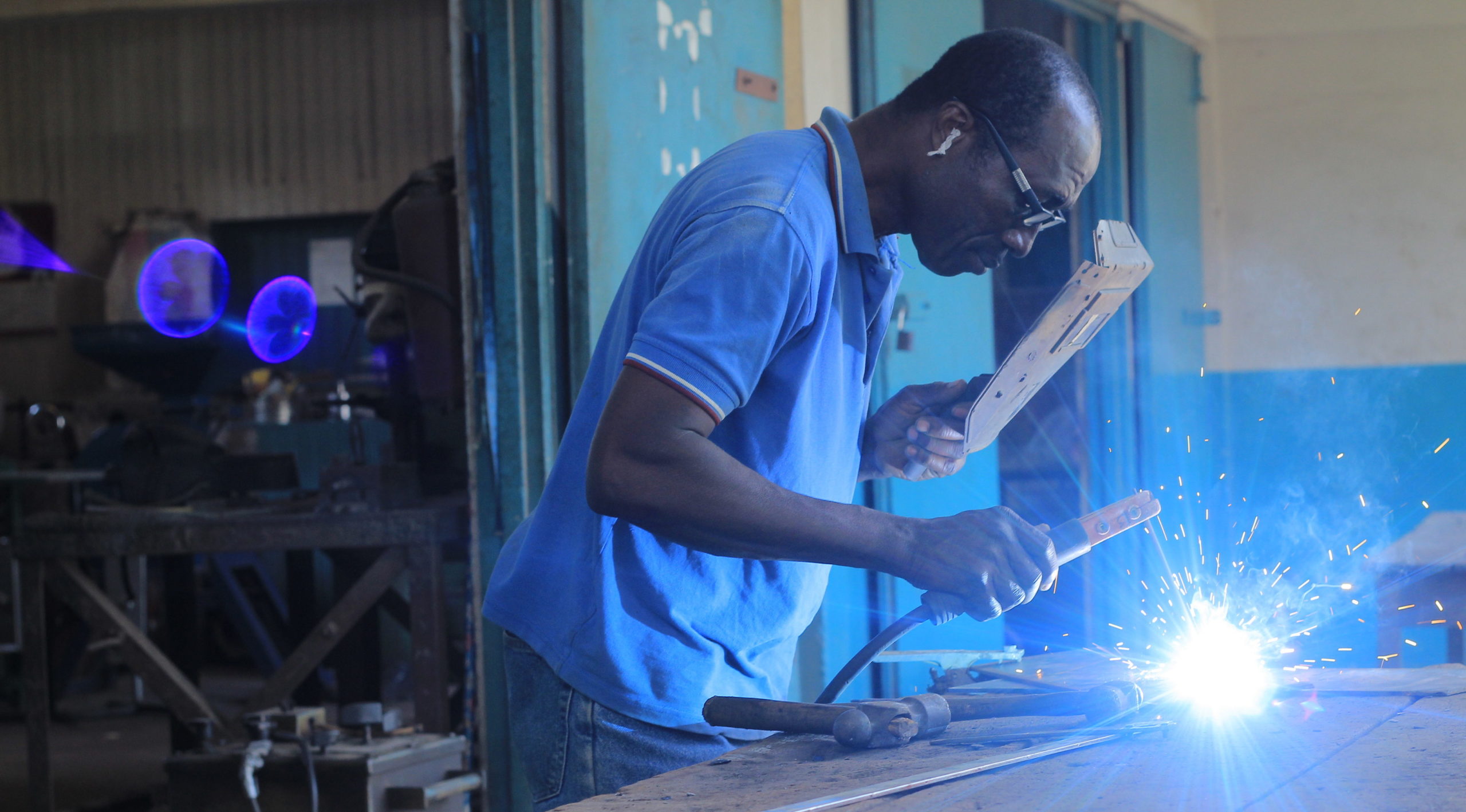
A locally manufacturing company in the industrial area of Tamale produces a highly efficient thresher for maize, soya beans, groundnuts, guinea corn, rice, and cowpeas. This machine is in high demand among farmers and features an efficient management system that minimizes waste in the grains. It has an average lifespan of ten years and can thresh over 100 bags for maize and 80 bags for soya beans. However, challenges include a lack of funding, marketing difficulties, and the need for strategic partnerships (Source: Mr. Abdallah Sayibu, Industrial Area, Tamale).
Another local industrialist in Tamale manufactures a fufu food machine that is widely consumed by the people. There are two versions: one is manually operated and can pound a sizable pan of yam in 15 minutes, while the self-feeding version can do the same in 10 minutes if operated manually, or 5 minutes if powered by an electric motor. This machine also has an average lifespan of ten years if regularly maintained. However, challenges include insufficient capital to increase production and inadequate space for manufacturing (Source: Mr. Seidu Tikuma).
Nevertheless, much more should have been accomplished, considering the pace at which Ghana’s first president was moving. Other industrial economies such as Malaysia and South Korea, which were once at par with Ghana, have made significant progress.
It should be a matter of concern for academics, industrialists, policymakers, and the entire country to rekindle our commitment to national development beyond merely engaging in discussions, rhetoric, and political propaganda.
Much has been said about the alarming trajectory of our educational system, and Ghanaians need a revolutionary approach to reverse this trend. Year after year, educational institutions produce graduates who are primarily theorists and lack the necessary skills and capacities to contribute to industrial development. This could be a result of inadequate facilities combined with high student enrolment.
The role of academia is to provide foundational knowledge and skilled talent, while industry offers resources, funding, and real-world, practical, market-driven challenges. The collaboration between academia and industry aims to accelerate and enhance economic growth. However, there is a significant disconnect between these two development paradigms, which operate independently.
Another worrying trend is the fact that education policymakers and implementers do not strategically manage or direct investment in the sector. Instead of encouraging private investors in technical and vocational areas where the state is challenged, they allow them to produce the same personnel, which ends up aggravating the unemployment situation in the country.
On the political front, there is high political interference in Public Administration leadership. The placement of personnel in key public positions is largely skewed toward political patronage, which creates the tendency of putting square pegs in round holes. The abuse of the procurement system includes over-invoicing, under-invoicing, and sole sourcing. These practices short-change and increase the debt portfolio of the country.
The Ghana Investment Promotion Centre (GIPC), established under Act 865, is the primary government agency fostering economic growth by attracting, promoting, and facilitating foreign and local investment. It supports investors through business registration, incentives, and aftercare services while advocating for a better business environment.
Over the years, a lot of effort has been made in the area of direct foreign investment, attracting foreign nationals to the country for investment. Unfortunately, some of these so-called investors export the same goods from their countries, where Ghanaian businessmen are already engaged, creating a comparative disadvantage for local investors and pushing them out of the market.
I cannot imagine whether GIPC is really exhibiting its core mandate professionally. Instead of attracting investors to areas such as manufacturing, where the nation is challenged, to ensure a balance of trade, they allow them to invest in the same commodities, creating unnecessary competition with local businessmen.
Sadly, in Tamale, huge parcels of prime land which belong to the state are leased to Chinese investors for the same trade (buying and selling) that the citizens are engaged in, where the Chinese have a comparative advantage to produce in their country. The investors sell commodities such as beverages, brushes, wall clocks, carpets, and clothing, among others.
The media plays a significant role in the industrialization drive. For instance, it can bring to light the local economic potentials of each area that could attract investment to propel development. However, most are largely engaged in political and sensational reportage. The northern sector is blessed with natural resources such as sunlight, fruit trees, iron ore deposits, and a high deposit of clay, among others, as well as in other parts of the country. Unfortunately, one hardly sees or hears the media exposing or promoting these opportunities for investors to tap into.
My humble suggestions:
- The collaborative role between academia and industry should be reengineered to enhance effective skilled personnel development.
- The personnel requirements of the industry should feed into the training system of academia to avoid shortfalls and outflows in the employment sphere.
- Increase government commitment and support for the industrialization process.
- Identify and promote the development (adding value) of local economic potentials in natural resources in each district or region, such as iron ore deposits in the Northern Region, and parts of the country, gold, bauxite, oil and gas, lithium, and sunlight, among others.
- Improve and develop irrigation infrastructure in the country to support robust food production and processing.
- Encourage and support youth and women’s groups in the industrialization drive.
- Strengthen the institutions of Ghana and minimize political interference and influence in development activities.
- Effective spatial planning, management and protection of the lands in the country.
In conclusion, the crux of Ghana’s Public Administration challenges lies in procurement breaches. This issue hampers the growth of the country, and if the system is properly sanitized, the nation will move toward prosperity and enhanced development. Ghana’s capacity to industrialize is undeniable, and I strongly believe that the country can do better if governed by honest, spirited, and courageous leadership that provides the necessary support. Additionally, there should be efforts to avoid or minimize political patronage concerning the nation’s development. The educational curriculum designers should revisit and improve upon citizenship and patriotism
The writer:
Mohammed Saani Iddrisu
Executive Director
Northern Accelerated Intervention for Development
Email: [email protected]
Contact: 0246171426/0205307833