































President John Dramani Mahama has unveiled plans to establish three new technical universities and construct 50,000 housing units for teachers, positioning education and skills development at the centre of his government’s economic transformation drive.


Delivering his 2026 State of the Nation Address in Parliament on Friday, February 27, the President said the expansion of technical universities is intended to bridge Ghana’s skills gap and confront persistent youth unemployment.
He underscored the strategic importance of technical and vocational education in aligning training with industry demand and national development priorities.
“Technical universities play a critical role in closing the skills gap and reducing youth unemployment by delivering high-quality, industry-aligned and practice-oriented training within a broader policy framework that stimulates labour demand,” he stated.
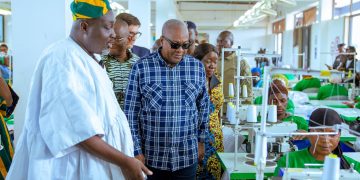
According to President Mahama, the proposed institutions will not merely increase enrolment capacity but will serve as hubs for innovation and industrial collaboration, helping to prepare a workforce capable of competing in a modern, technology-driven economy.
The move comes amid growing concerns about graduate unemployment and the mismatch between academic qualifications and labour market needs. By expanding technical education, the government is seeking to pivot towards more practice-based training that feeds directly into manufacturing, engineering, construction and emerging sectors.
Beyond tertiary education reforms, the President also announced an ambitious housing programme targeting teachers, particularly those serving in rural and underserved areas.
The initiative aims to deliver 50,000 housing units through a partnership involving the District Assemblies Common Fund, the Ghana Education Trust Fund and the Ghana National Association of Teachers, among other stakeholders.
President Mahama said improving accommodation for teachers is critical to boosting morale, retention and equitable distribution of educators across the country.
“This partnership demonstrates our collective dedication to enhancing teachers’ living conditions and boosting retention, especially in rural and remote areas,” he noted.
Source: www.kumasimail.com