






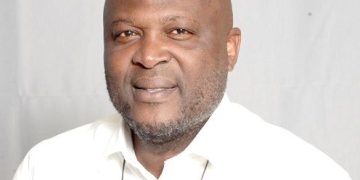




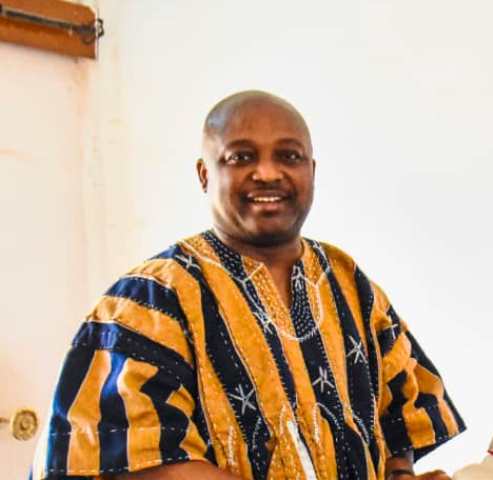
The Upper West Regional Minister, Charles Lwanga Puozuing, has said the continuous provision of bungalows and quarters for civil servants in the region, without addressing poor maintenance culture, would amount to a waste of public funds.


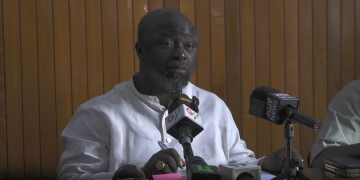
Speaking at a press soiree with journalists at the Upper West Regional Coordinating Council over the weekend, Mr. Puozuing said the deteriorating state of existing government housing makes further investment in such projects unjustifiable.
“If I were to advise government as a private person, I would say they shouldn’t even build a gutter there,” he said. “Go to all our quarters and see how tenants treat these properties because they belong to government, then ask yourself whether you would build more.”
The Regional Minister blamed the situation on what he described as the poor attitude of civil servants occupying state-owned bungalows, noting that government properties are being damaged and neglected at the expense of taxpayers.
“In some houses, two or three louvre blades are broken and the person replaces them with plywood,” the Minister noted. “We are not demonstrating that we need more affordable houses.”
Mr. Puozuing argued that government must first confront Ghana’s weak maintenance culture before considering new housing projects, insisting that scarce resources should be redirected to more urgent social infrastructure.
“If government has money to build, I would rather encourage government to improve our regional hospital,” he said. “Put the money there so we can be well taken care of.”
He contrasted the conduct of tenants in government quarters with what pertains in the private rental market. “If you go and rent somebody’s house, you cannot break a louvre blade and replace it with plywood. You will be moved out the next year,” he said.
The Regional Minister also questioned public resistance to recent rent adjustments for government bungalows, revealing that some occupants pay as little as GH¢60 a month, amounting to GH¢720 a year.
“When we doubled the rent, people started writing petitions,” he said. “How many of us can rent a two-bedroom house at a private place for GH¢200? It’s not even possible in my village, Nyange or Sabuli.”
Despite his strong remarks, Mr. Puozuing used the occasion to reaffirm government’s commitment to press freedom and democratic governance, describing the media as a key driver of development rather than passive observers.
“The media are not merely observers of development; you are partners and participants in it,” he said, calling journalists “one of the strongest pillars of our democracy.”
He commended media practitioners in the Upper West Region for what he described as growing professionalism, noting that some reports had attracted international attention and support for development initiatives. “Such journalism does not merely report reality; it changes reality,” he said.
Mr. Puozuing assured journalists of President Mahama’s commitment to safeguarding press freedom and pledged closer collaboration between the Regional Coordinating Council and the media.
“These challenges are real, and they demand collaboration rather than confrontation,” he said, urging responsible and balanced journalism that holds leaders accountable while also highlighting development progress.
He described the Upper West Region as “a story of hope, preserved trust, and opportunity,” and charged the media to tell that story accurately and responsibly as government rolls out new programmes in the coming year.
Source: www.kumasimail.com