




































The Ghana Police Service has issued a public notice restricting the uniforms that may be worn by private security operators nationwide, warning that any unapproved attire resembling state security uniforms will be considered unauthorized and punishable by law.


In the notice dated February 5, 2026, and signed by the Director-General in charge of Private Security Organizations, the Police said the directive is in line with Regulation 12 of the Police Service (Private Security Organizations) Regulations, 1992 (L.I. 1571).
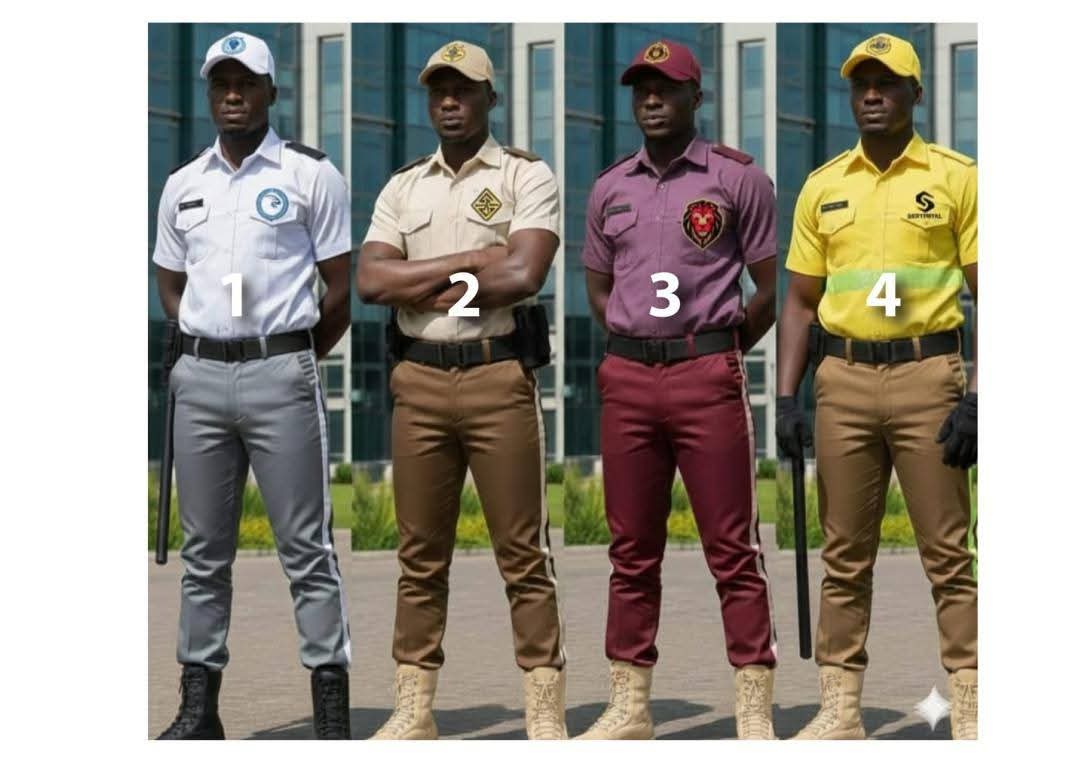
According to the statement, only four uniform combinations have been approved for use by private security operators and their employees across the country.
These include a white long- or short-sleeve shirt worn with ash khaki trousers featuring white stripes on both sides; a cream long- or short-sleeve shirt paired with brown khaki trousers with cream stripes; and a mauve long- or short-sleeve shirt worn over maroon trousers with mauve stripes.
The fourth approved uniform is a yellow shirt with ash or grey reflectors across the front and back, worn with brown khaki trousers. This option, the Police clarified, is strictly for private security personnel working in mines and oil fields.
The Police Service stressed that any other uniform, colour combination, design or turnout not listed in the notice — particularly those resembling the uniforms of state security agencies — is prohibited.
“All private security operators are required to comply strictly with the approved uniform specifications,” the statement said, adding that in-house security personnel must also desist from wearing uniforms that bear resemblance to those of state security agencies.
The Police warned that offenders will be liable to sanctions as prescribed by law.
Members of the public have also been encouraged to familiarize themselves with the approved uniforms and report any suspected violations to the appropriate authorities.
The directive is part of ongoing efforts by the Ghana Police Service to regulate private security operations and prevent impersonation or public confusion involving state security agencies.
Source :www.kumasimail.com