


































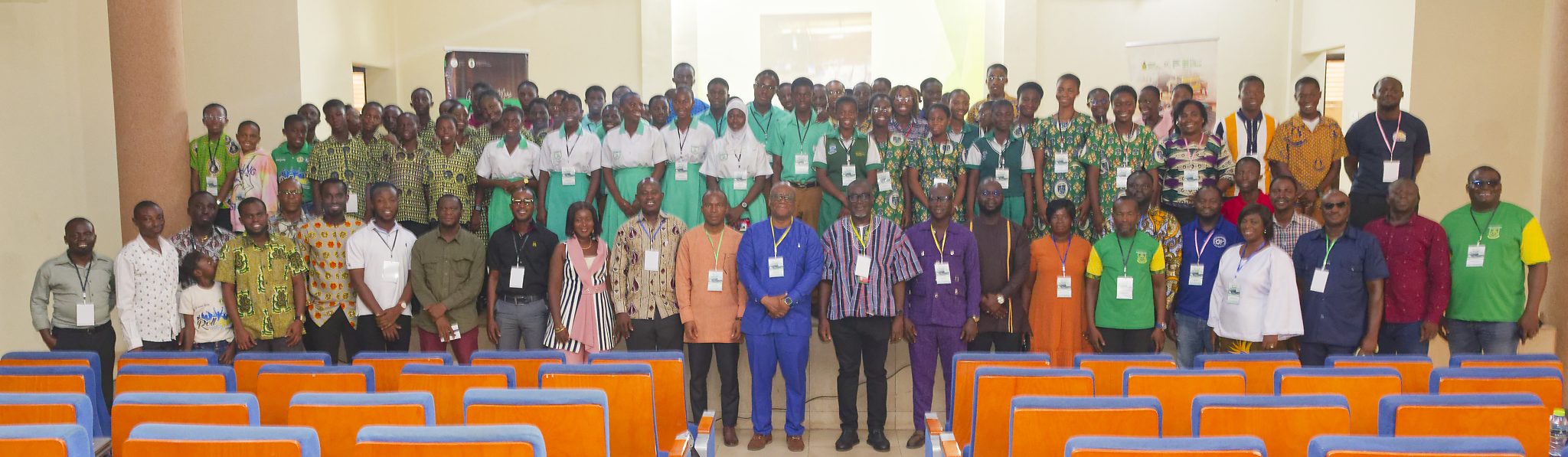
St. Louis Senior High School and Opoku Ware MA Junior High School have won the Senior High School and Junior High School categories respectively at the Responsible Artificial Intelligence Laboratory (RAIL) Phase II Robotics Cohort II Challenge, earning GH₵3,000 each for their innovative, technology-driven projects.


The competition, which brought together three Junior High Schools and four Senior High Schools, showcased student-led solutions addressing challenges in agriculture, energy, health and environmental management through robotics and artificial intelligence.
In the Junior High School category, Opoku Ware MA JHS clinched first place with AsaaseTom Guard, a smart robotic system designed to detect and monitor diseases in tomato crops. Good Shepherd R/C JHS placed second with a robotic solution for garbage collection aimed at improving sanitation, while Ayeduase R/C Basic School came third with a system that detects soil and crop nutrient deficiencies.
St. Louis SHS emerged winner in the Senior High School category with Akandifour Energy Meter, a self-regulating energy meter that enables users to monitor and control electricity consumption using Bluetooth and Wi-Fi technology. Dormaa SHS secured second place with a poultry disease detection system, followed by Mawuli School in third place with a semi-autonomous agricultural robot powered by machine learning. KNUST SHS placed fourth with MedMate, an AI-powered healthcare assistant for basic medical consultations.
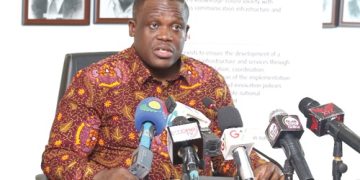
Speaking at the event, the Principal Investigator and Scientific Director of RAIL, Professor Jerry John Kponyo, called on government to integrate robotics and artificial intelligence into Ghana’s national curriculum, stressing that digital skills are critical for the country’s future.
“It is important to integrate robotics and AI into mainstream education so it does not remain limited to a few schools, but becomes part of how we educate every child,” he said.
Professor Kponyo noted that RAIL’s work focuses on applying AI to key sectors including agriculture, healthcare, energy, education, gender inclusion and inequality reduction. He also disclosed that under RAIL’s Women in Technology initiative, robotics laboratories have been established in 22 schools across 14 regions to build early capacity among young learners.
He urged policymakers to support the effort through formal policy, improved infrastructure and teacher training to deliver practical science and technology education.
The Provost of the College of Engineering, Professor Kwabena Biritwum, praised RAIL for promoting responsible AI and innovation among young people, describing science and technology as key drivers of economic transformation. He encouraged the students to remain confident and consider engineering programmes at KNUST as they pursue higher education.
Ing. Prof. Mrs. Eunice Akyereko Adjei, RAIL Women in Technology Thematic Lead, said the challenge was designed to celebrate the creativity and curiosity of young Ghanaian innovators and provide a platform for them to demonstrate skills developed through the programme.
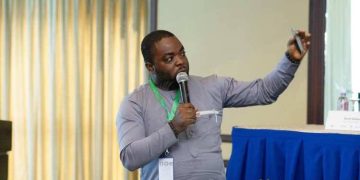
The event also featured insights from Mr. Kwabena Yeboah Agyiri of Evidence Farms on improving community adoption of technological innovations, as well as solidarity messages from the Ghana Education Service and the Yamoransa Model Laboratory, reaffirming support for science, technology and innovation at the pre-tertiary level.
Source: www.kumasimail.com