












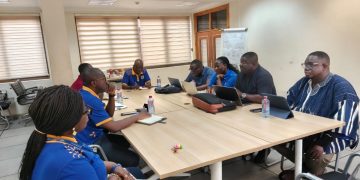


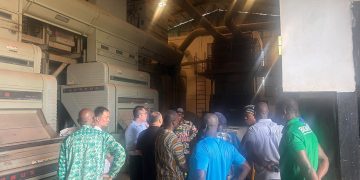






















The United Nations World Food Programme (WFP), with funding from the Foreign, Commonwealth & Development Office (FCDO) and dsm-firmenich, is making significant progress in the introduction of fortified rice into public and private school feeding programmes across Ghana, as part of efforts to improve child nutrition, learning outcomes and local food systems.


Working in close collaboration with the Ghana School Feeding Programme (GSFP) under the Ministry of Gender, Children and Social Protection (MoGCSP), the Ghana Education Service (GES), the Ghana Health Service (GHS) and the Women in Agriculture Development (WIAD), the initiative currently covers schools in seven regions.
Large-scale rice fortification has been widely recognised as an effective intervention against micronutrient deficiencies in populations that rely heavily on rice as a staple food. The process involves adding essential vitamins and minerals to rice, either during milling or through heat extrusion.
In Ghana, WFP’s pilot rice fortification project is assessing the feasibility and economic viability of scaling up fortified rice nationwide. Beyond nutrition, the initiative seeks to support selected rice millers with tailored technical guidance to develop sustainable business models that integrate fortification while creating market opportunities for local smallholder farmers.
Under the public-school component, the programme targets 157,510 learners, including 111,247 pupils in basic schools and 46,263 students in senior high schools (SHSs).
In partnership with GES and GSFP, WFP selected 365 basic schools and 35 SHSs across 12 districts in six regions—Upper West, Upper East, Northern, Ashanti, Oti and Greater Accra—for the pilot phase.
The initiative aims not only to address micronutrient deficiencies but also to improve school enrolment, attendance and academic performance, particularly in underserved communities.
To ensure sustainability and local ownership, WFP has invested in domestic rice fortification capacity by procuring and delivering four rice fortification equipment units valued at over USD 80,000 to millers in four regions.
Equipment has been delivered and installed at BBN Cooperative in the Upper East Region, Franco Food Processing and Farms in the Ashanti Region, and Max Industries in Greater Accra. A fourth unit for Tamanaa Company Ltd in the North-East Region is pending delivery and installation.
Following installation at three mills, WFP supplied 60 metric tonnes (MT) of fortified rice kernels (FRK), valued at over USD 91,000, to support production. The fortified rice is distributed to basic schools through caterers and to SHSs via the National Food Buffer Stock Company (NAFCO).
WFP is currently finalising a cost-benefit analysis to inform a potential scale-up of the programme and to assess the feasibility of making fortified rice mandatory under the Ghana School Feeding Programme and for broader public consumption.
In 2025, BBN Cooperative in the Upper East and Ko Franco Farms in the Ashanti Region supplied a combined 170 MT of fortified rice and 61.7 MT of parboiled unpolished rice to nine selected SHSs in the Upper East, Northern and Ashanti regions.
Meanwhile, Max Industries is preparing to produce 200 MT of fortified rice for selected private schools and WFP livelihood programmes targeting pregnant and breastfeeding women, children and adolescent girls.
The fortified rice initiative has also been extended to low-fee-paying private schools in deprived communities across Northern Ghana. The private school programme currently covers 208 schools in 17 districts across four northern regions, with a projected reach of more than 60,000 children.
So far, 123 MT of fortified rice has been supplied, reaching 58,991 pupils. Participating schools have recorded a 7.9 per cent increase in enrolment.
To improve accountability and efficiency, WFP has introduced a hybrid cash-and-value voucher system, expanded its network of trained food retailers from four to 31, established School Implementation Committees, and digitised monitoring through the School Connect platform.
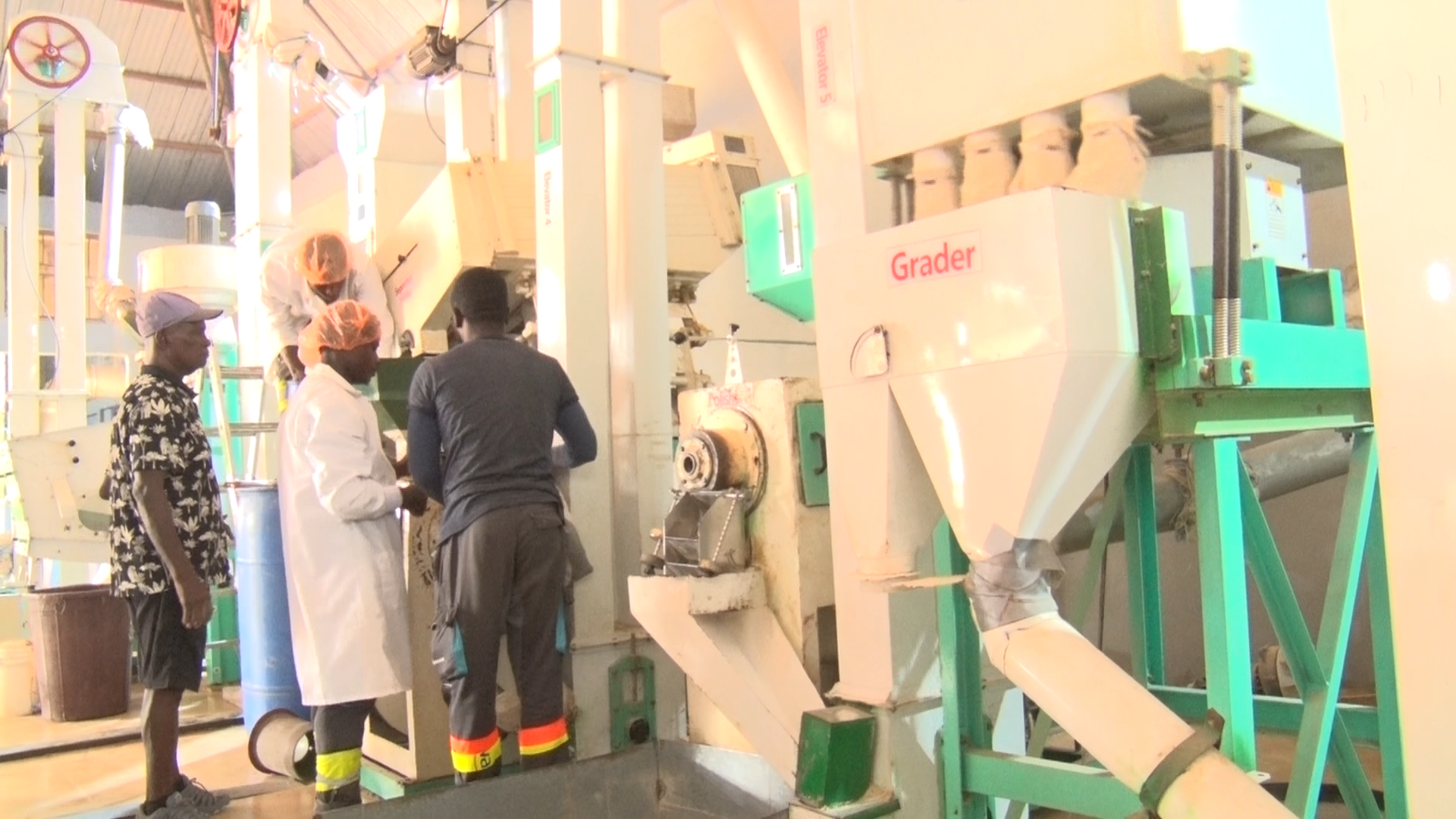
During a recent visit to the rice processing facility at Adadientam in the Ejisu Municipality, Franco Food Processing and Farms—a key project partner—demonstrated the technical processes behind producing quality fortified rice.
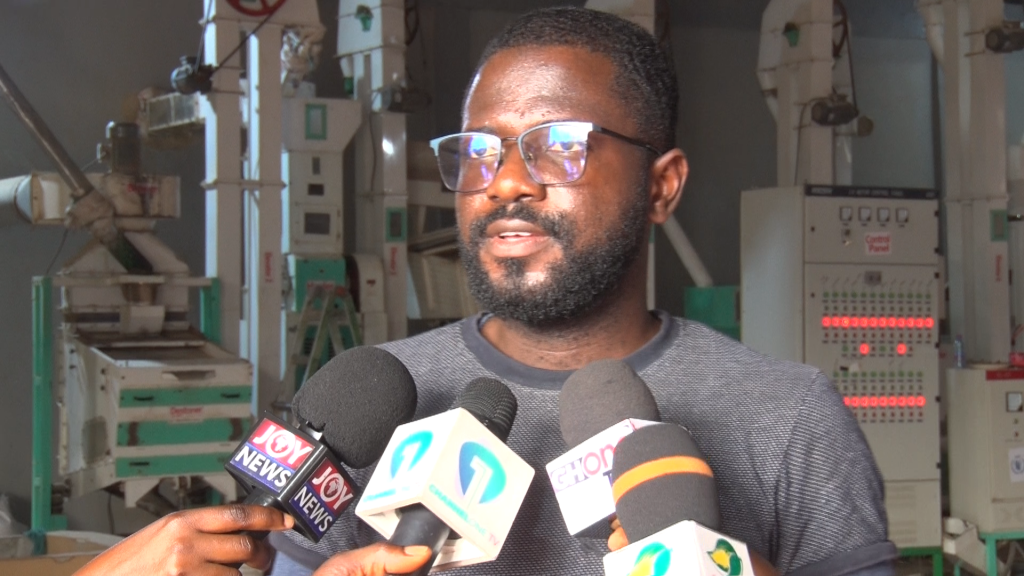
According to Production Manager and Site Engineer Solomon Osei Sarfo, the milling process begins with thorough cleaning of paddy rice to remove impurities before milling. The rice then passes through a destoner, which removes stones and other foreign materials—a common complaint associated with locally produced rice.
He explained that polishing, while improving the appearance of rice, removes the nutrient-rich bran layer. “Because of the preference for white rice, we end up removing the most nutritious part of the grain,” he said, noting that this bran is often diverted for animal feed.
WFP’s intervention, he added, addresses this nutritional loss through fortified rice kernels designed to resemble regular rice grains. Unlike powdered fortificants that can be washed away during cooking, the pelletised kernels retain nutrients even after repeated washing. “This is a game changer for rice fortification in our sub-region,” Mr Sarfo said.
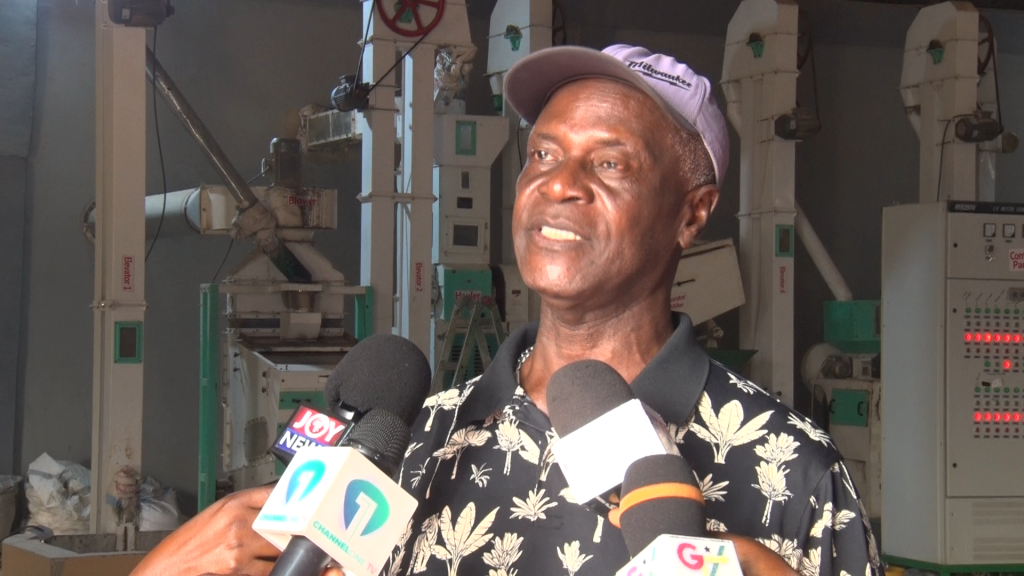
hief Executive Officer of Franco Farms, Mr Franco Obour, said he established the business in 2020 after recognising gaps in local rice processing standards. Production began in 2022, with the launch of the Franco Rice brand.
He said WFP approached the company to participate in the fortification programme, eventually supplying a rice fortification machine valued at about USD 50,000, along with fortified kernels at no cost. “We are among only three companies in the country selected for this,” he noted.
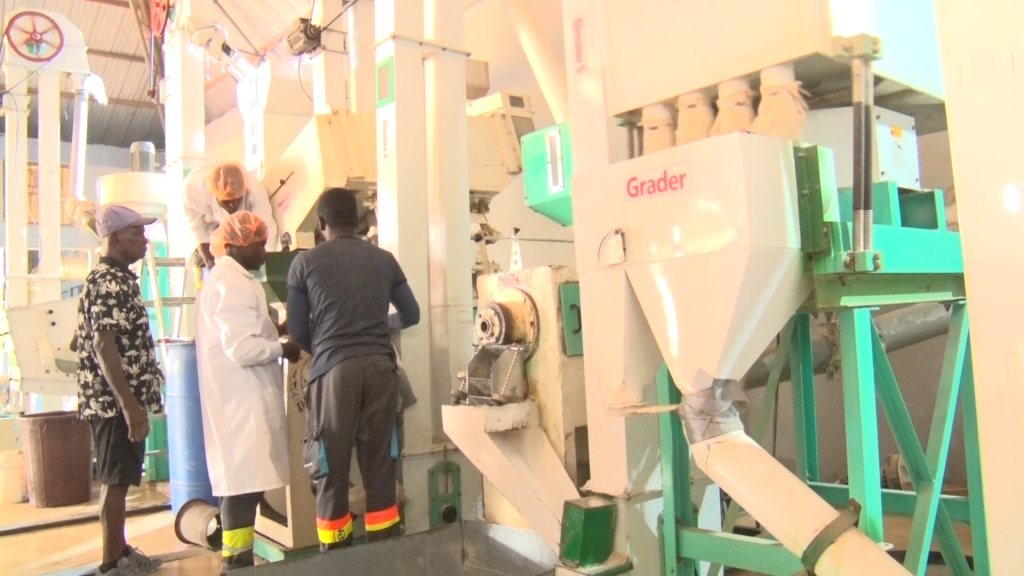
Mr Obour said the programme promotes the use of locally produced rice rather than imports, with Franco Farms already supplying its first consignment of 45 MT of fortified local rice. He added that NAFCO has begun purchasing fortified rice for SHSs, while discussions continue to bring the basic school feeding programme fully on board.
WFP and its government partners say the fortified rice initiative has demonstrated strong potential to improve child nutrition, strengthen educational outcomes and support Ghana’s local rice value chain.
As feasibility studies near completion, stakeholders remain optimistic that fortified local rice could soon become a standard feature of school feeding programmes nationwide, benefiting both children and local producers alike.
Source: www.kumasimail.com