




























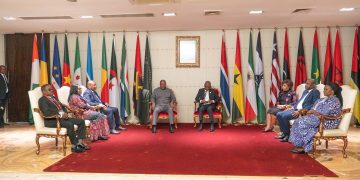




On January 22, 2026, the New Patriotic Party (NPP) took a commendable step toward internal cohesion when its national executives, Council of Elders, and five presidential primary candidates signed a peace pact in the presence of members of the National Peace Council.


The agreement was intended to bind all aspirants to accept the outcome of the party’s primaries and to refrain from actions that could undermine unity before, during, and after the contest.
While the overall objective of the peace pact is laudable, one incident during the process has sparked public debate. Reports indicate that presidential aspirant Kennedy Ohene Agyapong initially declined to append his signature after identifying what he considered errors in the document.
Unfortunately, some supporters of his opponents seized on this moment to portray him as indisciplined or disruptive. I disagree with that interpretation.
In my view, that singular act deserves commendation rather than criticism. Paying attention to detail—especially when signing an important document—is not an act of defiance; it is a demonstration of responsibility.
Across business, politics, governance, and even personal life, many individuals and institutions have suffered grave consequences simply because documents were signed without proper scrutiny.
Leadership demands vigilance. A leader who takes time to read, question, and seek clarity before committing is more likely to protect the interests of the people he serves. In that sense, Kennedy Agyapong’s reported action reflects seriousness of purpose and an understanding of the weight that official decisions carry. It is also one of the reasons he has succeeded as a businessman in Ghana, where attention to detail can determine the difference between success and failure.
This point is particularly relevant when viewed against Ghana’s recent political history. The controversial Power Distribution Services (PDS) deal, which was eventually terminated, remains a painful reminder of how inadequate due diligence and insufficient scrutiny of agreements can expose a nation to embarrassment and financial risk. Greater vigilance at the point of signing might have altered that outcome.
To be clear, this article is not an endorsement or campaign for Kennedy Ohene Agyapong to be elected as the NPP’s presidential candidate. Rather, it is an appeal for a broader national lesson: clarity, caution, and understanding of details are essential tools for leadership and success. Whether in politics, public service, or private enterprise, the habit of reading before signing is not a weakness—it is a strength.
As Ghana continues to search for leaders capable of navigating complex domestic and international agreements, we must begin to value diligence over haste and scrutiny over symbolism. Unity is important, but so too is responsibility. In leadership, the pen should never move faster than the mind.
Isaac Justice Bediako Broadcast Journalist, EIB Network, Kumasi