


















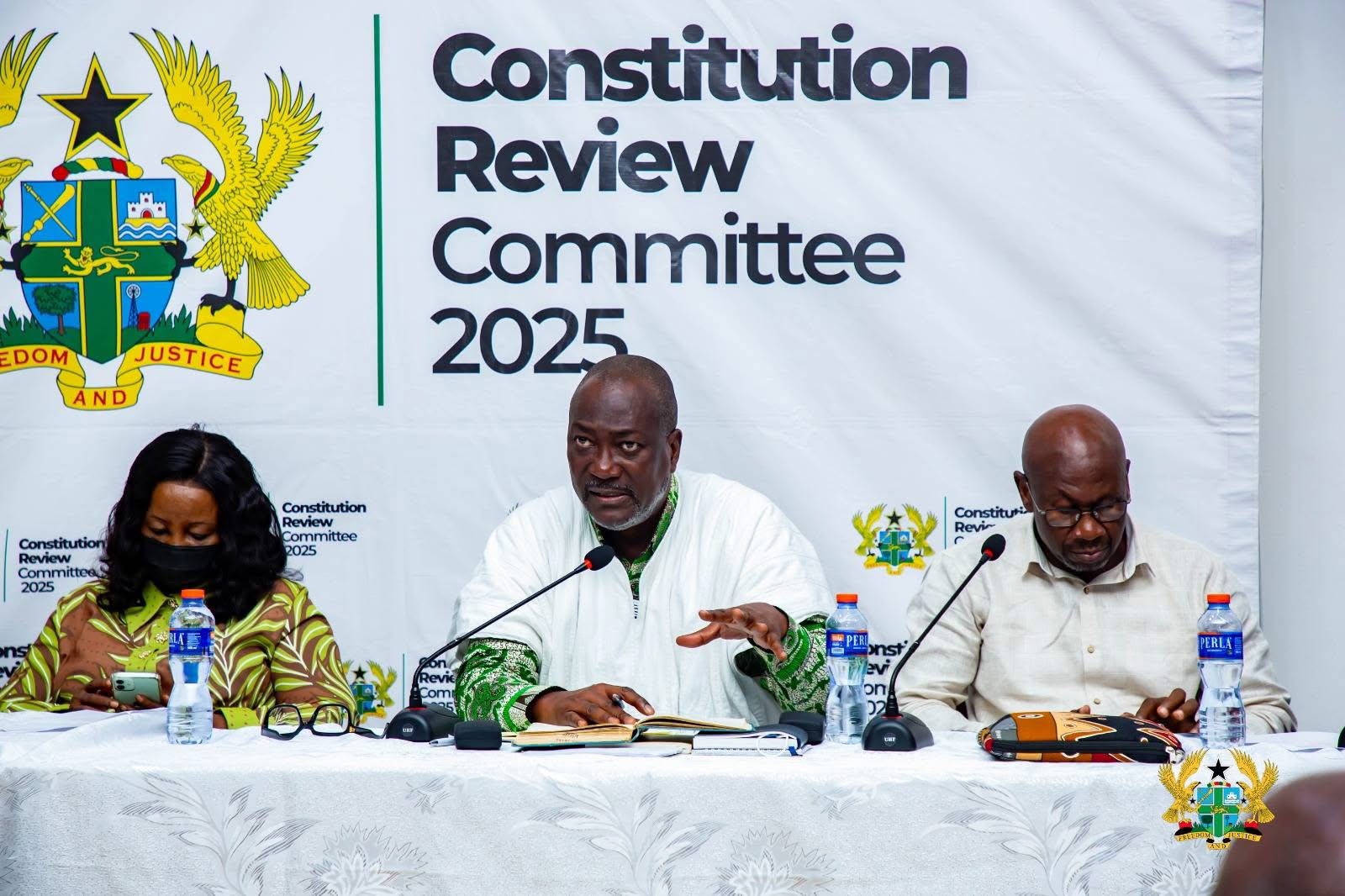
Ghana’s Constitutional Review Commission has firmly shut down calls for presidents to serve a third term, declaring no basis for such a change.


Instead, the committee recommends extending the presidential term from four to five years, coupled with strict limits on election campaigning to allow leaders more time to govern.
In its final report presentation on Monday, Chairman Professor Henry Kwasi Prempeh emphasized that extensive consultations revealed little public or elite support for altering Article 66(2) of the Constitution, which caps presidents at two terms.
“The report, there isn’t, we couldn’t find a place for a third term for the president,” Prof Prempeh stated.
“So we looked and looked and looked, we couldn’t find… we realised that the president himself doesn’t like it, you know, nobody really seems to like it, there wasn’t much of a demand for it at all.”
The committee dismissed invitations to clarify any perceived ambiguities in the two-term limit.
“We didn’t even want to go there. We didn’t think that Article 66(2) raised any issues in terms of ambiguity, so we kept it the way it is,” Prof Prempeh added.
Shifting focus to term length, the commission drew from feedback by former leaders and regional trends. Many stakeholders argued the current four-year cycle is too brief, leaving presidents consumed by setup and campaigning.
Prof Prempeh noted that Ghana’s term lags behind emerging global and African norms, including Nigeria’s longer cycle.
“We’re proposing an extension by one more year,” he said.
To counter concerns over lost governance time such as six months for administration setup and a full year campaigning, the report introduces regulated campaign periods, modeled on countries like Senegal.
Under the proposal, electioneering activities like posters, billboards, jingles, and rallies would be banned until an official “campaign season” opens, akin to a regulated “fishing season.”
This reform aims to end perpetual 24/7 campaigning. “We are proposing a campaign season, a short one, so that government will have time to govern,” Prof Prempeh explained.
“For the first time, we hope… that we will have a political or electoral environment where campaigns… do not run 24-7, four-year campaigns, but where there is a definite period before which parties and candidates may not do campaigning. We think that would free up time for governing.”
Additional recommendations target presidential appointments, aiming to reduce the executive’s burden and refocus leaders on core duties.
“I think some of the changes we’ve also made in the area of appointments, I think will also embed in the presidency and also allow the president to focus more on the real business of governing as opposed to being saddled with many appointments, some of which we believe that the president would be more than happy to give up,” the chairman highlighted.
Source: www.Kumasimail.com