




























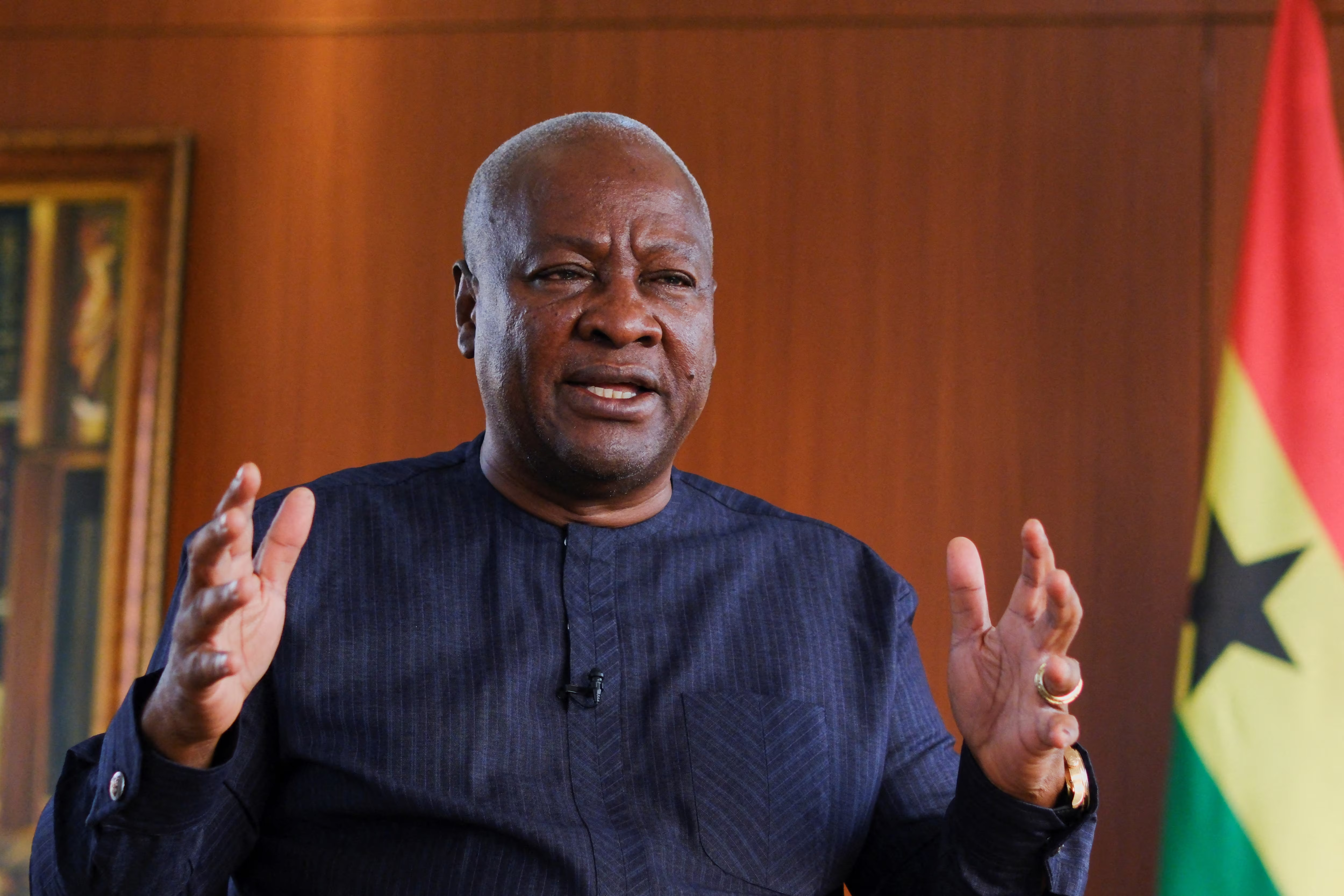








Ghana’s Finance Minister has attributed the current challenges in the cocoa sector to falling competitiveness, financing constraints and significant production shortfalls in recent years.


According to the minister, Ghana’s cocoa has become uncompetitive on the international market, with beans from other producing countries selling at prices significantly lower than Ghana’s producer price. As a result, some buyers have been reluctant to purchase Ghanaian cocoa.
The minister also said the Ghana Cocoa Board (COCOBOD) lacked the liquidity to purchase cocoa from farmers for hedging or trading purposes. This, he explained, followed the failure of the syndicated loan for the 2024/25 season and the introduction of a financing model under which off-takers financed purchases.
He noted that by 2022, COCOBOD’s financial position had deteriorated considerably, leading to the restructuring of its Cocoa Bills in 2023.
For the first time, the annual cocoa syndicated loan in 2023 experienced significant delays, which the minister linked to reduced investor confidence in the Ghanaian economy. The first tranche of the loan was received on 22 December 2023, four months after the start of the cocoa season.
COCOBOD had projected an output of 800,000 tonnes for the 2023/24 crop season and committed 786,672 tonnes in contracts. However, actual production fell to 432,145 tonnes — a shortfall of 45%.
The minister described the deviation as unprecedented, noting that variations in crop forecasts typically range between 5% and 15%. The production gap resulted in rollover contracts of 333,767 tonnes at an average price of $2,661 per tonne.
He said this led to losses of more than $1bn, funds that would otherwise have benefited cocoa farmers and other stakeholders.
In 2024, COCOBOD was unable to pay the final tranche of its syndicated loan due in July and received a $70m bridge financing facility from the Ministry of Finance to avert default.
Despite a commitment to repay the amount, COCOBOD subsequently defaulted on the bridge financing, underscoring what the minister described as the organisation’s severe financial difficulties. The debt has since been inherited by the current management of COCOBOD.
Source: www.kumasimail.com