

































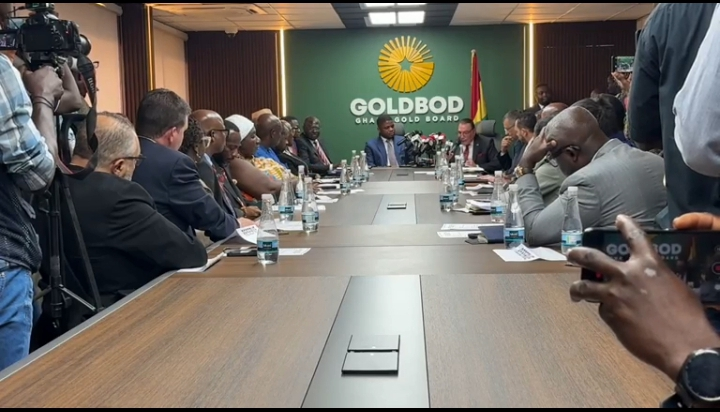
Ghana will, from February 1, 2026, begin refining at least one metric tonne of gold locally every week, after the Ghana Gold Board (GoldBod) sealed a landmark agreement with Gold Coast Refinery Limited to deepen value addition in the sector.


The move signals a clear policy shift away from exporting raw gold towards strengthening domestic processing and maximising the country’s earnings from its mineral resources.
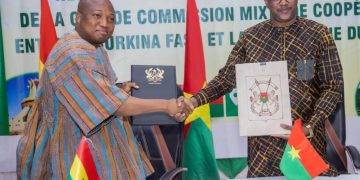
Speaking at the signing ceremony in Accra on Tuesday, 20 January, Chief Executive Officer of GoldBod, Sammy Gyamfi, said the agreement represents a major turning point in how Ghana manages its gold.
“Today is a great day because… we will be executing a groundbreaking landmark agreement that will change the face of management of our gold resources, particularly in relation to value addition,” he said.
Under the deal, up to 1,000 kilogrammes of gold exported by GoldBod will be refined locally every week, with a gradual plan to scale up volumes towards full domestic refining over time.
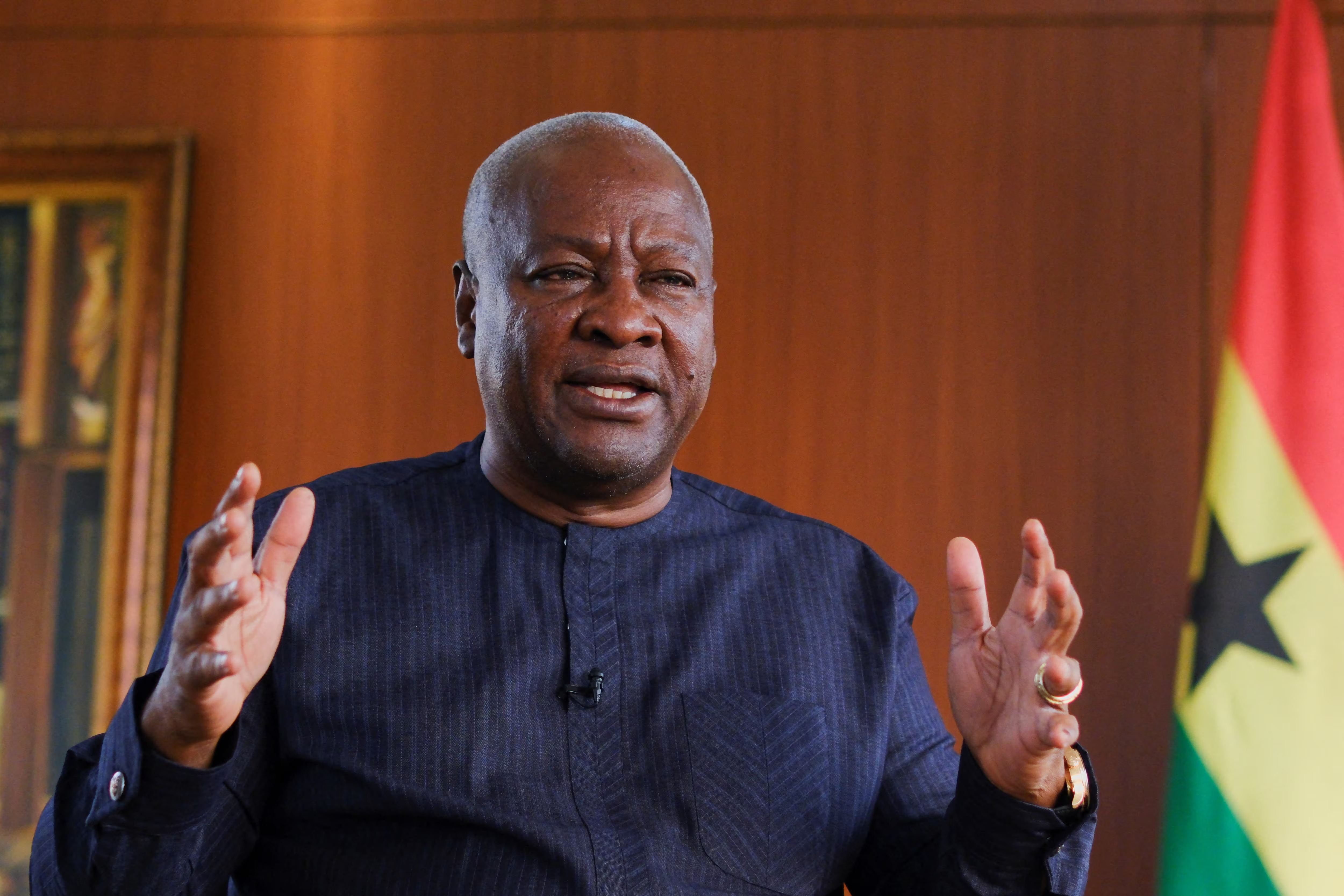
Gyamfi stated that the approach aligns with President John Dramani Mahama’s broader vision for the economy. “His instructions were very clear… to ensure that we move Ghana away from extraction to full-value optimisation, true value addition,” he said.
The agreement also gives the state a direct stake in the refinery. Ghana will hold a 15 percent free carried interest in Gold Coast Refinery through GoldBod, positioning the country as a partner in the business rather than merely a client.
“We are not some strangers who are going to be refining our gold at Gold Coast Refinery… that refinery is also ours,” Gyamfi stated.
He disclosed that the push for local refining followed concerns that Ghana’s biggest refinery was operating below capacity, while nearly all gold exports left the country in raw form.
“99.9% of all the gold we export… is exported in this raw form,” he said, describing the situation as “very troubling.”
The refined gold will meet a minimum purity of 99.5 percent, with the capacity to reach higher international standards. The partnership also brings on board Rand Refinery, Africa’s only LBMA-accredited refinery, to provide technical support and help Ghana work towards securing LBMA accreditation.
Beyond boosting value addition, the agreement is expected to retain millions of dollars in refining fees within the local economy, support continuous refinery operations, create jobs, and increase tax and dividend revenues for the state.
Source: www.kumasimail.com