

















President John Dramani Mahama has endorsed a broad package of reforms aimed at increasing Ghanaian ownership and participation in the mining sector.


The measures were announced at the maiden Mining Local Content Summit in Takoradi by the Chief Executive Officer of the Minerals Commission, Isaac Tandoh.
The two-day event, held under the theme “Strengthening Local Content and Indigenization: Building a Resilient Mining Sector in Ghana,” brought together government officials, industry players and local entrepreneurs.
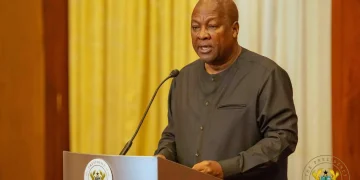
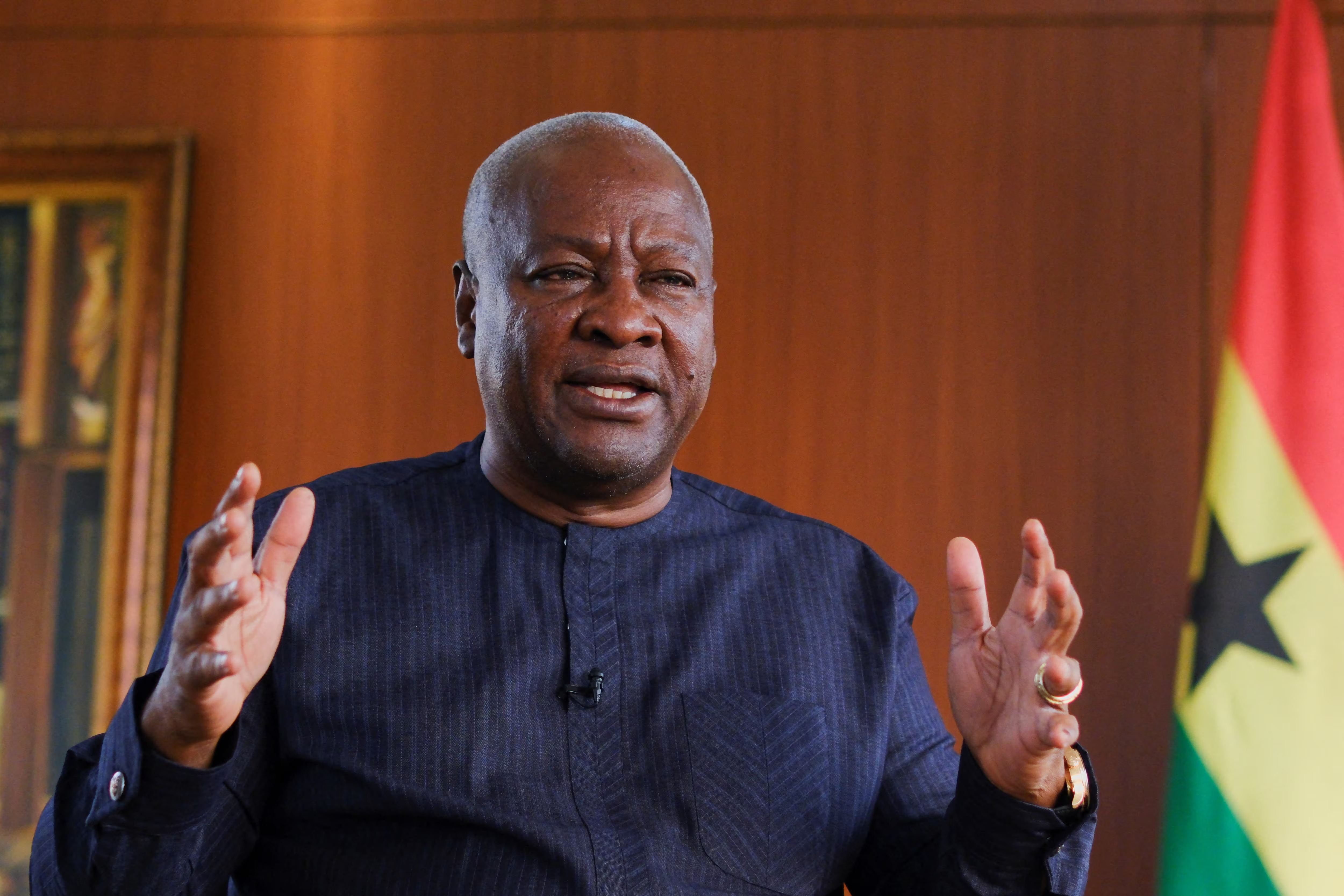
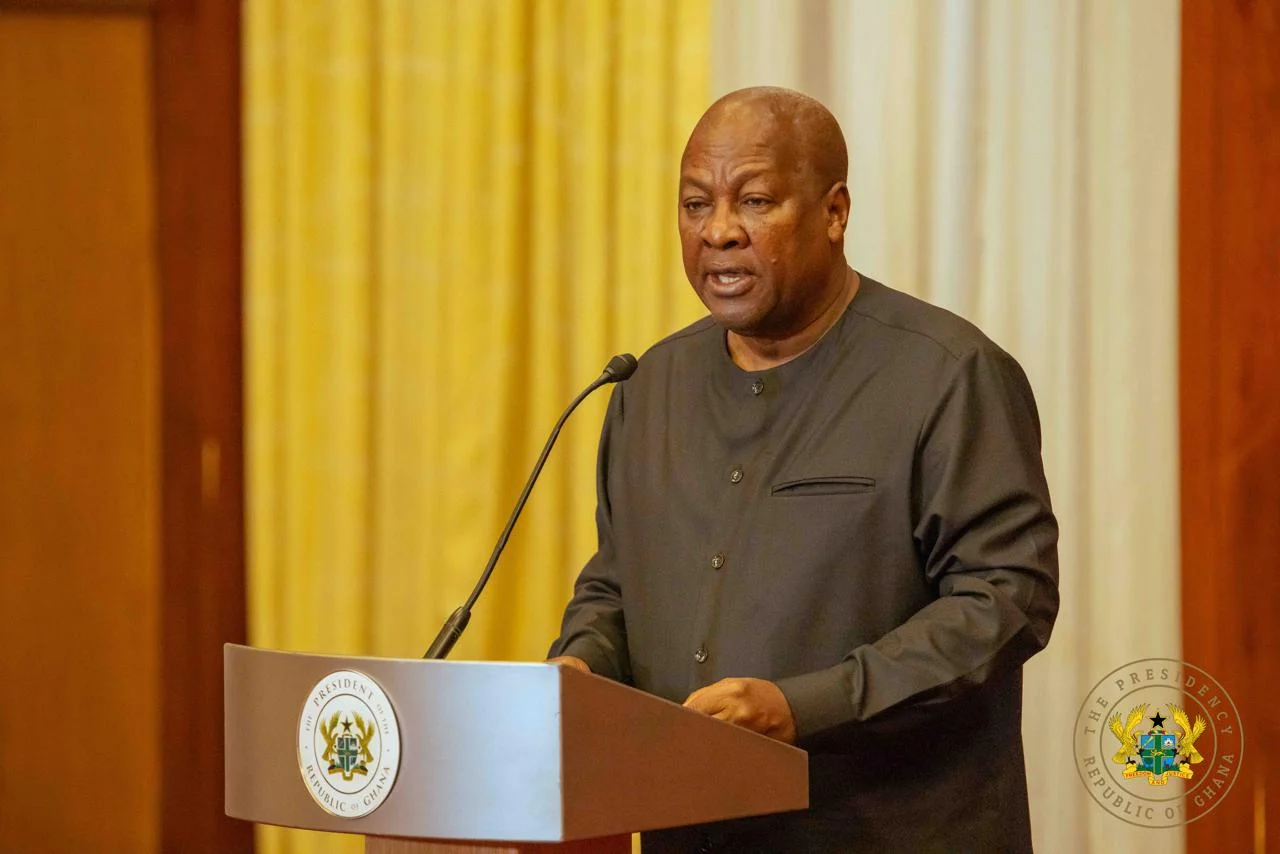
Speaking as Guest of Honour, President Mahama said the reforms were central to his administration’s “reset” agenda and intended to ensure that the country’s mineral wealth translates into tangible benefits for citizens.
“Local companies must secure commanding heights in the economy, particularly within the mining industry,” he said.
He commended the Minister for Lands and Natural Resources and the Board of the Minerals Commission for organising what he described as a transformative summit aimed at strengthening indigenous businesses. After delivering his address, the president officially opened the event and toured exhibition stands showcasing mining-related goods and services.
Limited local participation
Ghana’s mining sector accounts for about 43% of merchandise exports, making it a key pillar of the national economy. However, the Minister for Lands and Natural Resources, Emmanuel Armah-Kofi Buah, said local participation remains limited.
According to him, Ghanaian businesses capture less than 40% of procurement spending in the sector, while more than 70% of high-value services are still dominated by foreign suppliers.
He said bridging the gap would require strategic partnerships, technology transfer and sustained capacity-building for local firms. He also warned against the practice of “fronting”, in which foreign entities use Ghanaian nominees to secure mineral rights, describing it as “a direct theft of national opportunity”.
Licences revoked
Mr Tandoh outlined several reforms, including the revocation of more than 300 small-scale mining licences acquired through irregular means.
District Mining Committees will now play a mandatory role in reviewing and recommending all small-scale licence applications before approval.
He said the Minerals and Mining Act (Act 703) and the 2014 Minerals and Mining Policy had been comprehensively reviewed, with new legislative instruments introduced to close legal loopholes. Legislative Instrument 2462, which previously allowed mining in forest reserves, has been revoked.
A new medium-scale licensing category has also been introduced to bridge the gap between small- and large-scale operations. Meanwhile, stability and development agreements are being phased out, with a new royalty regime expected to allow Ghana to capture greater value during periods of rising gold prices.
Local content requirements will now be embedded in mining agreements, procurement decisions and employment policies, officials said.
Focus on ownership and transparency
A key element of the reforms is the elimination of “fronting”, which authorities link to the rise in illegal mining, known locally as galamsey.
“Employment is not the same as ownership. Labour is not the same as control,” Mr Tandoh told participants. “Our people are working in the mines, agreed, but do they own the mines?”
He said the changes were not intended to deter investors but to ensure equitable benefit-sharing and long-term sustainability. The Minerals Commission, he added, would enforce regulations “without fear or favour”.
Mr Tandoh also announced plans for a digital transformation drive to improve efficiency and transparency in the regulation of the sector.
Officials say the reforms mark a significant shift in Ghana’s mining policy, aimed at strengthening indigenous participation and ensuring that mineral revenues contribute to inclusive and sustainable national development.
Source: www.kumasimail.com