












The Minority Caucus in Parliament is demanding a bipartisan parliamentary inquiry into the circumstances under which Ghana lost $214 million in the first nine months of 2025 under the Gold for Reserve Programme.
The caucus said such an ad hoc investigative committee should have the power to subpoena the Governor of the Bank of Ghana (BoG), the Chief Executive of the Ghana Gold Board, and other persons to provide answers into how such a loss occurred.


The probe would demand all the contracts, licenses, intermediaries, and other information that were required for the public to understand in detail what happened and to institute measures to ensure that such losses do not happen again.
“And where negligence or corruption is proven, prosecutions must follow and all recoverable funds must be clawed back to the state. This crisis is not about politics but about whether Ghana still stands as a guardian of the resources that we have been given and we have the ability to use them for generations unborn, or whether temporary gains will lead us to irresponsible behaviour that leads us into debt and destruction of our environment,” they said.
Other demands
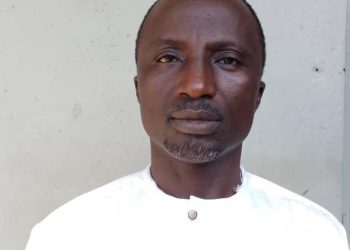
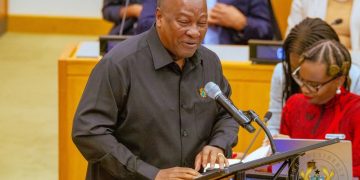
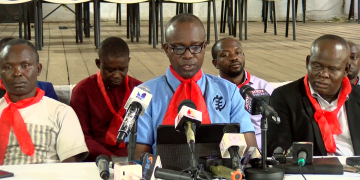
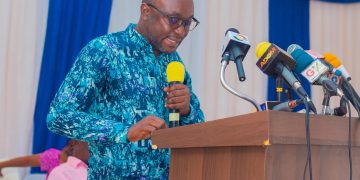
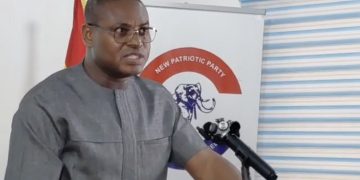
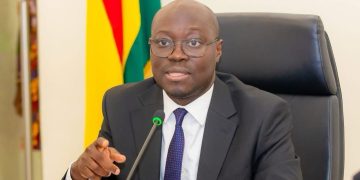
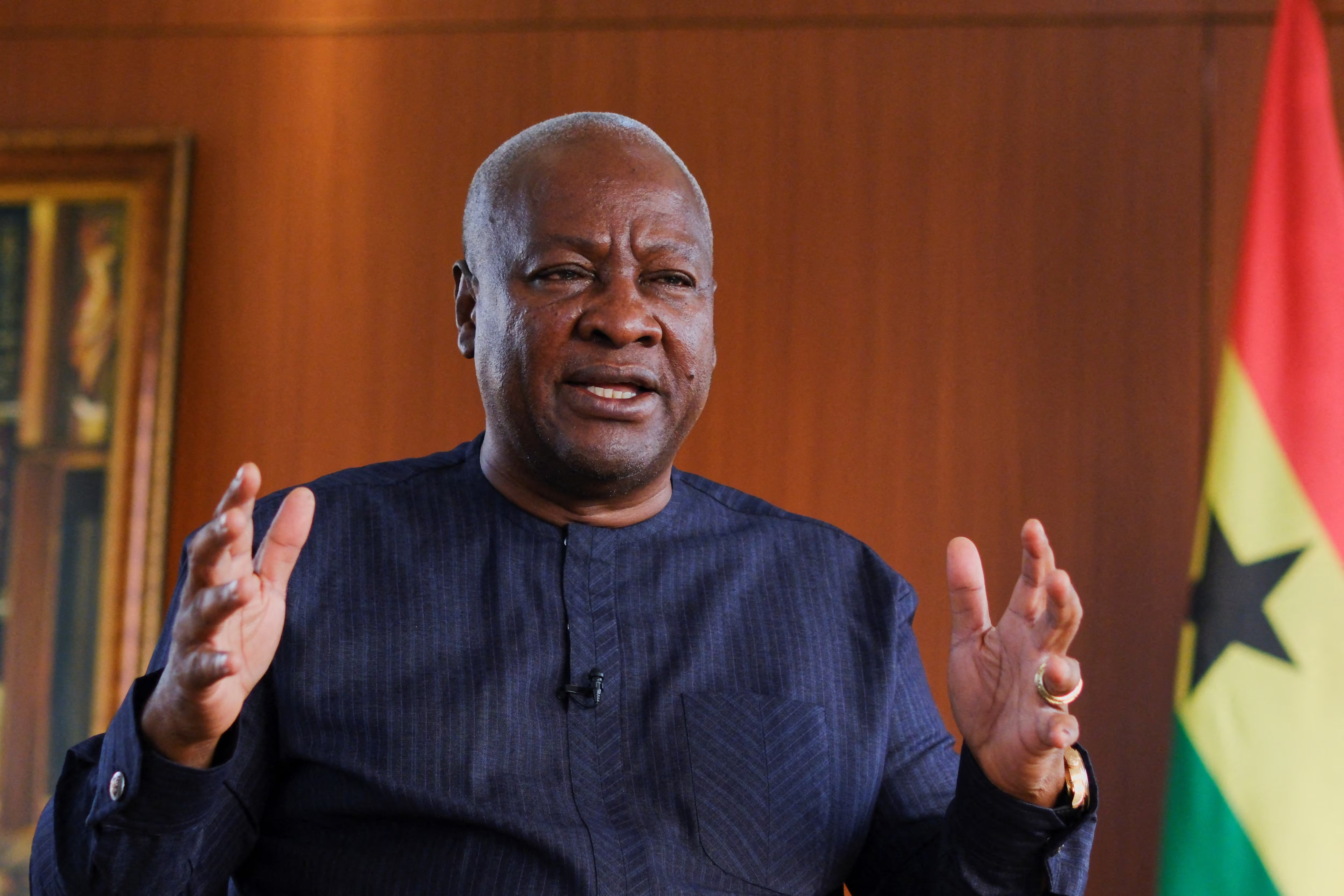
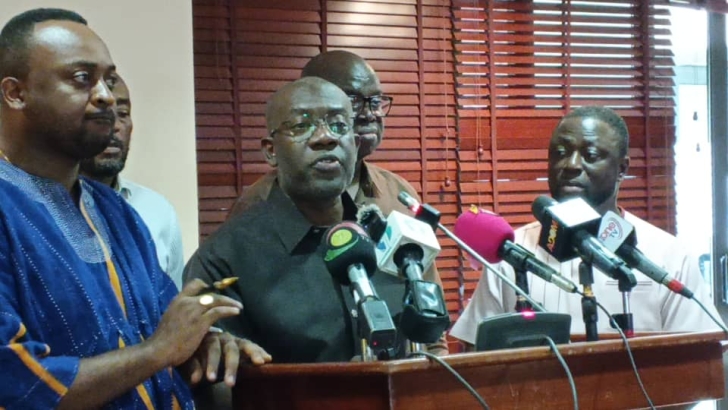
Speaking on behalf of the Minority Caucus at a press conference in Parliament on Monday [Dec 29, 2025], the Member of Parliament (MP) for Ofoase-Ayirebi, Kojo Oppong Nkrumah said the probe would also help to establish how one Alhaji Bawa of Bawa Rock Limited was selected to become the only aggregator licensed by the GoldBod to purchase all artisanal gold directly for the Goldbod from suppliers across the country.
“Under such bipartisan inquiry, we will be expecting the BoG and the GoldBod to publish the fee structure, the pricing formula, the aggregator selecting criteria, and all foreign exchange arrangements that they had tied to the scheme, which had led to the loss.
“One of the things we will be asking for is the suspension of permits in forest reserves and the introduction of serious measures on traceability because, as at now, we have every reason to believe that state money is being used to buy galamsey gold,” he said.
IMF revelation
Mr Nkrumah said per the International Monetary Fund (IMF), Ghana lost $214 million in the first nine months of 2025 under the gold for reserve scheme.
He said per the Minority Caucus’s calculation, such a loss would increase to $300 million by the close of this year. Explaining the rationale for the losses, he said small-scale miners would not sell unless they were paid global market prices, even if a slight discount was given to them, and at an exchange rate which the forex bureau used.
He again said the Goldbod therefore had to pay minus at the real market value.
He said the Goldbod then sold the dollars it received from offshore buyers back to the BoG at the BoG or interbank rate, which was a weaker rate.
He explained that the Goldbod protected its books by passing the exchange rate losses directly onto the BoG. “So this is not a market fluctuation problem, but it is a system that is designed to make losses, and for the state to bleed so intermediaries will remain secure and profitable,” he said.
Ignored suggestion
Mr Nkrumah recalled that when the Gold Board Act was being passed, the Minority extensively outlined why the regulator should be decoupled from a commercial entity that could do gold trade and make a profit.
He said the Minority suggested that it would be better to have a limited liability company with capital so that trade losses would not happen.
“This is exactly what has happened now, and so far $214 million of loss is going towards $300 million by the end of the year,” he said.
Mr Nkrumah said the current arrangement was not how the original structure of the gold for reserves programme was designed.
He said the original structure was a sovereign reserve building tool to help Ghana accumulate physical gold, strengthen its balance sheet, reduce its reliance on foreign currency borrowing, and gradually stabilise the cedi.
He pointed out that under the original design, which was introduced by the New Patriotic Party, Ghana’s reserves increased from 8.7 tonnes to 31 tonnes in just two years.
Intermediary
No losses accrued because BoG bought physical gold directly for its reserves and not through intermediaries like Alhaji Bawa and not for speculative purposes, he said.
“Now the model has been changed contrary to the advice and all the advocacy that we did and the BoG, under the new reset, has ceded their mandate to the Goldbod, and Goldbod has also ceded to a private company, Bawa Rock Limited, which now operates primarily as a trading company, not a reserve builder.
“And the moment we shift from holding strategic gold to trading gold, pricing and forex risks will appear, and the taxpayer in the end is the one who has to pay the $300 million at the end of the year,” he said.
Source: www.kumasimail.com