


















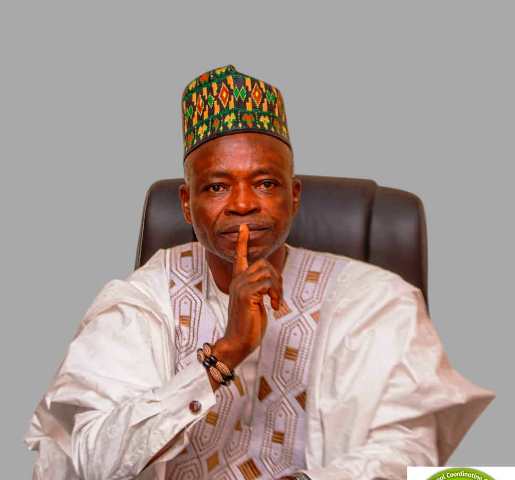
The Northern Region is consolidating its position as Ghana’s leading food-producing hub, Regional Minister Hon. Ali Adolf John has said, underscoring agriculture as a critical pillar in President John Dramani Mahama’s reset agenda for national growth and food security.


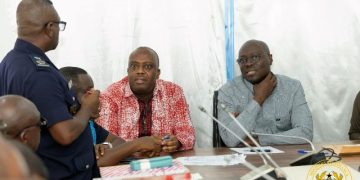
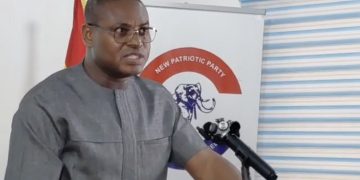
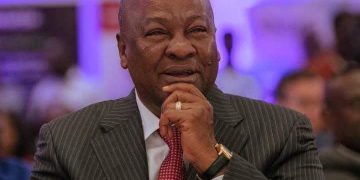
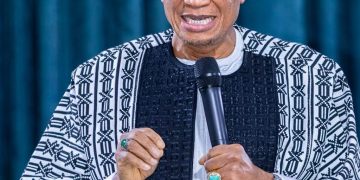
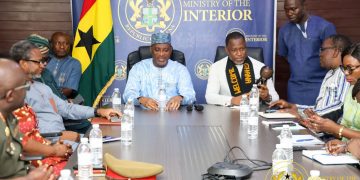
Addressing stakeholders at the Second Meeting of the Expanded Northern Regional Coordinating Council in Tamale on Monday, December 22, 2025, Hon. Adolf said the region’s agricultural output remains unmatched and reflects the strategic focus of the Mahama government on revitalising the productive sectors of the economy.
“The Northern Region continues to be the backbone of Ghana’s food supply. What we are witnessing today is the result of deliberate policies and renewed commitment under President John Dramani Mahama to empower farmers and strengthen local production,” the Regional Minister stated.
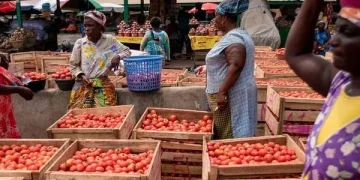
He disclosed that in 2025 alone, the region cultivated approximately 652,000 hectares of farmland, producing an estimated 3.6 million metric tons of food crops. Yam production accounted for 118,529 hectares, yielding more than 1.8 million metric tons, firmly positioning the Northern Region as Ghana’s leading yam-producing area.
Cassava output stood at 810,691 metric tons from 60,123 hectares, while maize cultivation covered 150,104 hectares, with an expected yield of 294,832 metric tons.
Hon. Adolf further revealed that the region leads nationwide in farmer registration under the Feed Ghana Programme, with 93,591 farmers registered, nearly 40,000 of them women.
“The strong participation of women tells us that our agricultural transformation is inclusive. This is exactly the kind of impact President Mahama envisions – growth that leaves no one behind,” he added.
He cited the successful hosting of the 41st Farmers’ Day celebrations at Kulkpeniduli in the Yendi Municipality as a clear demonstration of the resilience and productivity of farmers in the region, describing it as “a moment that showcased the renewed confidence of the farming community in government support.”
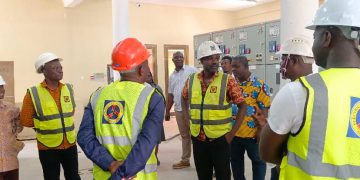
Beyond agriculture, the Regional Minister said the Mahama administration is steadily addressing infrastructure deficits to support human capital development. He announced that 97 education infrastructure projects including classroom blocks, dormitories, libraries, staff bungalows and assembly halls have been awarded across the region.
However, he expressed concern over learning outcomes, noting that only 51.6 per cent of candidates who sat for the 2025 Basic Education Certificate Examination (BECE) passed at least six subjects, while the 2025 WASSCE results were also “generally not encouraging.”
“Infrastructure alone is not enough. We must match these investments with improved supervision, teaching quality and accountability,” he said, directing the Regional Director of Education to present a detailed analysis to guide corrective interventions.
On water and sanitation, Hon. Adolf acknowledged persistent challenges, particularly during the dry season, but assured residents that relief is imminent.
“Provision has been made in the 2026 Budget to address water supply challenges in Tamale and Yendi. These interventions will soon take off as part of government’s broader commitment to dignity and public health,” he said.
He described sanitation conditions in parts of Greater Tamale as worrying, citing choked drains and indiscriminate dumping of refuse, and urged the Tamale Metropolitan and Sagnarigu Municipal Assemblies to act decisively. He also called for strict enforcement of the monthly sanitation exercise across all districts.
In a move to enhance public safety, the Regional Minister announced the distribution of 1,600 security streetlights to MMDAs, with each assembly receiving 100 lights.
“These lights are strictly for public spaces. They are meant to improve security and must not be diverted for private use,” he cautioned.
While commending security agencies for maintaining relative peace, Hon. Adolf warned that drug abuse among the youth poses a growing threat to development. He welcomed the deployment of a special police taskforce to combat drug-related activities and appealed to the public to cooperate with law enforcement.
“Protecting our youth is non-negotiable. If we lose them to drugs, we lose the future of this region,” he said.
The Regional Minister called on Metropolitan, Municipal and District Chief Executives, traditional authorities and development partners to deepen collaboration in support of the Mahama government’s development agenda.
“This meeting is about unity of purpose. If we work together, the Northern Region will not only succeed but will lead Ghana’s transformation under President John Dramani Mahama,” he stressed.
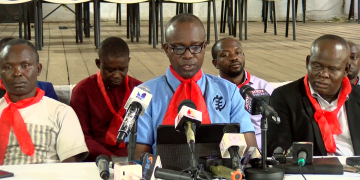
The meeting featured a detailed presentation by the Regional Development Planning Officer, Alhaji Abukari Inusah, on key development challenges and priorities, followed by extensive deliberations aimed at accelerating sustainable development across the region.
Source: www.kumasimail.com