

























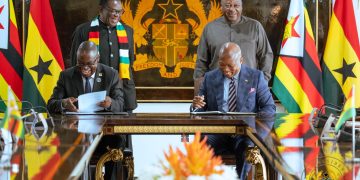



The Governor of the Bank of Ghana, Dr. Johnson Pandit Asiamah, on Wednesday said Ghana’s economy has shown significant signs of recovery, with inflation declining sharply and the cedi ending 2025 as one of Africa’s stronger-performing currencies, but cautioned that the gains must be sustained through discipline and sound leadership.


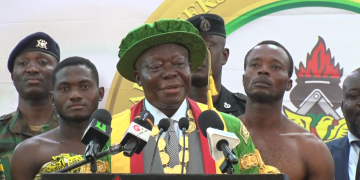
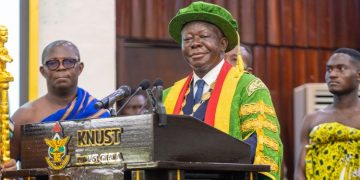
Speaking during a public courtesy visit by the Asantehene, Otumfuo Osei Tutu II, to the Bank of Ghana in Accra, Dr. Asiamah said inflation fell from 23.8 percent in December 2024 to 5.4 percent by December 2025, reflecting what he described as broad-based disinflation across food and non-food items.
He attributed the improvement to sustained monetary discipline, improved food supply conditions, and closer coordination between the Bank of Ghana and the Ministry of Finance.
“As inflation pressures eased and expectations re-anchored, the Bank was able to recalibrate its policy stance carefully,” Dr. Asiamah said, noting that the Monetary Policy Rate was reduced from 27 percent to 18 percent by November 2025 to support credit growth while preserving price stability.
On the external front, the Governor said Ghana’s gross international reserves rose to about US$13.83 billion by the end of December 2025, providing nearly six months of import cover, while trade performance and investor confidence improved.
Responding to a question previously raised by the Asantehene about the sustainability of the cedi’s appreciation, Dr. Asiamah said the currency ended 2025 at about GH¢10.67 to the US dollar, a performance that Forbes ranked among the strongest on the African continent.
“This outcome reflects improved sentiment, stronger reserves, reduced inflation, and restored policy credibility,” he said, adding, however, that exchange rate stability must be “earned continuously.”
“We must not confuse improvement with permanence,” Dr. Asiamah cautioned. “A currency remains strong only when the real economy beneath it is productive, competitive, and disciplined.”
He stressed that sustaining the cedi’s performance would depend on fiscal restraint, increased domestic production, export growth, and long-term economic planning rather than short-term consumption.
Dr. Asiamah praised Otumfuo Osei Tutu II for his consistent advocacy for discipline, prudent use of public resources, and development that creates real opportunities for citizens, describing the Asantehene’s leadership as “quiet, steady, and deeply anchored in wisdom.”
According to the Governor, Ghana’s economic recovery must now translate into improved livelihoods, including jobs for the youth, stronger local industry, and access to affordable credit without reigniting inflation.
“The Bank of Ghana is fully committed to playing its role firmly, independently, and professionally to ensure that these gains become durable and inclusive,” he said.
The Asantehene’s visit, themed “Stability, Discipline, and Sustainable Prosperity: Reflections on Leadership, the Cedi, and Ghana’s Economic Path,” was described by the Bank as timely, coming at a critical phase of Ghana’s economic recovery.
Otumfuo Osei Tutu II has over the years played a prominent role in national dialogue on peace, unity, and development, often urging leaders to prioritize discipline, productivity, and long-term national interest.
Dr. Asiamah thanked the Asantehene for his counsel and support, saying his leadership continues to underscore the link between social stability and economic progress.
Source: www.kumasimail.com