

























Parliament of Ghana has approved extensions to two major petroleum agreements, a move the government says will help sustain production in ageing oil and gas fields and unlock billions of dollars in new investment.


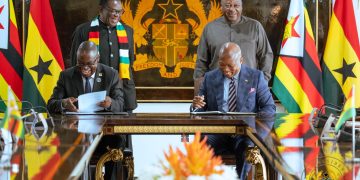
Lawmakers voted to extend the West Cape Three Points (WCTP) and Deepwater Tano (DWT) block agreements to 31 December 2040.
The decision is expected to unlock up to $2bn in additional capital expenditure, including the drilling of new wells and the installation of subsea infrastructure to counter declining output in mature fields.
The amended agreements involve the government, the Ghana National Petroleum Corporation (GNPC) and its exploration subsidiary, along with international partners including Tullow Ghana Limited, Kosmos Energy and PetroSA.
Parliament also approved a master gas agreement between the government, GNPC and the contractor group.
Safeguarding mature fields
Presenting the report of the Energy Committee to the House, its chairman Emmanuel Bedzrah said the extensions were justified to safeguard continuity in upstream petroleum operations and sustain production in mature fields.
According to the committee’s report, the existing contractors have extensive operational knowledge of the Jubilee and TEN fields. Maintaining the current arrangements, it said, would reduce transition risks and prevent potential production disruptions that could arise from early licence termination or a change of operator.
The report also cited significant investment commitments under the revised agreements. These investments are intended to slow natural production decline, stabilise oil output and enhance gas recovery, thereby extending the economic life of the fields and improving long-term petroleum revenues.
Under the amended terms, GNPC will gain an additional 10% participating interest from July 2036. This would bring its total interest to 22.5% in the WCTP agreement and 25% in the DWT agreement.
The extended field life is projected to generate about $374m in additional value to the state from increased production and prolonged revenue flows, including an estimated $255m in gas savings, the report said.
Tax offset mechanism
The committee also addressed a request by contractors for a corporate income tax (CIT) offset arrangement to serve as a government-backed payment security mechanism for gas sales to GNPC.
According to the report, the proposal is linked to outstanding debts owed by the state for gas supplies. As of the end of November 2025, about $165.15m was owed under the Jubilee Gas Sale Agreement, covering roughly 15 months.
The proposed tax offset would allow contractors to offset amounts owed against their corporate income tax liabilities. The report described the mechanism as non-interest-bearing and fiscally efficient, arguing that it would avoid additional borrowing costs or increased debt exposure compared with instruments such as letters of credit.
In line with the Petroleum Revenue Management Act, 2011 (Act 815), the Ministry of Finance has undertaken to pay any corporate income tax amounts offset by contractors into the Petroleum Holding Fund within 60 days after the end of the relevant fiscal quarter.
Source: www.kumasimail.com