












In Wa West in the Upper West Region of Ghana, development is no longer a distant promise. It is becoming a lived experience, shaped deliberately from the ground up. Across communities where distance and deprivation have long delayed opportunity, a quiet but determined reset is taking place.


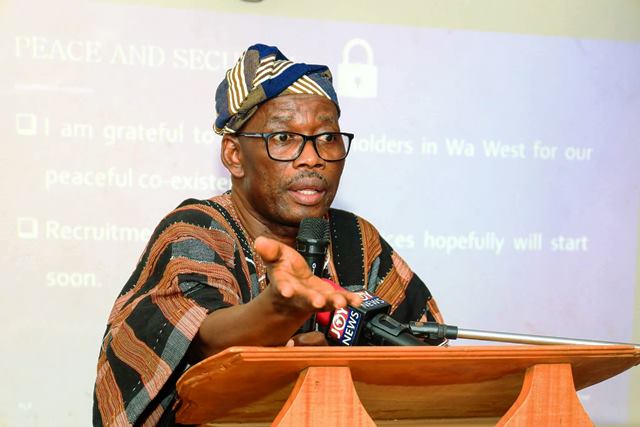
This reset reflects the broader Reset Agenda of President John Dramani Mahama, which places human capital, equity, and inclusive growth at the centre of national development. In Wa West, that vision is being translated into action through the leadership of the Member of Parliament, Hon. Peter Lanchene Toobu.
Attacking Illiteracy at the Base
During the 2024 election campaign, Hon. Toobu encountered several communities with populations of between 300 and 500 people without a single educational facility. For him, this was not just a statistic – it was a warning sign.
“Children in these communities are often too young to walk long distances to access education, and when that happens, we lose them very early in life,” he observed.
Convinced that development must begin from the earliest stage of life, the MP is leading an initiative to establish kindergarten schools in ten underserved communities beginning in 2026. The approach is deliberately modest but deeply empowering and anchored on communal effort rather than dependency.
“Community ownership, not dependency, is the focus,” Hon. Toobu emphasizes.
Each KG will be supported initially by a volunteer teacher on a monthly stipend, with proper orientation carried out in consultation with the District Director of Education. The plan is for these schools to transition smoothly into the public education system once the state takes over.
Beyond the classroom, the impact is expected to ripple through households.
“This will allow women to leave their young children in school before going to the farm or the market, knowing they are safe and learning,” he explains.
For Hon. Toobu, the fight against illiteracy is urgent and non-negotiable.
“Illiteracy is cancerous,” he says plainly. “Let posterity be fair to us.”
Water, Health, and Effective Learning Time
Education, he believes, cannot succeed without attention to basic human needs—chief among them, water.
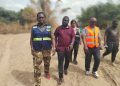
In Nerikuteng, the drilling of a new borehole is already easing daily hardship. Previously, pupils had to leave school repeatedly in search of drinking water, disrupting lessons and reducing effective contact hours.
“It is important to keep students in school for effective contact hours,” Hon. Toobu notes. “Water should not be the reason a child leaves class.”
The same intervention is being extended to Vieri and Goziiri, as part of a broader effort to reduce water-borne diseases and improve learning outcomes. These projects are running alongside the reshaping of major roads and the construction of new feeder roads to connect communities and unlock economic activity.
“Water is life,” the MP reminds. “But access, through roads and basic infrastructure, is what allows communities to truly grow.”
A Legacy Measured by Lives Changed
Taken together, these interventions signal a long-term vision for Wa West, one that aligns closely with President Mahama’s Reset Agenda of inclusive, people-centered development.
Hon. Toobu is optimistic about what lies ahead.
“I can see Wa West moving to the next level of our development ladder in the next five years,” he says.
For him, public office is ultimately about impact, not applause.
“I came to serve, and to leave an indelible mark for posterity,” Hon. Toobu affirms.
As Ghana resets, Wa West is resetting too—from the classroom, from the borehole, and from the feeder road. And in these carefully laid foundations lies the promise of a healthier, educated, and more resilient future for generations yet unborn.
Source: www.kumasimail.com