









































The Member of Parliament for Abuakwa South, Dr Kingsley Agyemang, has criticised the Driver and Vehicle Licensing Authority’s (DVLA) directive accompanying the suspension of a proposed new vehicle number plate system, warning of potential breaches of compulsory motor insurance laws and risks to public safety.


In a statement issued today, Dr Agyemang welcomed the DVLA’s decision to suspend the new system, originally scheduled for January 1, 2026, but expressed grave concerns over the authority’s instruction permitting vehicles with temporary Drive from Port (DP) and Defective Vehicle (DV) plates to continue operations “until further notice”.
“This directive is incompatible with the mandatory requirements of the Motor Vehicles (Third Party Insurance) Act, 1958 (No. 42). Under section 3 of the aforementioned legislation, every motor vehicle used on a highway must be covered by a valid policy of insurance against third-party risks. The purpose of this requirement is to ensure that innocent third parties are protected in the event of death, bodily injury, or property damage arising from road use,” Dr Agyemang stated.
He noted that the suspension stemmed from “serious concerns raised in Parliament regarding institutional readiness, stakeholder engagement, and the absence of the necessary legislative amendments to the Road Traffic Regulations, 2012 (L.I. 2180)”.
The MP added that these issues were compounded by a High Court injunction granted on December 23, 2025, restraining implementation of the system.
Dr Agyemang argued that the DVLA directive contravenes the Motor Vehicles (Third Party Insurance) Act, 1958 (Act 42), particularly Section 3, which requires every motor vehicle used on a highway to carry valid third-party insurance cover. This provision aims to protect third parties from death, bodily injury, or property damage arising from road accidents.
“DP and DV plates are, by their nature, temporary and conditional. Insurance cover issued in respect of such plates is limited in duration and scope, pending inspection and full registration. They are not intended to permit prolonged or indefinite use of vehicles on public roads,” he explained.

The lawmaker highlighted Sections 10 and 11 of the Act, which impose duties on insurers to satisfy third-party judgments, and Sections 16 and 17, which criminalise driving without valid insurance.
“Administrative directives cannot lawfully override these statutory obligations,” Dr Agyemang asserted.
He warned that allowing such vehicles on roads without proper insurance regularisation “places motorists, pedestrians, and passengers at unacceptable risk and undermines the integrity of Ghana’s compulsory motor insurance regime”.
Dr Agyemang has urged the Minister for Transport, Joseph Bukari Nikpe to intervene decisively, making four specific demands:
•   Regularise the status of DP and DV plates in strict compliance with the Motor Vehicles (Third Party Insurance) Act, 1958;

•   Ensure no vehicle operates on public highways without valid third-party insurance;

•   Issue clear policy direction to the DVLA to prevent uninsured road use; and

•   Safeguard public confidence in vehicle registration and road safety regulation.
The MP also called on the National Insurance Commission to enforce insurance provisions rigorously.
“Compulsory motor insurance exists to protect the public, not to accommodate administrative
uncertainty.
“The law is clear, and compliance is not optional, the National Insurance Commission must therefore rise to ensure strict enforcement of insurance provisions,” he concluded.
Background:
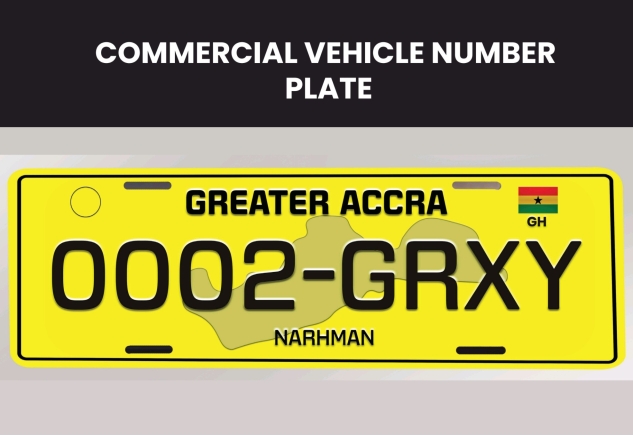
The Driver and Vehicle Licensing Authority (DVLA) has suspended the planned rollout of new vehicle number plates from January 2, 2026.
The Chief Executive Officer of the DVLA, Julius Neequaye Kotey announced this at a press conference in Accra on Wednesday December 24, 2025.
The move follows the pending approval of the new process by Parliament.
A proposed amendment to the Road Traffic Regulation, 2012 (L.I. 2180), which specifies the contents and format of vehicle number plates in Ghana, is still before Parliament and has not yet been approved.
In a press statement dated December 24, 2025, the DVLA explained that while Parliament amended the Road Traffic Act, 2004 (Act 683), the specific provisions in L.I. 2180 were not passed before Parliament went on recess on Friday, December 19, 2025.
“Until the legislative requirements are fully settled, we are unable to proceed with the rollout of the new RFID-embedded licence plates,” the DVLA said.
The DVLA in August 2025 announced a plan to abolish displaying the year of registration on vehicle number plates from January 2, 2026.
Source: www.Kumasimail.com