























In many communities across Northern Ghana, poverty is not abstract. It is measured in skipped meals, children sent home from school, untreated illnesses, and women forced to choose between survival and dignity.


For Inspire To Act, a women- and youth-rights focused non-profit based in Tamale, breaking this cycle begins with a simple but radical idea: trusting women with consistent support and walking with them long enough to rebuild their lives.
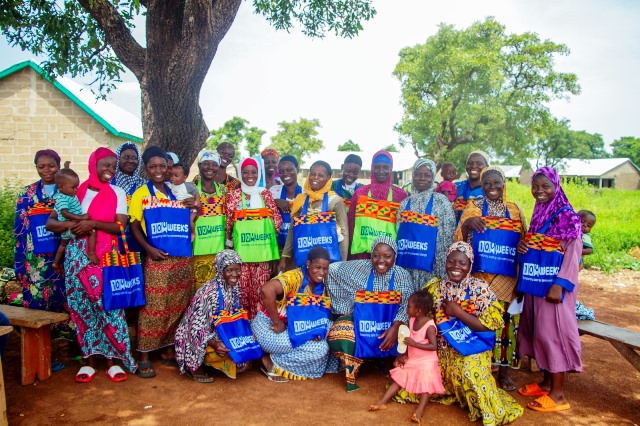
At the heart of this approach is the 100 Weeks Project, an unconditional cash transfer programme designed to support women living in extreme poverty over a two-year period. The project is currently being implemented across several districts in the Northern Region. They are: Tamale Metropolis, Sagnarigu Municipality, Kumbungu District, Savelugu Municipality, Nanton District, and Mion District.
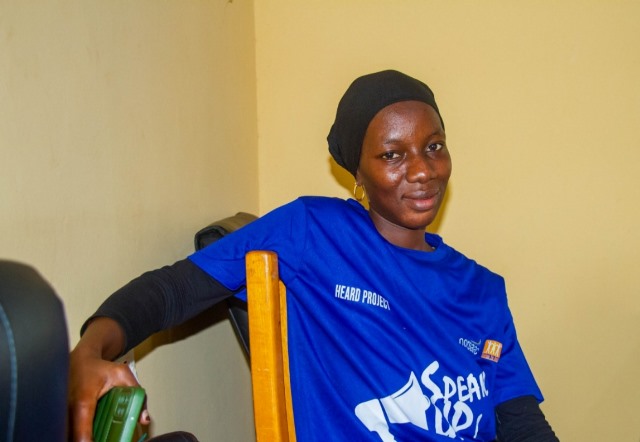
“The 100 Weeks Project is an economic empowerment programme where selected women receive unconditional weekly cash support,” explains Hajara Baba, a coach on the project. “The money helps them take care of their children’s education, household meals and also start small businesses that can sustain their families.”
Each woman receives €8 every week, equivalent to about 115 Ghana cedis, paid directly into her mobile money account. But cash alone is not the intervention.
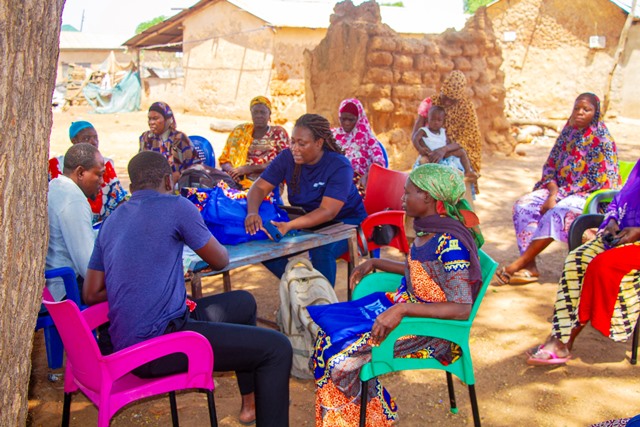
“Every single week, we build their capacity,” Hajara says. “We train them in personal development, entrepreneurship, life skills and financial literacy so they can manage the money well and move out of poverty.”
Beneficiaries are usually organised into groups of 20 women. Through a pooled rotating savings system known as a Cash round, each woman gets the opportunity to receive a lump sum of approximately 1,000 Ghana cedis, enabling her to start or expand her small business.
“The idea is not just survival,” Hajara adds. “It’s sustainability. After two years, the cash stops, but the acquired skills and small businesses remain.”

The impact of this approach is backed by data. According to Abdul-Rahman Abdallah, Monitoring and Evaluation Officer at Inspire To Act, baseline assessments revealed deep deprivation among the first group of beneficiaries.
“At the start, only six out of 40 women could afford three meals a day,” he says. “Even then, the meals were mostly carbohydrates, with very little nutritional balance.”
Many women skipped meals entirely, and 16 women reported that their children were not in school simply because they could not afford fees, uniforms, or basic supplies.
Less than a year into the programme, the situation has shifted dramatically.
“After about 42 weeks, almost all the women were eating three meals a day, and this time with balanced diets that include fish, meat, and eggs,” Abdul-Rahman explains. “Only two women still reported difficulty with regular meals.”
Education outcomes improved as well.
“All 16 women who had children out of school were able to send them back,” he says. “That is a major change, not just for the children, but for the future of these families.”
Health indicators followed the same pattern. Women reporting poor or unstable health dropped from 13 at baseline to 6, highlighting the strong link between economic stability and wellbeing.
Livelihoods also transformed. At the beginning, only two women had any form of income-generating activity. Today, nearly all beneficiaries are running small businesses, supported by training and the Cash round system.
“Only two women are still struggling with their business initiatives,” Abdul-Rahman notes. “For us, that is a powerful indicator of success.”
For Alhaji Abdul-Rashid Imoro, Executive Director of Inspire To Act, these results show why the 100Weeks model works — and why it must be scaled.
“The programme supports a woman continuously for 100 weeks,” he explains. “And when it is implemented well, it becomes self-sustaining.”

Unlike lump-sum grants that are often quickly absorbed by urgent needs, the steady and structured nature of the programme encourages discipline and long-term planning.
“When you give large sums of money at once, it often doesn’t succeed,” he says. “But with 100 Weeks, women are trained before they even receive the cash. Waste becomes very minimal.”
Looking ahead, Inspire To Act is planning to engage Members of Parliament and District Assemblies to replicate the model using local development funds, including the District Assemblies Common Fund.
“Our hope is that by the end of the 100 weeks, beneficiaries will no longer need support,” Alhaji Imoro says. “They should be confident, economically resilient, and even proud to recommend other women for similar opportunities.”
From weekly meals to thriving small businesses, from children returning to school to women reclaiming dignity, the 100 Weeks Project shows that poverty is not permanent when support is patient, structured and human centered.
Sometimes, transformation does not begin with a miracle — just 100 weeks of belief in a woman’s potential.
Source: www.kumasimail.com