
































The Millennium Development Authority (MiDA) is positioning Northern Ghana as a major agro-industrial hub under President John Dramani Mahama’s 24-Hour Economy Programme, following an extensive field assessment of agricultural corridors along the White and Black Volta River basins.


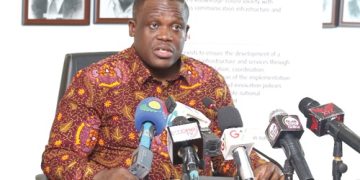
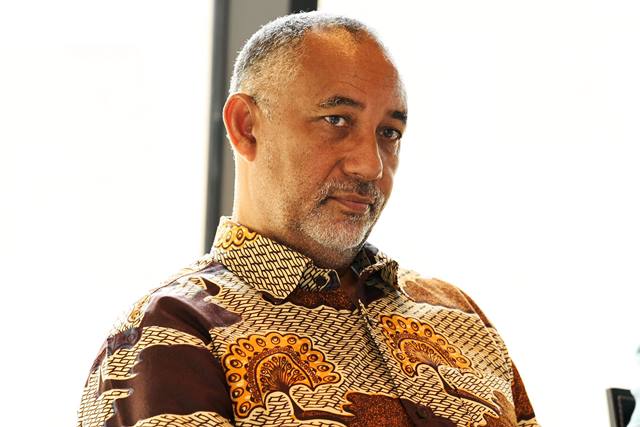
Speaking at a high-level stakeholder engagement in Tamale on Monday, MiDA Chief Executive Officer, Mr. Alex Mould, said the Authority had concluded an intensive tour across the Oti, Northern, Savannah, North East, Upper East and Upper West regions to assess land readiness for the establishment of Agro-Ecological Parks (AEPs).
“What we have seen on the ground confirms that the north has the scale, water resources and land suitability to anchor Ghana’s next phase of agro-industrial growth,” Mr. Mould said. “The AEPs are designed to drive round-the-clock production, value addition and job creation in line with the 24-Hour Economy vision.”
The 24-Hour Economy Programme, a flagship policy of President Mahama, seeks to shift Ghana from an import-dependent economy to a productive, export-driven system by enabling businesses—particularly in agriculture, agro-processing and manufacturing—to operate continuously in three-shift cycles. The policy is expected to create thousands of high-quality jobs, improve competitiveness and deepen value addition across the economy.
Mr. Mould explained that MiDA’s AEP model fits squarely into this framework by clustering production, processing, logistics and energy infrastructure within designated zones capable of supporting 24/7 operations.
“We are building modern agribusiness ecosystems—processing hubs, logistics chains and market access systems—that can function day and night,” he said. “This is how we unlock jobs for young people and build resilient rural economies.”
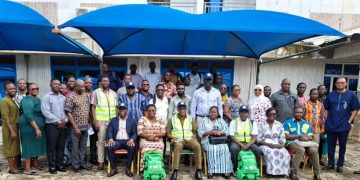
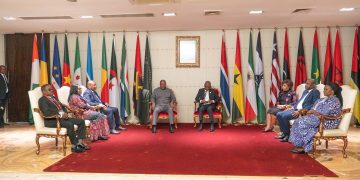
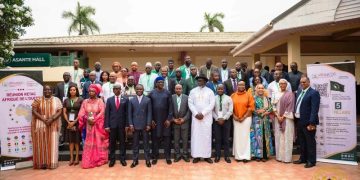
The stakeholder meeting, jointly convened by MiDA and the Northern Development Authority (NDA) at the NDA’s Tamale office, brought together representatives from Regional Coordinating Councils (RCCs), GIDA, CSIR-SARI, UDS, MOFA, EPA, the Forestry Commission, Water Resources Commission, and several civil society and development organisations operating within the Northern Savannah Ecological Zone (NSEZ).
Welcoming participants, Chief Executive Officer of the NDA, Dr. Emmanuel Abeere-Inga, reaffirmed the Authority’s mandate to coordinate development interventions across the zone and pledged full institutional backing for MiDA’s programmes.
“Effective coordination is central to transforming Northern Ghana,” Dr. Abeere-Inga said. “NDA has already developed a cross-regional coordination framework with RCCs and Chief Directors to address persistent development challenges, and we are ready to align that framework with MiDA’s interventions.”
He disclosed that NDA’s engagements with international development partners had further strengthened support for a harmonised approach to development planning in the north.
Board Chairman of MiDA, Mr. Charles Abugre, urged stakeholders to see the 24-Hour Economy as a shared national project rather than a government-only initiative.
“The Northern Savannah Ecological Zone has enormous untapped economic potential,” Mr. Abugre said. “If institutions work together and the private sector comes on board, we can accelerate growth and ensure that the benefits reach communities across the north.”
Under the 24-Hour Economy Programme, government plans to support businesses with incentives such as tax reliefs, improved security for night-time operations and upgraded energy and transport infrastructure through the ‘Connect 24’ framework, which integrates digital systems, logistics and sustainable power solutions.
Source: www.kumasimail.com