










A retired missionary, Dr. Ian Trail, once said, “Unity is not the absence of disagreement but a consensus to agree to work together.” In human institutions, especially political parties, difference is not a flaw; it is a natural expression of diversity and conviction.


What gives such institutions durability is not the silencing of dissent, but the wisdom to rise above it in pursuit of a higher collective purpose.
History, both local and global, consistently shows that political success is not merely the product of popularity, tribe, or religion, but of unity of purpose, clarity of vision, and disciplined organization.
Leadership undoubtedly plays a significant role in politics. Whoever leads a political party enjoys a strategic advantage, visibility, authority, and the responsibility of shaping direction. Yet leadership alone does not win elections. Parties win elections when they subordinate personal ambitions, internal sentiments, and factional preferences to a shared mission. (Campbell et al., 1960; Katz, 1980; Diamond, 2006; Afrobarometer, 2022).
The New Patriotic Party (NPP) has reached such a moment.
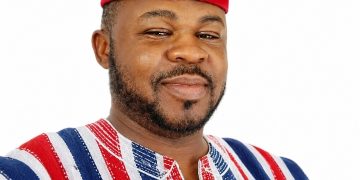
With the party’s democratic processes producing Dr. Mahamudu Bawumia as its elected candidate, the task before the NPP family is no longer to debate, hesitate, or remain quiet. The task is to unite, rally around the party’s vision, record, and future promise.
It is important to confront, honestly and calmly, some of the unspoken anxieties within sections of the party. Dr. Bawumia represents a demographic minority in terms of religion and tribe. In Ghanaian politics, these factors are sometimes whispered about, sometimes overstated, and often misunderstood. But political maturity demands that the NPP rise above such narrow calculations.
Political history is replete with examples where so-called “unlikely candidates” prevailed, not because they fit traditional expectations, but because their parties stood firmly behind them. Scholarly research and political commentary once described Barack Obama as an unlikely winner of the United States presidential election, a young senator, a racial minority, with a name many believed America was not ready to embrace. What changed the outcome was not his identity and leadership alone, but a party and movement that unified around a message of hope and collective purpose.
Nelson Mandela emerged from 27 years of imprisonment with no formal executive experience and led a country deeply divided by race, fear, and uncertainty. Many doubted whether a former political prisoner could govern a modern state.
What secured his victory was not personal popularity alone, but his party, the African National Congress (ANC), closing ranksand presenting Mandela as a symbol of reconciliation rather than revenge. The party’s unity reassured voters and the international community.
Parties do not win by liking a candidate; they win by mobilizing behind one. (Campbell et al., 1960)
US President Donald Trump was widely regarded as an outsider, rejected by party elites, and considered unelectable by most analysts. He had no political pedigree and was deeply polarizing. Yet, once he secured the Republican nomination, the party, despite internal discomfort, largely rallied behind him.
Even closer to home, John Agyekum Kufuor was once dismissed as “too soft,” “too gentlemanly,” and repeatedly unsuccessful after earlier losses to Prof. Adu Boahen and Jerry John Rawlings. But when the NPP finally united firmly behind him in 2000, skepticism gave way to confidence, and victory followed.
A recent example further underlines this point. After losing the 2016 election as an incumbent president, many political commentators and even party insiders had largely written off John Dramani Mahama as electorally exhausted. Yet the outcome of the 2024 election proved otherwise. What changed was not the Mahama personality or past defeat, but party resolve. When the National Democratic Congress (NDC) closed ranks, muted internal dissent, and deliberately projected unity behind a single candidate and message, it transformed perceived weakness into political momentum. The lesson is instructive: voters respond not only to candidates, but to the confidence a party shows in its own choice. Unity did not erase Mahama’s past; it reframed it and ultimately made victory possible.
For the NPP, the stakes of 2028 are far larger than the fortunes of any single leader. They include the preservation of the party’s ideological tradition, its development-oriented philosophy, and its long-term relevance in Ghana’s democratic evolution. Fragmentation, passive resistance, or selective enthusiasm would not weaken the Flagbearer-elect, Dr. Bawumia, alone; it would weaken the party itself.
This is why reconciliation within the NPP is not merely a moral appeal; it is a strategic necessity.
It must also be acknowledged, with honesty and maturity, that the internal contest produced harsh words and public pronouncements that will not simply disappear with the declaration of a flagbearer. Statements made in the heat of competition have a long shelf life in modern politics, often replayed by opponents long after internal contests have ended. During the primaries, Ken Ohene Agyapong publicly described Dr. Bawumia as dishonest, while Dr. Bryan Acheampong anchored parts of his campaign on interpretations of the 2024 election data that questioned Dr. Bawumia’s viability for 2028. These statements, whether tactical or emotional, now belong to the public record and may be weaponized by political opponents.
Yet history shows that remorse, humility, and open reconciliation within a party are not signs of weakness but of strategic wisdom. Public acknowledgment of excesses, sincere apologies, and deliberate efforts to heal internal wounds are often the very acts that restore credibility and signal readiness to govern.
When party leaders demonstrate the maturity to reconcile and move forward together, they deny opponents the opportunity to exploit internal fractures and instead project cohesion, discipline, and seriousness of purpose.
Party members who preferred other contenders must now see themselves not as defeated factions, but as co-owners of a collective project. NPP’s victory in 2028 will not be achieved by personality worship or individual heroics, but by disciplined messaging, grassroots mobilization, and a renewed emphasis on the party’s founding values, property-owning democracy, economic freedom, and inclusive national development.
The question before the party, therefore, is not whether 2028 is “for Bawumia” or “for someone else.” The real question is whether 2028 will be for the NPP.
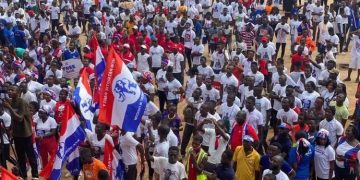
If the party speaks with one voice, campaigns with one vision, and presents a united front to the Ghanaian electorate, the internal differences of yesterday will become the collective strength of tomorrow. Unity does not erase diversity; it organizes it toward victory. History favors parties that understand this truth early enough.
The time has come for the NPP family to close ranks, mend internal divisions, and advance as one, because in politics, as in life, it is only the house built on unity that withstands the storm.
Source: Kwame Adinkrah, PhD | Broadcaster