





































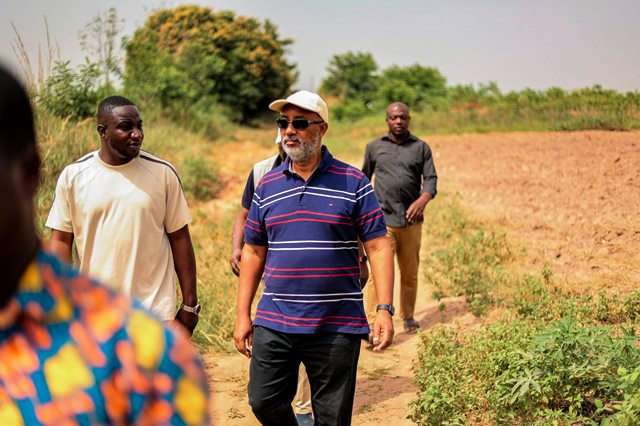
The Chief Executive Officer of the Millennium Development Authority (MiDA), Alex Mould, has sounded a strong warning over what he describes as widespread neglect of agricultural infrastructure across Ghana’s Middle Belt.


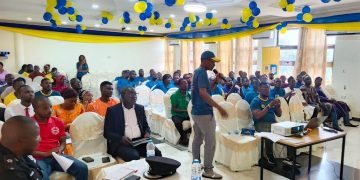
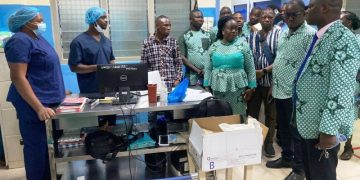
His concerns follow a seven-day field assessment tour across the Ashanti, Bono, Ahafo, and Bono East Regions, where MiDA inspected irrigation schemes, dams, inland valleys, markets, and agro-processing facilities, while engaging local authorities and agribusiness players to identify investment gaps.
“Going around the farming areas in this country has revealed that we have a lot of wasted assets. Investments have been made over the years, but there has been a lot of neglect in terms of operations and maintenance,” Mr. Mould said.
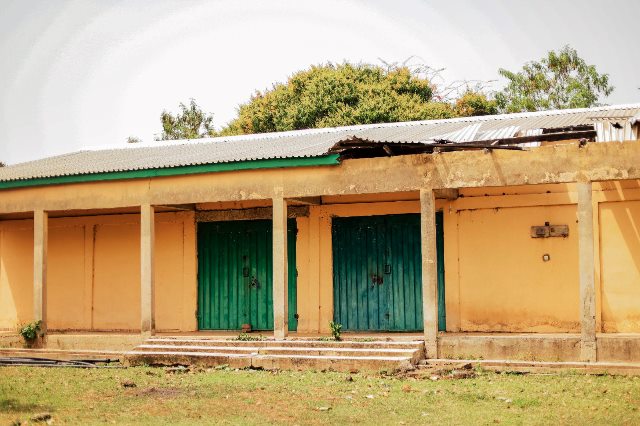
At the Subinja irrigation site, the situation was particularly stark. Critical infrastructure has been stripped, with key equipment missing.
“the pump house originally contained four pumps, an electricity transformer, but these installations have since been stolen,” Mr. Mould observed.
He stressed that reviving such facilities will require coordinated action, led by the Ghana Irrigation Development Authority (GIDA) and the Ministry of Food and Agriculture.
“To rehabilitate the dam, we will need GIDA to conduct a feasibility assessment on how to restore the equipment, dam and fields, rehabilitate the pump house, pumping and piping systems, and restore irrigation canals and reconnect electricity to the facility,” he said.
Beyond neglect, Mr. Mould pointed to major underutilisation of existing irrigation potential, especially in rice-growing areas in Tano North and South.
“We just left a rice irrigation field that has the capacity to cultivate about 1,000 acres but is currently producing only about 300 acres,” he revealed.
He attributed the shortfall to an incomplete dam project dating back to 2008, which continues to limit water supply.
According to him, completing the dam and installing a proper concrete canal system could unlock full production and enable multiple harvests each year.
“If we can supply water throughout the year, and provide improved agronomy practices, production could increase from about 1,000 tonnes of paddy rice annually to between 6,000 and 7,000 tonnes,” he said.
Mr. Mould described many of the sites visited as “brownfield opportunities” — existing but underperforming assets that can be quickly revived through targeted investment.
He added that scaling up production could pave the way for agro-processing facilities such as rice mills, boosting local agribusiness and reducing Ghana’s dependence on imported food.
Source: www.kumasimail.com