
































A new academic study has concluded that Ghana’s fight against illegal mining, known locally as galamsey, continues to falter due to a combination of corruption, cultural dynamics, and ineffective crisis communication.


The study which was conducted by a Ghanaian communication scholar and Senior Lecturer at the University of Media, Arts and Communication (UniMAC), Dr Albert Anani-Bossman, found that while successive governments have introduced measures to curb illegal mining, these efforts have largely delivered short-term gains, with little sustained impact.
Despite strong political rhetoric and interventions such as task forces and regulatory reforms, enforcement has been inconsistent, often weakened by allegations of official complicity and weak accountability systems.
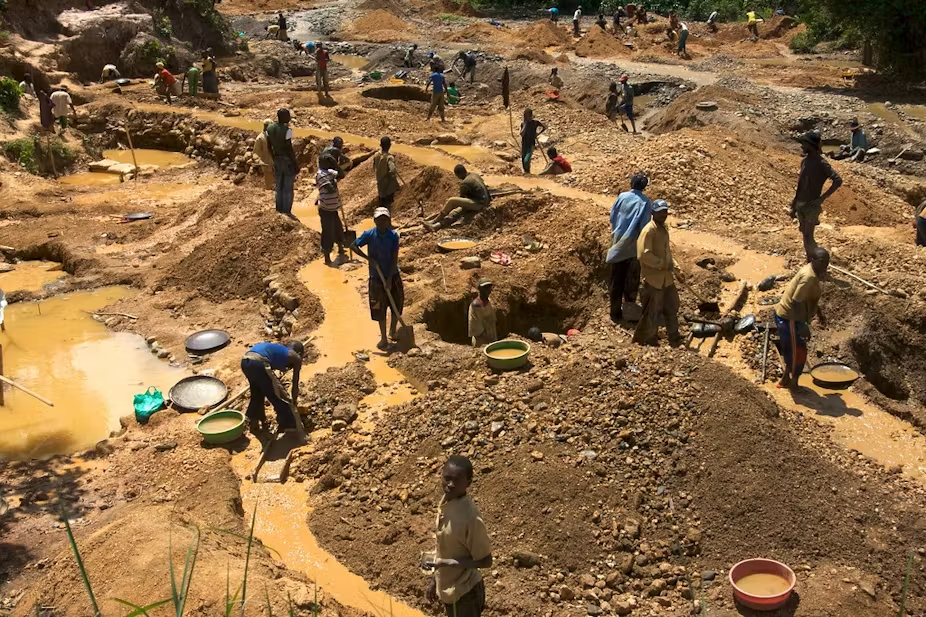
Illegal mining has, over the years, expanded from small-scale local activity into a widespread environmental crisis, severely affecting water bodies, agricultural land and rural livelihoods.
The situation has been exacerbated by the involvement of foreign actors and the increasing use of mechanised mining techniques, which have intensified environmental damage.
According to the study, Ghana’s political landscape has further complicated the response.
Deep partisan divisions have encouraged blame-shifting between major political parties rather than coordinated action, while official communication has often been perceived as defensive and lacking transparency.
This, the study notes, has contributed to the decline in public trust in government efforts to address the crisis. Economic realities also play a central role. In many affected communities, illegal mining provides a critical source of income, often far exceeding earnings from farming and other traditional livelihoods.
This has made local resistance to anti-galamsey measures more pronounced, particularly in areas with high unemployment.
The study also points to cultural factors shaping public response.
Respect for authority and a preference for social harmony can limit confrontation, while practices such as gift-giving and dwan¬tua—where influential figures intervene to seek pardon for offenders—have, in some cases, allowed illegal miners to escape punishment.
While Ghana’s media has played a significant watchdog role—through investigative reporting and campaigns that have drawn national attention to the crisis—the authors note that public pressure has often been difficult to sustain.
The researchers conclude that without stronger transparency, consistent enforcement and communication strategies that reflect Ghana’s socio-economic and cultural realities, efforts to end illegal mining are likely to remain ineffective.
Source: Starrfm