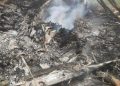










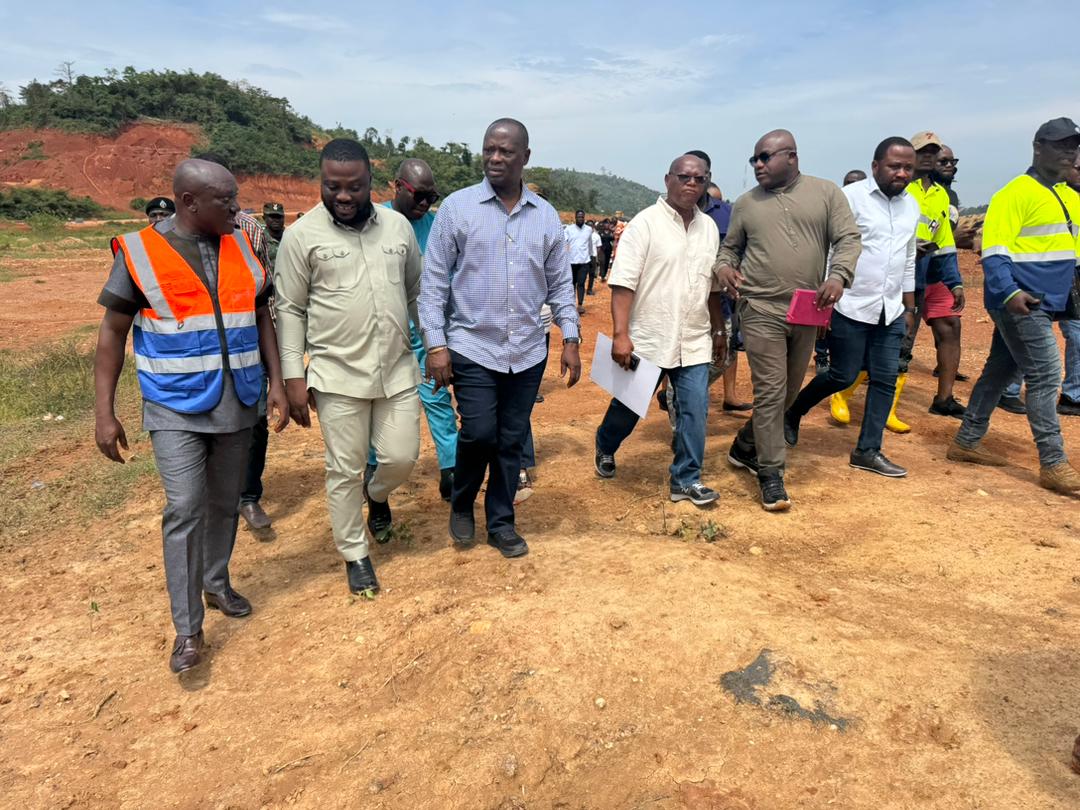
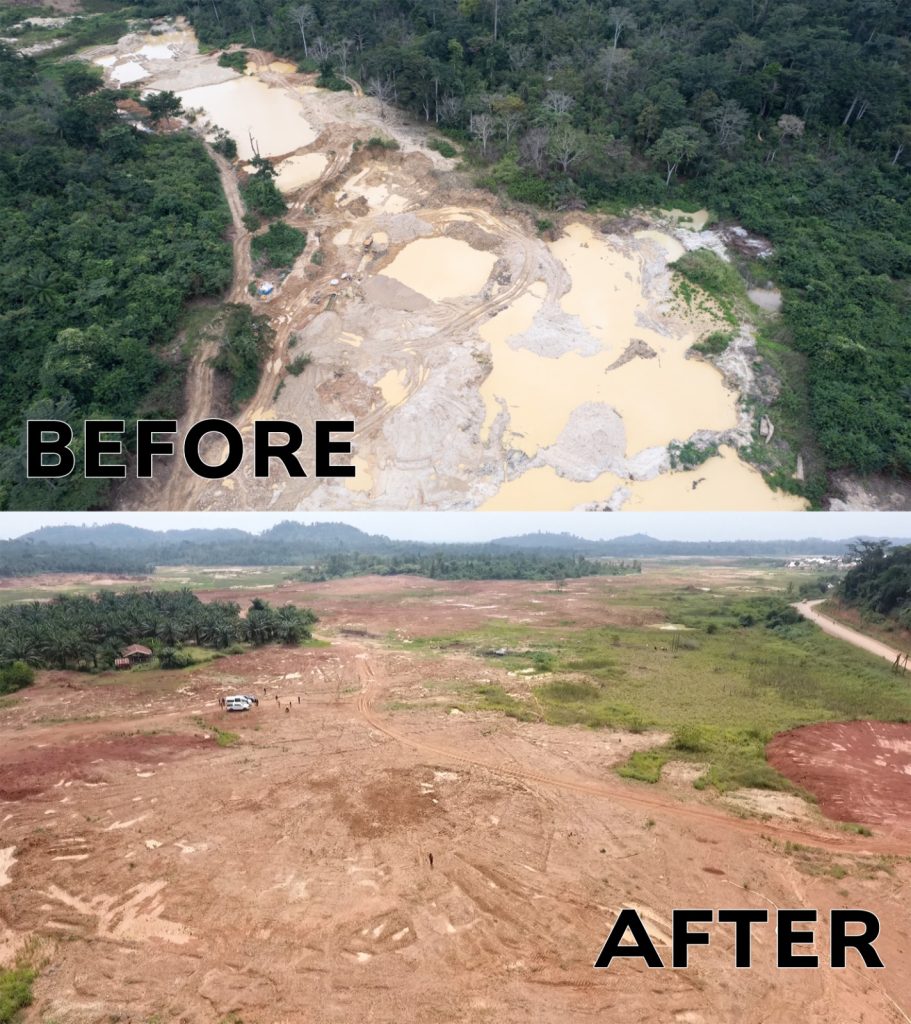
About 800 acres of land devastated by years of illegal mining at Nyankumase in the Manso Adubia District have been fully reclaimed, marking a major milestone in the Mahama administration’s renewed campaign to reverse the environmental damage caused by galamsey.


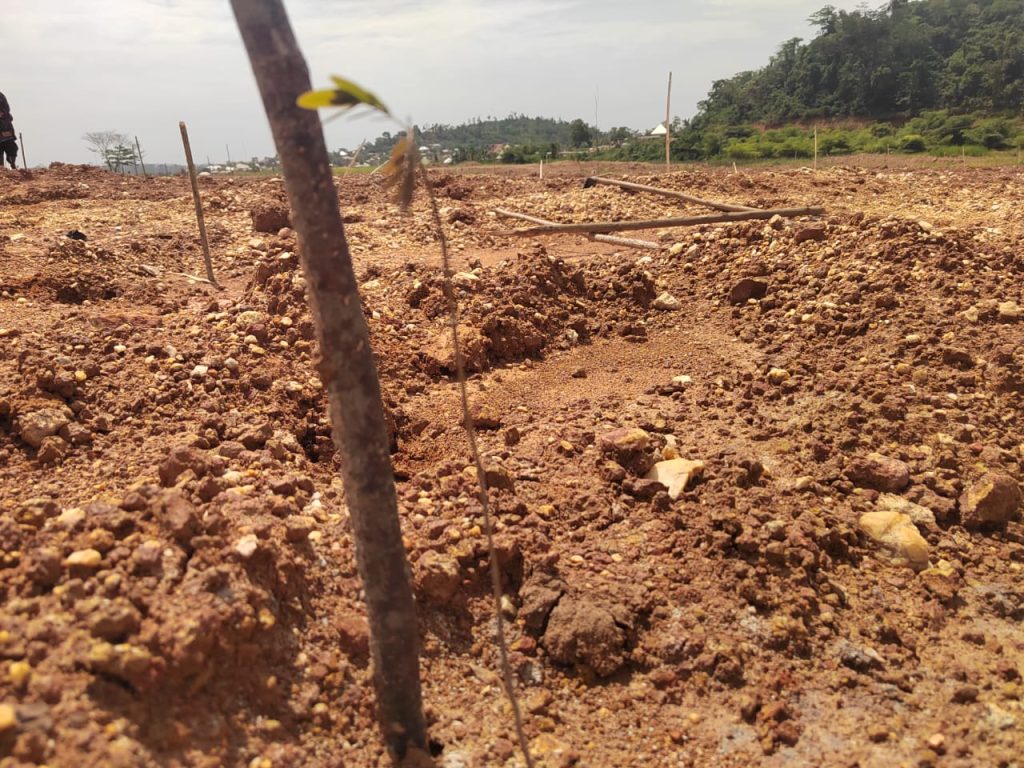
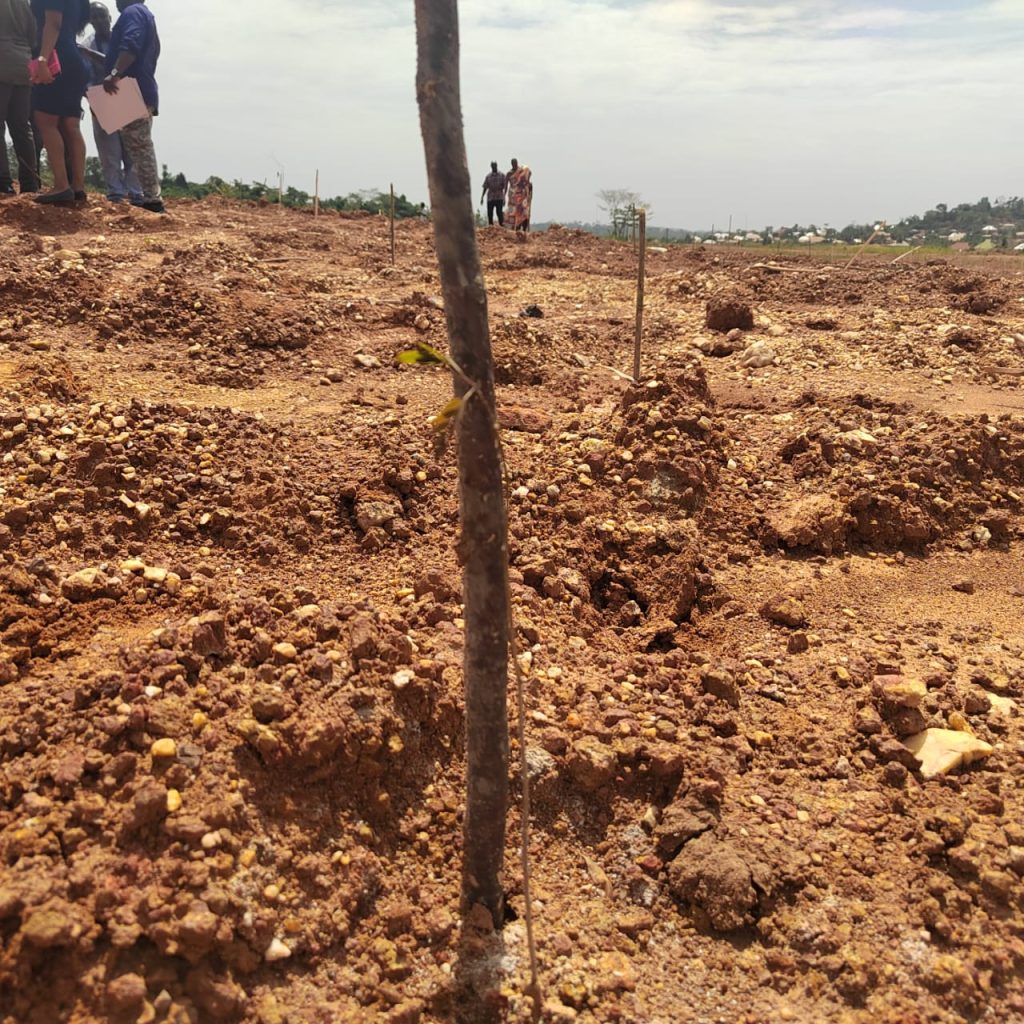
The reclaimed site, now stands as a living symbol of recovery. Chosen for their resilience and economic value, the trees are expected to restore vegetation while offering sustainable forestry opportunities for future generations.
Once riddled with open pits, polluted streams, and destroyed cocoa farms, the reclaimed land has now been replanted with cassia and teak trees under the government’s Galamsey Rehabilitation Initiative, transforming a former mining wasteland into a site of ecological recovery and economic promise.
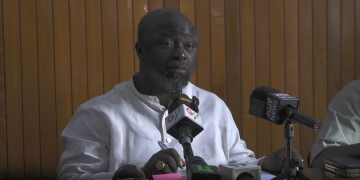
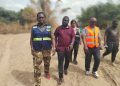
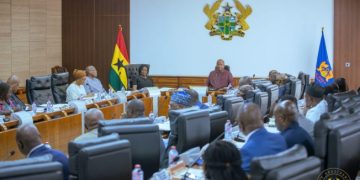
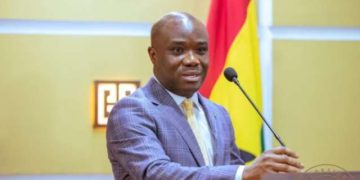
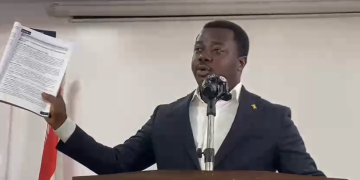
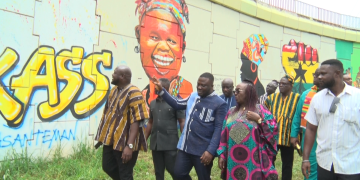
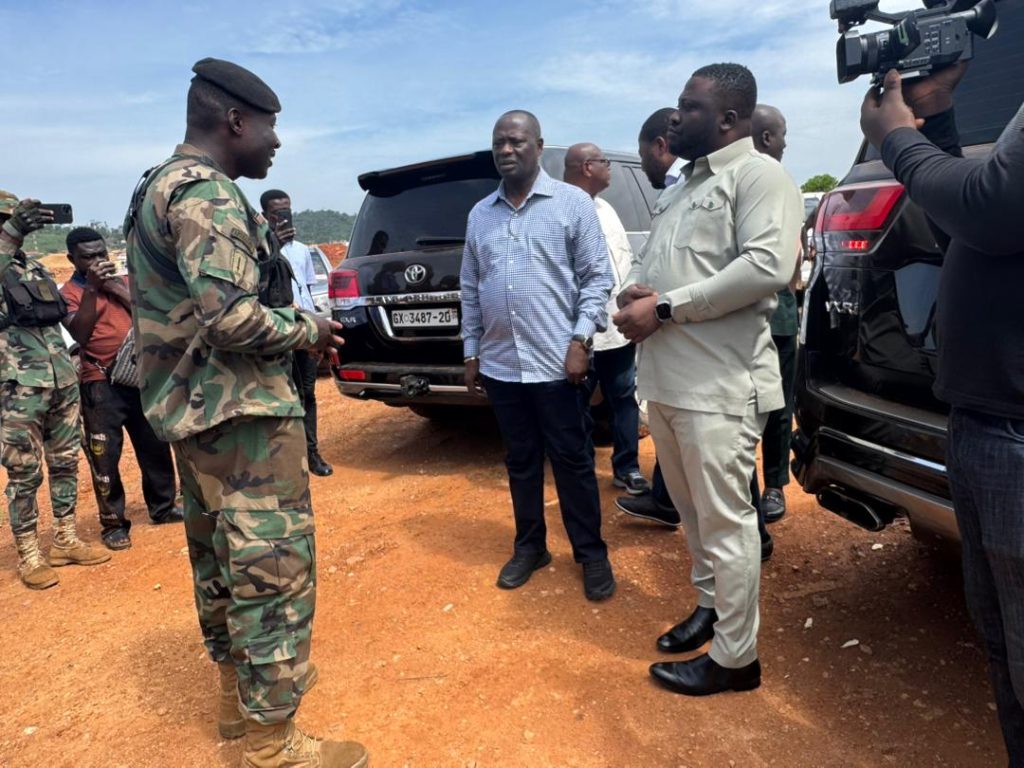
Inspecting the project, Minister of Lands and Natural Resources, Emmanuel Armah-Kofi Buah, underscored government’s resolve to protect rivers, farmlands, and forest reserves.
He highlighted complementary programmes such as Tree for Life and Blue Water, designed to reinforce ecological sustainability and safeguard water bodies across the country.
Beyond ecological healing, the Nyankumase reclamation is poised to create jobs and stimulate local economies.
Officials say the initiative will transform mined-out sites into farmland, forest plantations, and development-friendly zones—turning devastation into opportunity.
The Galamsey Rehabilitation Initiative, under which Nyankumase falls, has earmarked several other degraded areas nationwide for similar interventions.
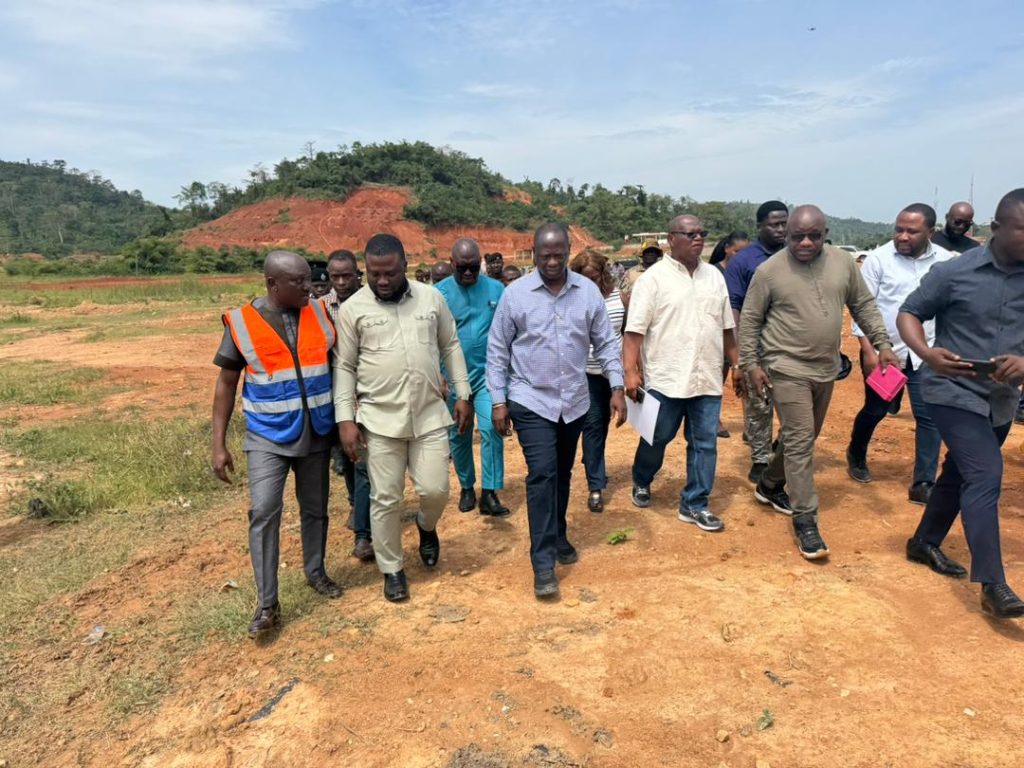
The drive, authorities insist, is not only about halting illegal mining but also about restoring hope, proving that even the most ravaged landscapes can be reclaimed and put back to productive use.
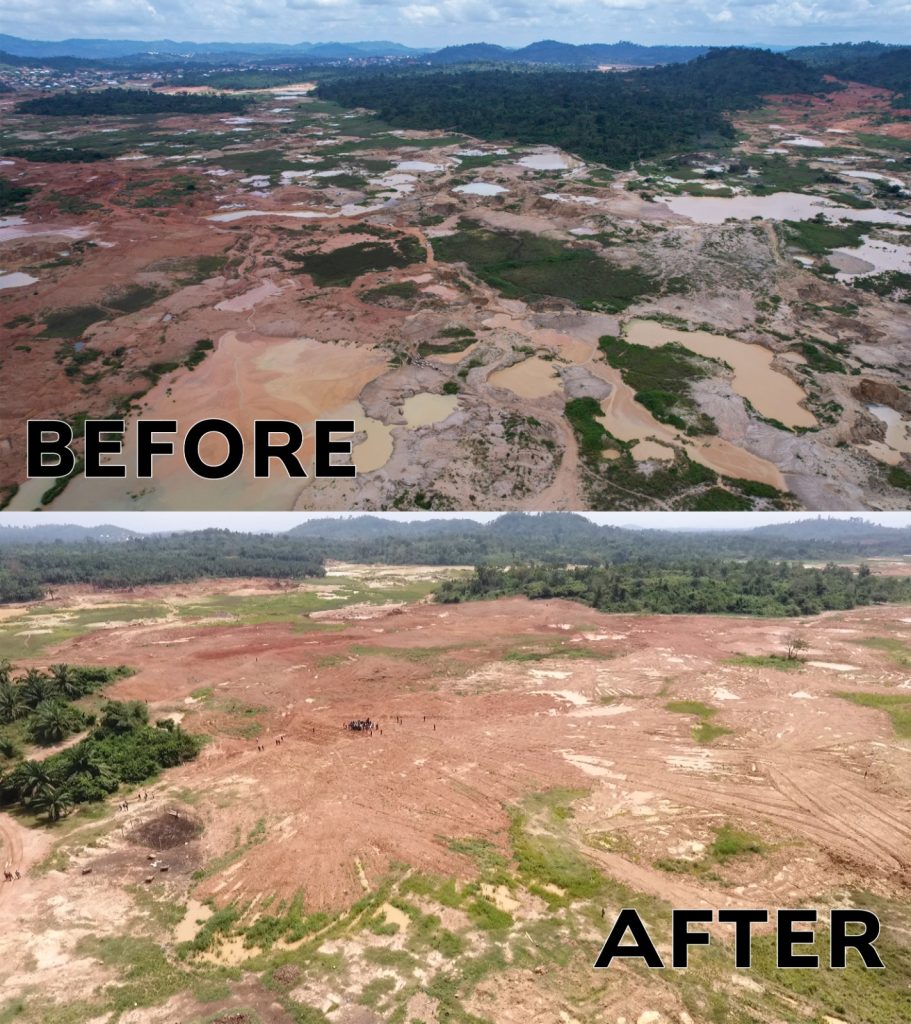
Illegal mining continues to exact a heavy toll on Ghana’s rivers and farmlands, leaving many communities with polluted water and destroyed livelihoods. Yet government insists it will not relent.
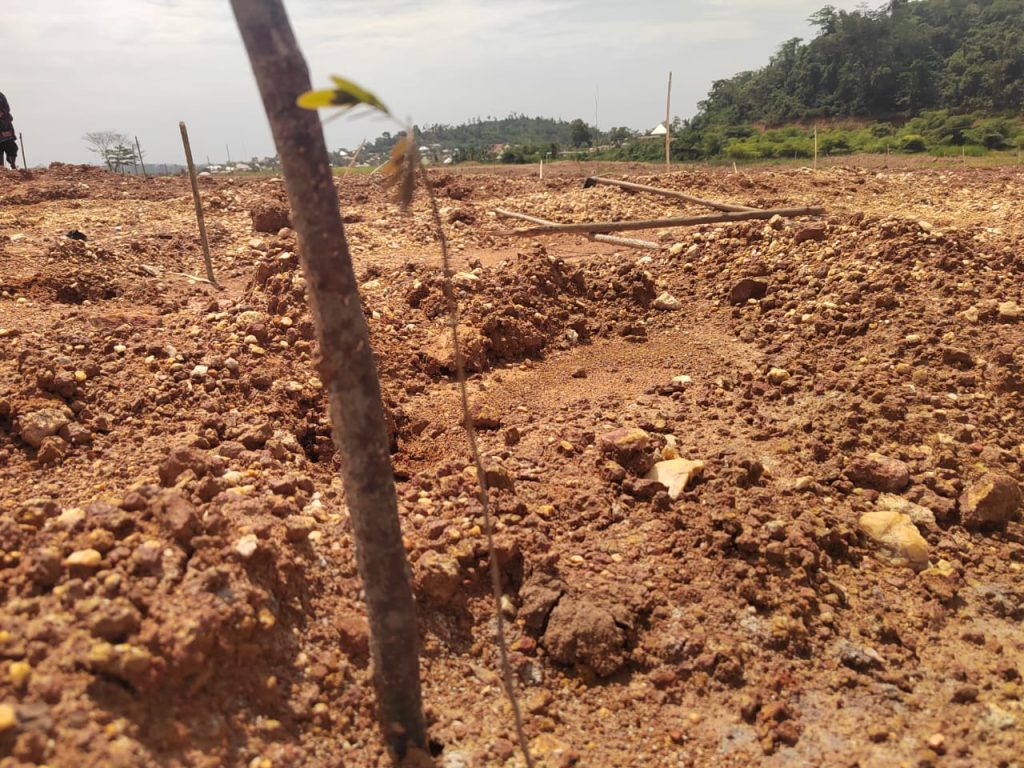
“The choice of species is deliberate,” Hon. Armah-Kofi Buah explained. “We are restoring vegetation while ensuring future economic value through sustainable forestry. This project is about recovery, livelihoods, and sustainability.”
“We are passing through and we need to preserve these lands for future.we are sewing green again,this is great. This year we are planting additional l20 million species”.he indicated.
“We are moving to reclaim our lands .One District at a time. Let us all join hands to turn Ghana back to the Gold Coast time”, he added.
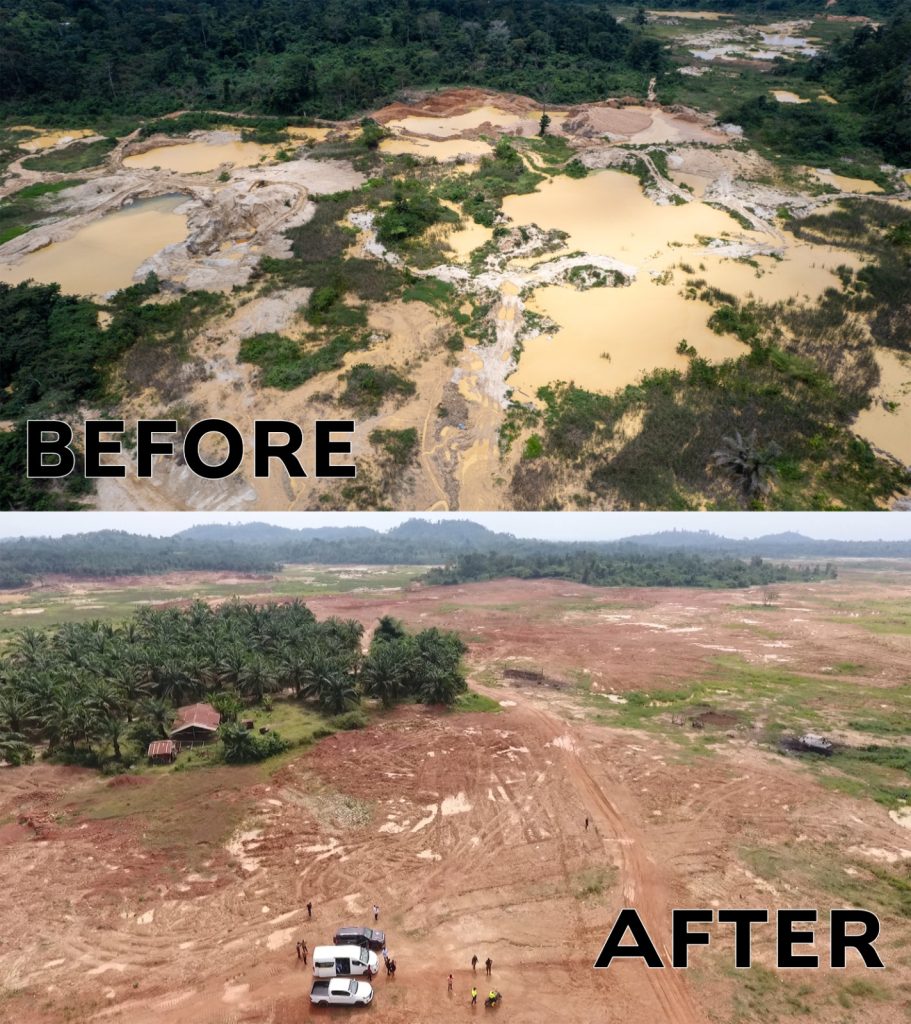
With Nyankumase as a flagship, the reclamation programme reflects President Mahama’s broader commitment to heal the scars of galamsey and return destroyed lands to productive use—an effort that blends environmental recovery with economic renewal, and sets the stage for a greener, more resilient future.
For villagers, the transformation is more than symbolic. “We thought the land was gone forever,” said Kwaku Mensah, a farmer whose family lost their cocoa plot to mining. “Now, with the trees coming back, we can dream again of farming and raising our families here.”
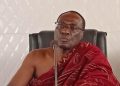
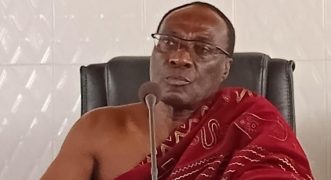
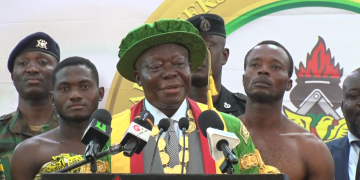
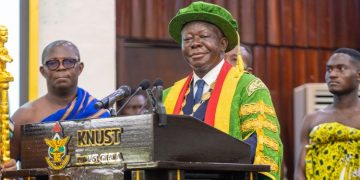
Nana Doku Appiah Dankwa II,Manso Adubia Chief was present and was grateful to the government the project.
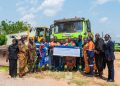
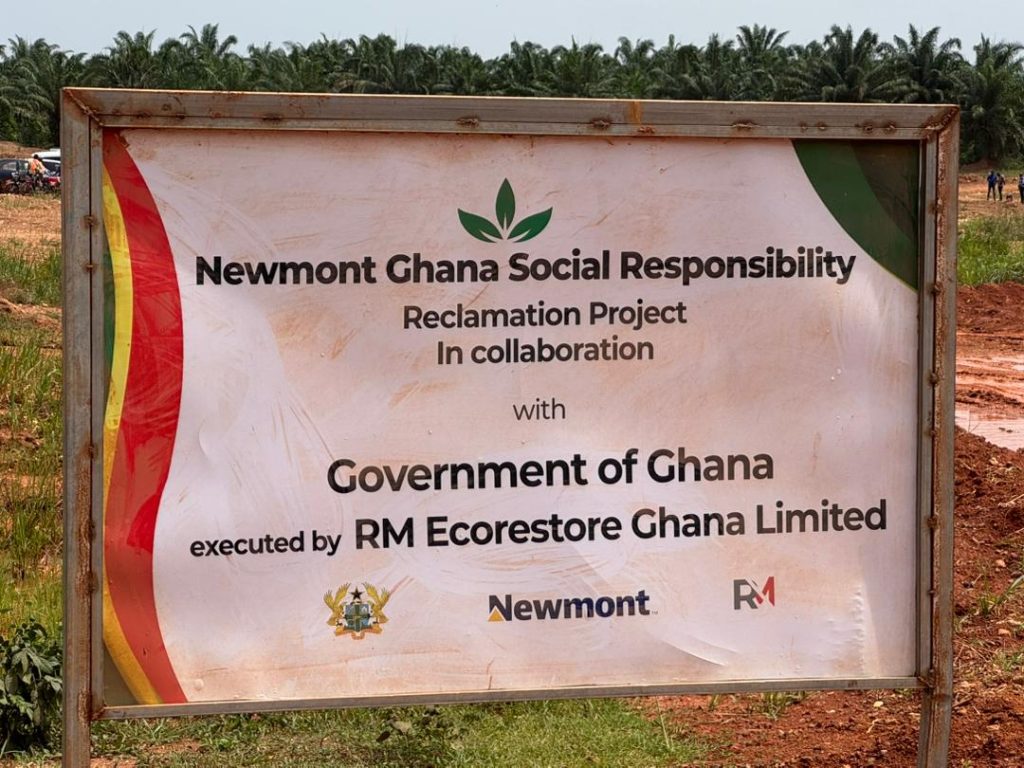
The reclamation works are being carried out by RM Ecorestore Ghana Limited, a company supporting the Government of Ghana in reclaiming and revegetating degraded and mined-out areas across the country.
The project is a partnership between the government of Ghana and Newmont Ghana a large scale mining film operating in Eastern and Ahafo regions.
Source :www.kumasimail.com