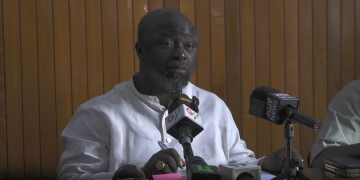

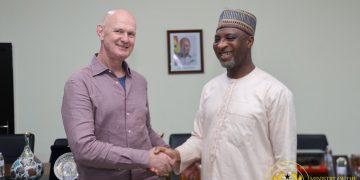







































The Chief Justice, Paul Baffoe-Bonnie, has advised judges against the imposition of excessively long custodial sentences, adding that such practices undermine efforts at inmate reformation, leading to congestion in the country’s prisons.


He said that while punishment was necessary, sentencing must be guided by reformative objectives and established sentencing guidelines.
“I have sentenced people to 70 years before. Everyone who knows me knows that when I was a High Court judge, I gave Ataa Ayi 70 years, so I am not against long sentences. But long sentences really affect the prison population and, sometimes, they are counterproductive,” Justice Baffoe-Bonnie said
He gave the advice during a courtesy call on the management of the Ghana Prisons Service (GPS) in Accra yesterday.Long sentences
The Chief Justice explained that prisons were primarily meant to reform offenders; however, excessively long sentences often defeated that purpose.
“No matter how reformatory you take these people through, if their sentences are too high, it turns out to be counterproductive,” he added.
The Chief Justice observed that some judges had lost track of established sentencing guidelines and said that the Judicial Service would periodically invite officers from the GPS to help orientate newly inducted judges on appropriate sentencing standards.
He also linked prison congestion to delays in the judicial process, particularly prolonged remand periods. “It is not anybody’s wish that somebody stays on remand for so long, but because the courts are congested and other cases are prioritised, remand cases tend to suffer.
The more remanded prisoners you have, the greater the congestion in prisons,” Justice Baffoe-Bonnie further said.
Shift system
As part of measures to decongest both the courts and the prisons, the Chief Justice announced plans to introduce a shift court system, with judges sitting in morning and afternoon sessions.
“We have decided that we are going to set up a shift court system. We already have Sunday courts. We are not yet at night courts, but this is the beginning,” he said.
The Chief Justice said once the system became operational, prison officers might be required to present convicted and remand prisoners earlier than usual to facilitate faster trials.
He also said that special courts dedicated to cybercrime, human trafficking and cross-border crimes would be rolled out soon.
“There have been several instances where people being tried for cyber offences are found to be committing these crimes while actually in prison,” Justice Baffoe-Bonnie said.
He expressed concern about the smuggling of mobile phones and other electronic gadgets into prisons, which enabled inmates to engage in cyber-related crimes.
Significance
The Director-General of the Ghana Prisons Service, Patience Baffoe-Bonnie, described the visit as timely and critical to improving prison administration.
She said the meeting had provided an opportunity to openly discuss how sentencing decisions affected the day-to-day management of inmates.
“The meeting is worthwhile. I imagine it as a situation where the gavel meets the chains and also an opportunity to discuss the impact of sentences handed down by judges, and the daily management of prisoners behind bars,” the D-G said.
Source: www.kumasimail.com