






























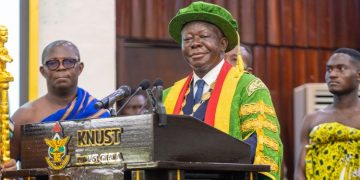

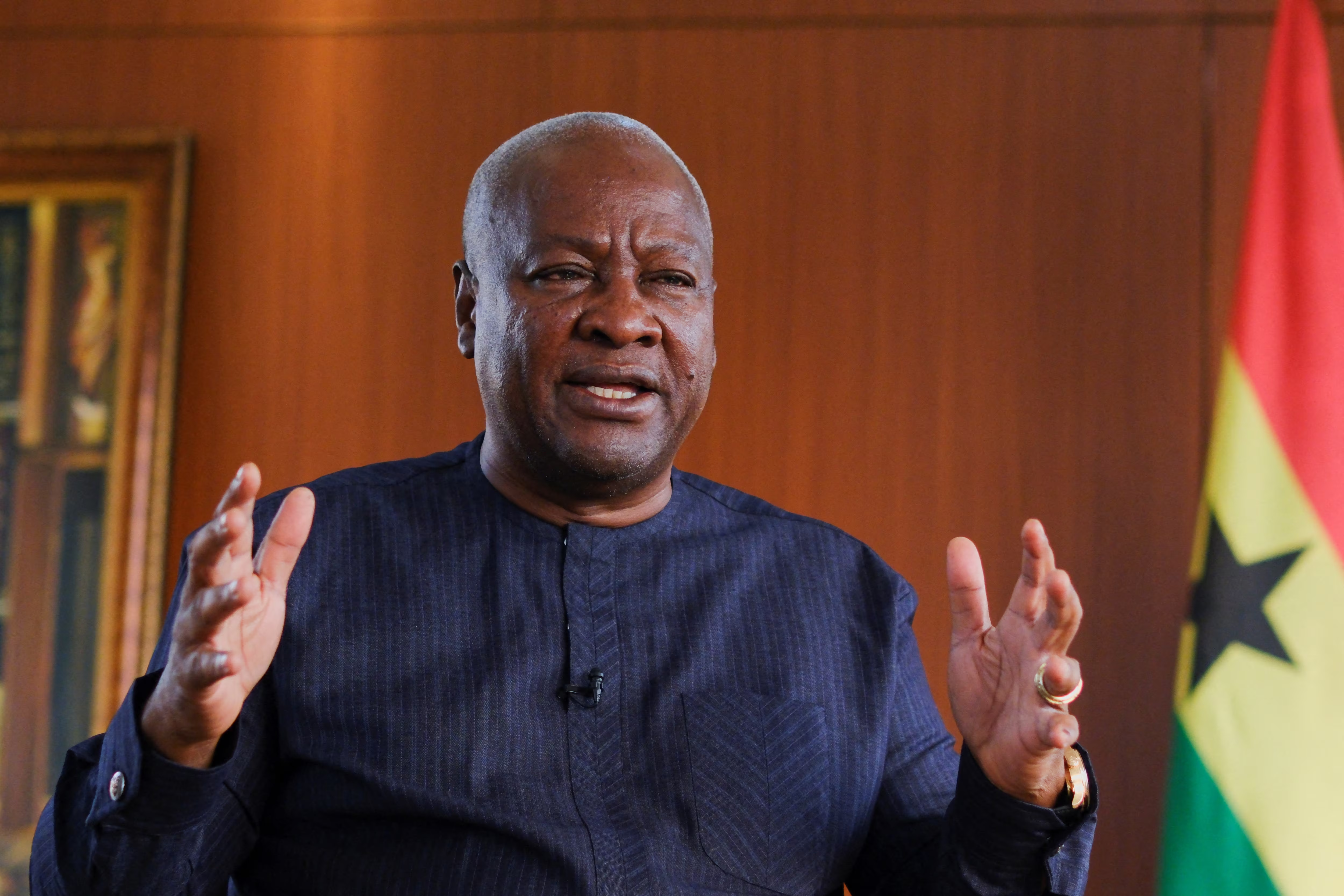






Recent public comments by Dr. Stephen Amoah, former deputy Minister for Finance and Member of Parliament for Nhyiaeso, have reignited debate within political circles over the suitability and qualifications of individuals appointed to lead Ghana’s Finance Ministry.


At a recent campaign event, Dr. Amoah stated publicly that but for the influence of Vice President Dr. Mahamudu Bawumia, Dr. Mohammed Amin Adam popularly known as Dr. Amin Anta would not have become Finance Minister.
The remarks echoed a view Dr. Amoah has reportedly expressed privately over the years, that he was more deserving of the Finance Minister position based on his service to the New Patriotic Party (NPP) and his academic background.
In response, Kumasi Mail conducted a fact-finding review of the academic qualifications, professional experience, and political service of both men, drawing solely on publicly available records and verifiable information.
Academic Backgrounds
Dr. Mohammed Amin Adam completed a Bachelor of Science degree in Economics at the University of Cape Coast (UCC) in 1998, graduating with First Class honours. He went on to obtain an MPhil in Economics from the same institution in 2002, graduating with Distinction.
In 2014, Dr. Amin Adam earned a PhD in Petroleum Economics from the Centre for Energy, Petroleum and Mineral Law and Policy (CEPMLP) at the University of Dundee in the United Kingdom.
He later completed an MSc in Economic Policy Management at the University of Ghana in 2021 and has undertaken professional development programmes at Columbia University, the University of Texas at Austin, and Harvard University.
Dr. Stephen Amoah, on the other hand, completed a Bachelor of Science degree in Computer Science at the Kwame Nkrumah University of Science and Technology (KNUST) in 2004.
He later obtained an MSc in Strategic Finance from the University of Derby in the United Kingdom in 2007. In 2021, Dr. Amoah earned a PhD in Actuarial Science from KNUST. He has also completed a certificate programme at the Massachusetts Institute of Technology (MIT).
Based purely on academic specialisation, Dr. Amin Adam’s training is rooted in economics and public policy, while Dr. Amoah’s academic path reflects a background in computer science, finance, and actuarial studies.
Political Service and Party Contributions
Dr. Amin Adam’s involvement with the NPP dates back to a period when the party had limited support in northern Ghana. In 2000, he contested as the NPP parliamentary candidate for Chogu-Tishigu in the Northern Region. He again stood as the party’s candidate for Tamale Central in 2004.
Between 2001 and 2004, he served as a Presidential Staffer, and in 2005 he was appointed Deputy Minister for the Northern Region. He later served as Mayor of Tamale. After the NPP lost power in 2008, Dr. Amin Adam pursued further studies and entered civil society, co-founding the Africa Centre for Energy Policy (ACEP). Under his leadership and that of his colleagues, ACEP grew into one of Africa’s leading energy policy think tanks by 2016.
Dr. Stephen Amoah’s early political involvement was largely within party structures and student politics. During the early 2000s, he was active in the Tertiary Students Confederacy (TESCON) at KNUST. After completing national service and working briefly with the National Health Insurance Scheme, he pursued postgraduate studies abroad.
Following the NPP’s defeat in 2008, Dr. Amoah contested for the position of National Youth Organiser but lost. He later served as Ashanti Regional Organiser of the party after previous officeholders vacated the position. In 2017, he was appointed Chief Executive Officer of the Microfinance and Small Loans Centre (MASLOC).
Parliamentary and Ministerial Appointments
In the 2020 general elections, both men entered Parliament on the ticket of the NPP. Dr. Amin Adam won the Karaga seat, traditionally considered an NDC stronghold, while Dr. Amoah secured re-election in Nhyiaeso.
Dr. Amin Adam was subsequently appointed Minister of State at the Ministry of Finance and later confirmed as the substantive Minister for Finance. Dr. Amoah was appointed Deputy Minister for Finance following the death of Deputy Finance Minister John Kumah.
Conclusion
Kumasi Mail’s review indicates that while both Dr. Stephen Amoah and Dr. Mohammed Amin Adam have contributed significantly to the New Patriotic Party and national governance, their backgrounds differ markedly.
Dr. Amin Adam’s career reflects long-standing specialization in economics, energy policy, and public finance, coupled with decades of political service, particularly in northern Ghana. Dr. Amoah’s profile, meanwhile, combines party organisational work, executive appointments, and academic training in finance-related fields.
Any assessment of suitability for the Finance Ministry, therefore, largely depends on the criteria applied—whether emphasis is placed on economics-based training and long-term policy work, or on broader financial and administrative experience within government.
Source: Kumasi Mail (Fact-Finding Desk)