
























The Ghana Gold Board (GoldBod) has rejected claims that it has incurred losses or transferred losses to the Bank of Ghana (BoG) under the Gold for Reserves (G4R) programme, insisting that the reported losses cited by the International Monetary Fund (IMF) relate to policy costs rather than mismanagement or trading failures.


In a detailed statement issued by its Media Relations Unit, the GoldBod addressed widespread public debate surrounding a reported $214 million loss under the G4R programme in 2025, clarifying its role and the structure of the programme.
According to the GoldBod, it has not made any financial losses since its establishment in 2025 under the Ghana Gold Board Act, 2025 (Act 1140). The Board disclosed that its unaudited financial accounts for 2025 show revenues of over GHS960 million, against expenditures of less than GHS120 million, resulting in a surplus of more than GHS800 million.
The accounts are expected to be audited by the Auditor-General and published by the end of the first quarter of 2026.
The GoldBod explained that the G4R programme is a non-profit monetary policy intervention introduced by the Bank of Ghana in 2022 to accumulate foreign exchange reserves and stabilise the economy, rather than generate profit. As such, any costs arising from the programme are policy-driven and have always been recorded on the books of the central bank.
Addressing concerns about the reported losses, the GoldBod stated that these losses predate its establishment and are largely attributable to exchange rate translation differences and the deliberate policy decision to purchase artisanal and small-scale mining (ASM) gold at spot prices to discourage smuggling.
The Board stressed that these are economic policy costs, not operational or trading losses.
The statement further noted that the GoldBod plays a central role as the sole licensed aggregator meeting the stringent requirements for direct funding under the programme.
It clarified that Bawa-Rock Company Limited, incorporated in 2015, is currently the only entity that has met the eligibility criteria for an Aggregator licence, including the provision of a bank or advance payment guarantee. However, the GoldBod emphasized that Bawa-Rock is not a monopoly, as other licensed buyers receive funding through the aggregator under a four-tier licensing regime.
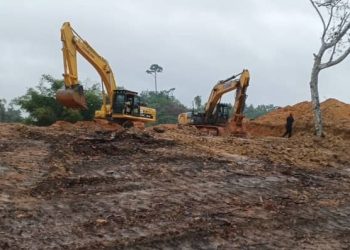
The GoldBod also dismissed claims that it is buying illegally mined “galamsey” gold, stating that its licensing framework expressly prohibits the purchase of gold from illegal sources.
It said measures are underway to introduce a blockchain-based traceability system in 2026 to ensure responsible sourcing and environmental sustainability across the gold value chain.
On the broader economic impact of the programme, the GoldBod argued that even if the reported $214 million or $300 million cost is confirmed, the programme delivered a net national economic gain in 2025.
It said the G4R initiative generated more than $10.8 billion in foreign exchange from ASM gold exports alone, contributing to a 40 percent appreciation of the cedi, a sharp decline in inflation, reduced lending rates and significant savings in external debt servicing.
The Board maintained that assessing the success of the G4R programme purely on profit and loss is misleading, stressing that the correct benchmark is whether the programme achieved its objective of stabilising the economy and strengthening Ghana’s foreign reserves.
The GoldBod reiterated its commitment to transparency, accountability and continued reforms in the gold trade sector, noting that it was established to address regulatory gaps that previously undermined the effectiveness of the G4R programme.
Source: below is full statement…
Source: www.kumasimail.com