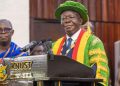












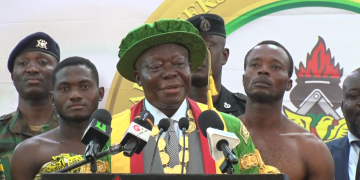
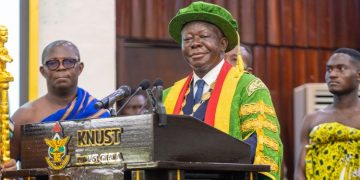
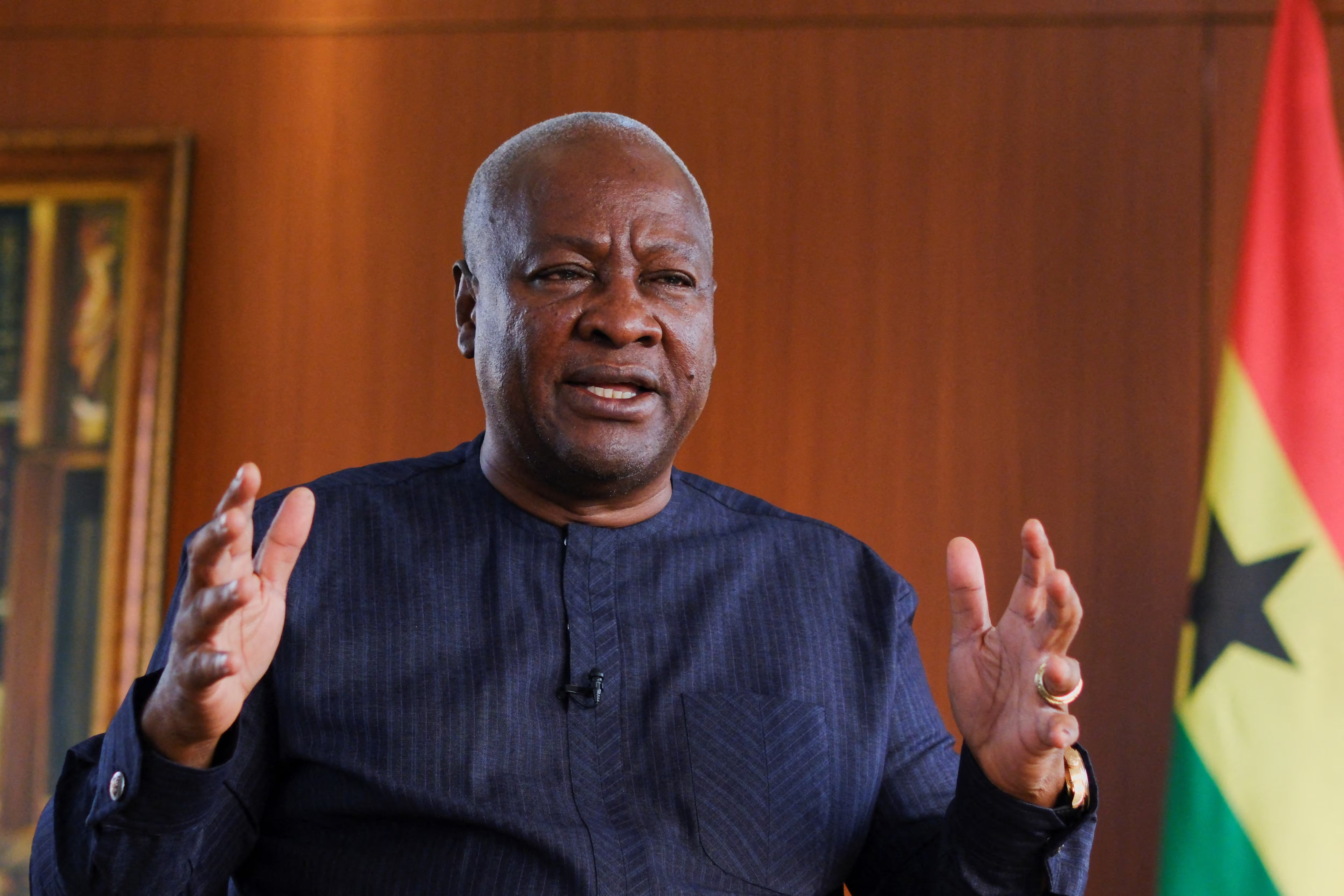




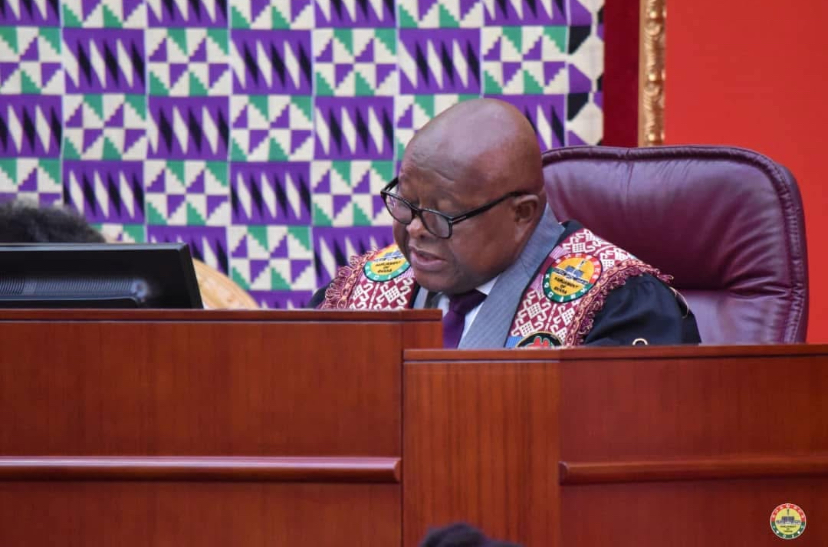
Former Speaker of Parliament Prof. Aaron Mike Oquaye has criticized the frequent emptiness of the legislative chamber, attributing it to Members of Parliament (MPs) prioritizing the attention of the President over their parliamentary duties.


In an interview on Bernard Avle’s Point of View program on Channel One TV monitored by Kumasimail, Prof. Oquaye argued that Ghana’s democracy is undermined by blurred lines between the executive and legislature.
He called for a rigorous separation of powers to restore checks and balances, warning that the current system lacks essential countervailing mechanisms.
“Parliament cannot be a check on the executive,” Prof. Oquaye stated bluntly.
He explained that ruling party MPs are often more focused on impressing the President in hopes of securing ministerial positions than engaging actively in parliamentary proceedings.
“No wonder much of the time the parliament is virtually empty because the system has no countervailing mechanism,” he added. “You find everybody looking towards the one and only one source, that is the Jubilee House.”
Prof. Oquaye, a veteran politician and legal scholar who served as Speaker from 2017 to 2021, highlighted how this dynamic erodes parliamentary oversight.
He pointed to instances where MPs chair boards of state corporations like the Volta River Authority (VRA), creating inherent conflicts of interest that hinder impartial supervision.
Host Bernard Avle pressed Prof. Oquaye on practical solutions, noting that MPs as beneficiaries of the status quo may resist changes that curb executive influence.
“The very people who are given the power to deal with such matters are the beneficiaries of this problem,” Avle remarked.
In response, Prof. Oquaye proposed a forward-looking approach to sidestep immediate self-interest.
“Maybe some disinterested people must do it in this way: Make it for the future. In other words, from the year so-and-so, we shall adopt this system of so-and-so. I think that is something that will help us.”
Avle sought clarification: “A decision that doesn’t affect the current Parliament?”
“Exactly,” Prof. Oquaye affirmed. “Otherwise, they are human and they don’t look at it realistically. But actually, it is no good.”
He emphasized Parliament’s core role as an overseer of the executive, arguing that MPs aspiring to join it defeat the purpose.
“Parliament is actually supposed to be an overseer and it has primary oversight responsibility towards the executive and yet you want to be part of it,” he said.
“You can imagine a member of Parliament who is happy to be a chairman of a board… when matters concerning that corporation come… how do you yourself feel when you are in a position to superintend and oversee the functions of that? It is difficult.”
Source: www.Kumasimail.com