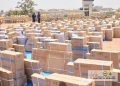


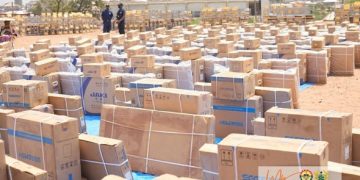



































The United Nations World Food Programme (WFP), with funding support from the Foreign, Commonwealth and Development Office (FCDO), is intensifying efforts to improve nutrition and learning outcomes among school-aged children in Ghana through the introduction of fortified rice in both public and private schools across several regions.


The initiative, being implemented in collaboration with key government partners — including the Ghana School Feeding Programme (GSFP) under the Ministry of Gender, Children and Social Protection, the Ghana Education Service (GES), the Ghana Health Service (GHS), and Women in Agriculture Development (WIAD) — is currently being piloted to assess the feasibility and economic viability of scaling up rice fortification nationwide.
Globally, large-scale rice fortification has proven to be an effective intervention for addressing micronutrient deficiencies in populations where rice is a staple food. The Ghana pilot involves enriching rice with essential vitamins and minerals during the milling process, with the aim of improving child nutrition while strengthening local food systems.
Under the public schools component, the programme targets 157,510 students, made up of 111,247 basic school pupils and 46,263 senior high school students.
At Ejisu Secondary Technical School in the Ashanti Region, Headmistress Mrs. Grace Asomani said the introduction of fortified rice has contributed positively to students’ nutrition, despite initial resistance.

“Fortified rice contains added nutrients unlike the ordinary polished white rice we are used to. This has improved the nutritional intake of our students, and if sustained, malnutrition could eventually become a thing of the past,” she Kumasi Mail.
Mrs. Asomani acknowledged that the transition was not without challenges, noting that many students were initially reluctant to accept the unpolished rice due to their preference for perfumed white rice.
“Before the project was rolled out, we educated the students and even organized nutrition campaigns where Home Economics students prepared different meals using the fortified rice. Despite that, acceptance was slow at first, so we had to continue educating them,” she explained.
She added that some batches of the rice were returned to suppliers for further processing to improve acceptability.
“Because it was unpolished, some students did not accept it initially. We sent some back for polishing and fortification, and with time, the resistance reduced significantly,” she said.
WFP, in partnership with GES and GSFP, selected 365 basic schools and 35 senior high schools in 12 districts across six regions — Upper West, Upper East, Northern, Ashanti, Oti and Greater Accra — for the pilot phase.

Ashanti Regional School Health Education Programme (SHEP) Coordinator, Addo Emmanuel, said the initiative complements national efforts to promote healthy nutrition in schools and surrounding communities.
“The World Food Programme is supporting schools with the nutritional aspect of feeding. In the Ashanti Region alone, more than 30 schools have been enrolled, and we have so far visited about 25 of them, covering both basic and senior high schools,” he said.
Mr. Addo noted that the programme also seeks to influence positive dietary habits beyond the classroom.
“We observed that some students relied heavily on fizzy drinks and unhealthy foods. Introducing fortified rice promotes healthier eating habits and encourages students to transfer this knowledge to their families and communities,” he explained.
He further revealed that assessments conducted in collaboration with the Ghana Health Service identified cases of anaemia and obesity among students, particularly in rural areas, underscoring the need for targeted nutrition interventions.
“As part of the programme, many schools have introduced nutrition-friendly initiatives such as designated fruit, vegetable and egg days. This has improved awareness and dietary practices among students,” he added.

Some students of Ejisu Secondary Technical School who have been consuming the fortified rice for several months described it as nutritious and comparable in taste to the polished rice they were previously accustomed to.
According to the students, although they initially missed perfumed rice, they later found the fortified rice tasty and filling. They also said the rice provides essential nutrients that support their health and daily activities, encouraging wider consumption both in schools and at home.
To ensure sustainability and promote local production, WFP has invested in rice fortification capacity by procuring four rice fortification equipment units valued at more than US$80,000 for millers in the Upper East, Ashanti, Greater Accra and North-East regions. Three of the units have been delivered and installed, while the fourth is pending delivery and installation.
Following installation, WFP supplied 60 metric tonnes of fortified rice kernels valued at over US$91,000 to support fortification and distribution. The fortified rice is supplied to basic schools through caterers and to senior high schools through the National Food Buffer Stock Company.
In 2025, millers including BBN Cooperative in the Upper East Region and Franco Food Processing and Farms in the Ashanti Region supplied a combined 170 metric tonnes of fortified rice and 61.7 metric tonnes of parboiled unpolished rice to nine selected senior high schools in the Upper East, Northern and Ashanti regions.
Max Industries is also expected to produce 200 metric tonnes for private schools and WFP livelihood programmes targeting pregnant and breastfeeding women, children and adolescent girls.
The programme has been extended to low-fee-paying private schools in deprived communities in Northern Ghana. A total of 208 private schools across 17 districts in four regions are participating, with a projected reach of more than 60,000 children. So far, 123 metric tonnes of fortified rice have been supplied, reaching 58,991 pupils and contributing to a 7.9 per cent increase in school enrolment.
To enhance accountability and efficiency, WFP has introduced a hybrid cash-and-value voucher system, expanded its network of trained food retailers, established School Implementation Committees, and digitized reporting through the School Connect platform.
WFP said it is currently finalizing a cost-benefit analysis to guide decisions on scaling up the programme and assessing the feasibility of making fortified rice consumption mandatory under the Ghana School Feeding Programme and for the general public.
The agency and its government partners reaffirmed their commitment to expanding the reach and sustainability of fortified rice to improve child nutrition, strengthen education outcomes, and support local agricultural value chains across the country.
Source: www.kumasimail.com