
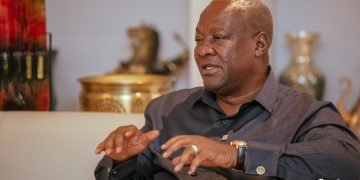



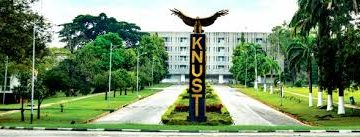


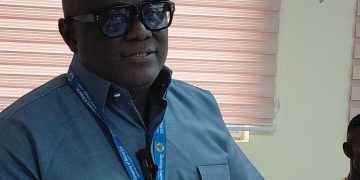













In the quiet corridors of the Medical Science Department at Kwame Nkrumah University of Science and Technology (KNUST), forensic pathologist Prof. Dr. Paul Poku Sampene Ossei is at war not with guns or soldiers, but with mercury, lead, and cyanide.


For over a decade, his lab has been dissecting the silent casualties of Ghana’s gold rush unborn babies, poisoned mothers, and contaminated rivers. His verdict is stark:
“When you poison water, you are committing a war crime,” he told Isaac Justice Bediako. “And that is what’s happening to Ghana right now.”
The Hidden Casualties of Gold
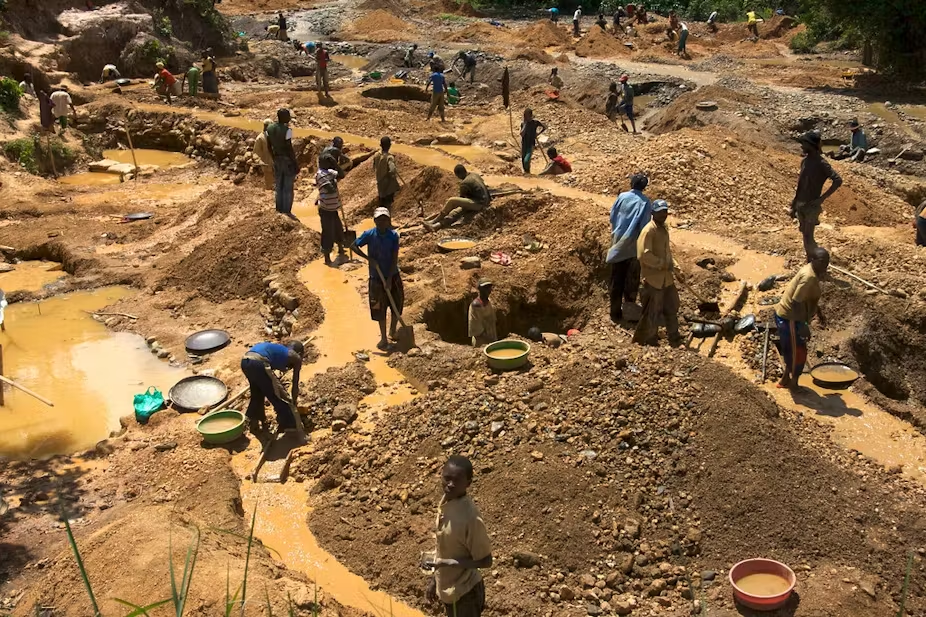
Illegal mining or galamsey has long been condemned for muddying Ghana’s rivers and uprooting forests. But Prof. Sampene’s new research exposes a far deadlier cost: a generation of children lost before they take their first breath.
In his laboratory, thousands of glass jars line the shelves each containing a human placenta from a different part of Ghana. The professor has examined more than 4,000 placentas, and every single one, he says, shows traces of heavy metals like mercury, arsenic, and lead.
“These are the cords that feed babies in the womb,” he explained softly. “When they’re contaminated, life itself is contaminated.”
His findings are haunting. In the past few years, he has documented over 500 cases of spontaneous abortions linked to toxic exposure. Doctors from mining towns like Prestea, Wassa Akropong, and Bibiani have called him privately, reporting rising deformities among newborns.
“Some hospitals quietly bury these babies,” he revealed. “Sometimes they send me samples for study and it’s heartbreaking.”
From River to Womb: The Poison Pathway
To understand the scale of the crisis, Prof. Sampene traces the journey of a single drop of water.
When miners use mercury and other chemicals to extract gold, those substances flow downstream — seeping into rivers that millions rely on for drinking, cooking, and irrigation.
Once inside the body, he explained, the toxins move quickly and mercilessly.
“The fetus absorbs 90 percent of whatever enters the mother’s body water, food, or air,” he said. “Only ten percent leaves. The rest stays, building up little by little until it destroys the baby’s developing organs.”
That slow accumulation is what scientists call bioaccumulation, but for expectant mothers in Ghana’s mining regions, it’s simply death in slow motion.
“If the child absorbs these metals during the stage of organ formation the eyes, limbs, or brain the result is deformity,” he said. “These toxins damage DNA, cause mutations, and lead to cognitive and physical disabilities that last a lifetime.”
A Nation Breeding Disease
The professor’s warning doesn’t end in the maternity ward. His autopsies have uncovered heavy metals in the kidneys, liver, and intestines of infants who died shortly after birth. Adults, he said, fare only slightly better.
“We’re seeing a surge in hypertension, diabetes, and asthma,” he explained. “These are not just lifestyle diseases anymore they are environmental diseases.”
According to Prof. Sampene, mercury, arsenic, and cyanide don’t simply vanish. They linger in the food chain, in the air, and in the soil slowly rewriting Ghana’s health profile.
“Our rivers are poisoned. Our crops absorb that poison. Then we eat it. The body becomes a storage house of toxins.”
The Human Toll: “I Can’t Even Hold a Pen”
The scientist has also seen the impact of mercury beyond his lab in real lives. “Three young men came to me recently,” he recounted. “They had used mercury in a fire while cooking. The vapors paralyzed them.”
One of them, a 23-year-old mathematics student at KNUST, was left trembling permanently.
“He can’t hold a pen,” Prof. Sampene said. “He used to be brilliant, but now his hands shake uncontrollably. Tests showed extreme mercury levels in his blood.”
The others, aged 27 and 32, were also left deformed victims of a metal once prized for its shine, now turned deadly.
Politics, Poison, and Denial
While the science paints a grim picture, Ghana’s politics, he lamented, have turned the crisis into a game of blame rather than action.
“Sometimes I feel very sad,” he said. “We’re busy arguing about who started the pollution, while people are dying. Dialysis is expensive, and we don’t have enough machines. Are we ready for what’s coming?”
He urged both the NDC and NPP to set aside political rivalry and face the crisis head-on.
“Enough is enough. This is not an NPP or NDC issue. This is about survival.”
The professor also expressed concern about the Ghana Water Company’s increased use of aluminum hydroxide to purify polluted water warning that prolonged consumption could lead to kidney and neurological problems.
The Ripple Effect: No One Is Safe
Many Ghanaians assume that the dangers of galamsey are confined to mining towns, but Prof. Sampene says the poison flows far beyond.
“A river doesn’t know boundaries,” he warned. “If the Ayensu River in the Eastern Region is polluted, it carries that poison to the Central and Greater Accra regions. No one is safe not even those in cities.”
The Way Forward: A Call for National Awakening
To reverse the tide, Prof. Sampene believes Ghana needs education, enforcement, and unity.“Mining gold is profitable,” he said, “but it must be done responsibly. Government must regulate, chiefs must enforce, and citizens must care.”
He envisions a future where environmental protection becomes a national duty, not just a policy slogan.“We’re poisoning our future,” he concluded. “If we don’t stop now, Ghana will become a cemetery of contaminated lives.”
An Urgent Message to a Sleeping Nation
The professor’s words are both scientific and prophetic a call to conscience for a nation that drinks from its own poisoned veins.
He doesn’t speak as a politician or an activist, but as a man who has seen the evidence under a microscope who has held the proof in his hands.
“This is not just about gold,” he said quietly. “It’s about life itself.”
Source: www.kumsimail.com