






























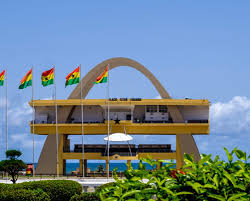
As Ghana commemorates its 69th Independence Day on March 6, 2026, it is worth revisiting the vision of Ghana’s first president, Kwame Nkrumah, and examining whether the country has truly fulfilled the promise of political independence.


Nearly seven decades after independence, a central question remains: Has Ghana achieved genuine economic independence, or has it merely transitioned into a new form of control—neo-colonialism?
Nkrumah warned of this danger long before it became widely discussed. His analysis of neo-colonialism remains one of the most important frameworks for understanding the development challenges facing Ghana and much of Africa today.
The Birth of the Neo-Colonial Era
In 1960, Nkrumah signaled Africa’s next phase of struggle when he declared:
“We face neither East nor West; we face forward.”
For Nkrumah, political independence was only the beginning. The next battle was economic independence and development, free from external domination.
However, global power dynamics soon shifted the course of development for newly independent nations. In 1961, the United Nations adopted Resolution 1710 (XVI) declaring the First United Nations Development Decade (1960–1970). The initiative encouraged international cooperation to support development in newly independent countries.
Behind this development framework was the intellectual influence of American economist W. W. Rostow, a principal adviser to John F. Kennedy. Rostow’s influential book, The Stages of Economic Growth: A Non-Communist Manifesto, presented a modernization model that sought to guide economic development in post-colonial states.
To critics like Nkrumah, however, this framework represented something different: a new form of control over formerly colonized countries.
Nkrumah’s Warning: Neo-Colonialism
In 1965, Nkrumah published his seminal book, Neo‑Colonialism: The Last Stage of Imperialism. In it, he argued that although colonial rule had formally ended, powerful nations continued to dominate newly independent countries through economic influence, financial institutions, and political pressure.
Under this system, political sovereignty existed in theory, but economic decision-making remained externally controlled.
Nkrumah believed that this system threatened Africa’s long-term development and warned that countries could remain dependent if they failed to build strong domestic industries and independent economic policies.
The Dependency Perspective
The concept of neo-colonial dependency was later expanded by German-American economist Andre Gunder Frank in his influential work Development of Underdevelopment (1967).
Frank’s Dependency Theory argued that underdevelopment in many countries is not accidental or natural. Instead, it is actively produced by a global economic system that benefits wealthy nations while keeping poorer countries dependent.
According to this theory, the economies of developing nations are structured to export raw materials and import finished goods, preventing them from building strong industrial bases.
This structure, critics argue, continues to shape many African economies—including Ghana’s.
The “Lumpen Alliance” and the Development Trap
One of the most controversial aspects of dependency theory is the concept of the “lumpen alliance.”
Frank suggested that local elites in developing countries often form alliances with foreign interests. These elites sometimes described as the “lumpen bourgeoisie” prioritize short-term gains, consumption of luxury goods, and foreign partnerships rather than investing in domestic industrial development.
This dynamic can create what scholars describe as “lumpen development.”
In such a system:
- Economic growth occurs without meaningful industrialization.
- Wealth is concentrated among a small elite.
- Large portions of the population remain economically marginalized.
The result is an economy heavily dependent on resource exports, foreign investment, and external markets, rather than a diversified, productive domestic economy.
The Social Consequences
A society structured around dependency can produce deep social inequalities.
Within this framework, scholars describe the emergence of a “lumpen proletariat” a marginalized population often trapped in unemployment, informal work, or social instability.
Without meaningful economic opportunities, large segments of the population struggle to participate fully in national development.
Critics argue that this condition weakens civic engagement and makes societies more vulnerable to political manipulation.
Ghana’s Development Question
Today, Ghana and the rest of the world are operating under the seventh United Nations Development Decade, guided by the United Nations Sustainable Development Goals.
Yet the broader development model—reliant on international cooperation, global markets, and external financing—remains largely unchanged.
For critics of neo-colonialism, the key question is whether this system can truly deliver structural transformation for African economies.
Can Ghana achieve genuine development without transforming its economic structure?
Can industrialization, technological advancement, and economic sovereignty occur within the existing global framework?
These questions remain central to the country’s future.
Rethinking Independence at 69
As Ghana marks nearly seven decades of independence, the legacy of Nkrumah’s ideas continues to provoke debate.
Political independence was a historic achievement. But Nkrumah believed that true independence required economic self-determination.
For many observers, Ghana’s development journey raises a critical challenge:
Is it time to rethink the country’s economic direction in order to achieve the kind of independence envisioned in 1957?
The answer may determine whether Ghana’s next decades bring genuine transformation—or continued dependency.
Source: Nyaaba-Aweeba Azongo