









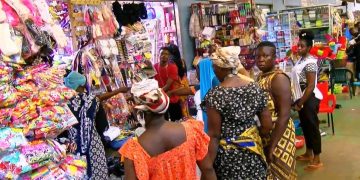





















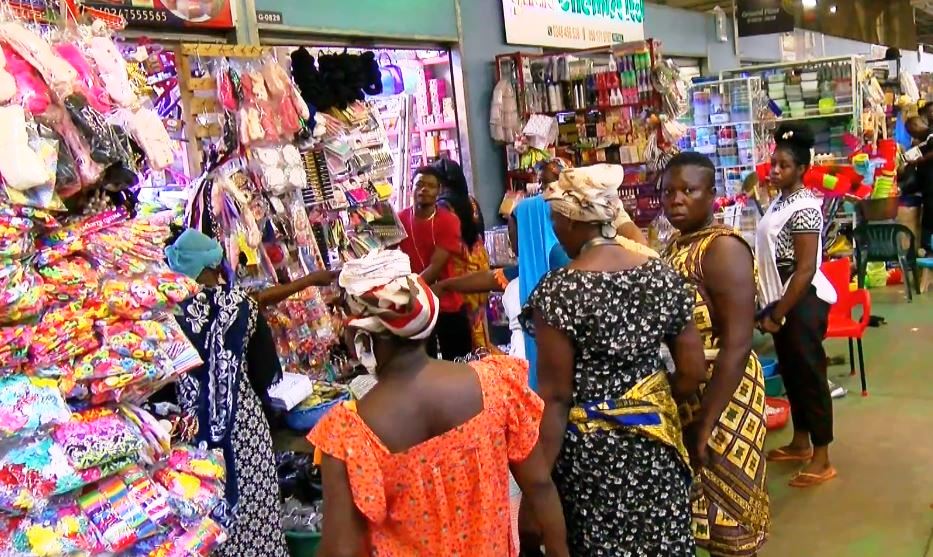
A trader at Kumasi’s Kejetia Dubai market has warned that the rapid expansion of Chinese-owned shopping malls across Ghana is pushing indigenous retailers out of business, accusing the government of failing to protect local entrepreneurs from what he describes as an increasingly unequal competition.


Kofi Nyamekye, a trader at Kejetia Dubai in the Kumasi Metropolis, says the growing presence of Chinese-owned retail outlets in Kumasi, Accra, Tamale and other major cities is depriving Ghanaian traders of customers and threatening thousands of livelihoods.
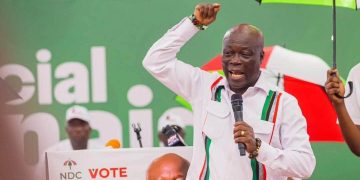
He has consequently warned the governing National Democratic Congress (NDC) that its handling of the situation could have electoral consequences in the 2028 general elections.
“If government does not check the development immediately, it is Ghanaians who vote during elections, and I will vote against the NDC come 2028,” he declared in a video in which he expressed his concerns in Twi.
Nyamekye’s concerns reflect growing discontent among sections of Ghana’s indigenous trading community over the proliferation of Chinese-owned shopping malls, which have become increasingly prominent in the country’s retail landscape.
He identified several Chinese retail outlets operating within the Kumasi metropolis, including those around Kejetia, Atonsu, Santasi and Magazine Road, arguing that their presence is diverting customers from traditional Ghanaian markets.
According to him, the Chinese operators sell virtually everything available in Ghanaian retail markets, often at prices that local traders struggle to match.
He argued that the affordability of goods in these malls, combined with their ability to stock a wide variety of products under one roof, gives them a considerable competitive advantage over Ghanaian traders.
“People leave their homes to come and shop, but when they get to these Chinese malls, they buy whatever they want instead of coming to the market. They sell everything we Ghanaians sell, and their prices are much cheaper compared to ours,” he said.
Kejetia traders bear the brunt
The concerns are particularly significant for traders operating at Kejetia Dubai, a commercial trading centre within Kumasi’s wider Kejetia trading enclave.
The centre accommodates Ghanaian entrepreneurs, including small and medium-scale retailers and wholesalers engaged in the sale of imported and locally sourced merchandise.
Their businesses provide livelihoods for traders, shop attendants, distributors and other workers who depend on retail and wholesale commerce.
Nyamekye believes the increasing concentration of Chinese-owned retail outlets is threatening this indigenous business ecosystem by drawing away customers who would traditionally patronise Ghanaian-owned shops.
He argued that the situation cannot simply be blamed on a lack of purchasing power among consumers, insisting that Ghanaians continue to spend but increasingly direct their money towards the Chinese outlets.
He further claimed that some of the malls record substantial weekend sales when many traditional Ghanaian traders are not operating.
“On Saturdays and Sundays, when we Ghanaian retail traders don’t go to the market, these Chinese mall operators make not less than GH¢5 million just by selling on weekends,” he alleged.
The figure could not be independently verified.
Financing gap raises competition concerns
Beyond the growing number of shopping malls, Nyamekye identified unequal access to affordable financing as another major disadvantage confronting Ghanaian traders.
He argued that local businesses struggle to secure credit at affordable interest rates, while Chinese businesses enjoy more favourable financing conditions in their home country.
He cited interest rates of approximately two per cent in China compared with rates he claimed could reach 36 per cent at some Ghanaian commercial banks and savings and loans companies.
“How can you compete with them in terms of trading?” he questioned.
His argument raises broader concerns about the competitiveness of Ghanaian-owned businesses, particularly smaller enterprises that depend on expensive commercial loans to finance imports, replenish stock and sustain daily operations.
What Ghana’s investment laws say
Nyamekye’s concerns come against the backdrop of Ghana’s investment laws, which expressly reserve certain categories of trading activities for Ghanaian citizens and wholly Ghanaian-owned enterprises.
Under the former Ghana Investment Promotion Centre Act, 2013 (Act 865), Section 27 prohibited non-Ghanaians from participating in activities including selling goods in markets, petty trading, hawking and selling from stalls.
However, Ghana introduced a new investment framework through the Ghana Investment Promotion Authority Act, 2026 (Act 1173), which came into force on July 15, 2026, repealing the previous legislation.
Section 32 of the new law maintains restrictions on foreign participation in the sale of goods in markets, petty trading, hawking and selling from stalls.
The new law also requires foreign nationals engaging in eligible trading enterprises to invest at least US$500,000 in cash as equity capital and ensure that at least 75 per cent of their employees are skilled Ghanaians.
An important distinction, however, exists between foreign-owned shopping malls and the informal retail activities reserved for Ghanaians.
The Ghana Investment Promotion Authority (GIPA) has clarified that Ghana remains open to foreign investment in the formal retail sector, including malls and supermarkets, provided investors comply with applicable investment requirements.
In August 2026, GIPA and the Ghana Union of Traders Associations (GUTA) agreed on measures to strengthen monitoring and enforcement of the laws protecting Ghanaian-owned informal retail businesses.
GIPA Chief Executive Officer Simon Madjie reaffirmed that informal retail activities, including open markets, small shops and kiosks, were reserved exclusively for Ghanaians.
The Authority also raised concerns about the practice of Ghanaians allegedly fronting for foreign nationals to conceal foreign ownership or control of businesses operating in restricted sectors.
GUTA and AGI raise alarm
Nyamekye’s concerns are also being echoed by organised business groups.
GUTA President Clement Boateng recently called on government and relevant regulatory authorities to investigate the expansion of Chinese-owned shopping malls, estimating that they had taken approximately 60 per cent of Ghana’s retail market share.
Speaking on JoyNews’ PM Express Business Edition on November 5, 2026, Mr Boateng said the development was having a negative impact on indigenous businesses.
He also expressed concern about the repatriation of profits generated by foreign-owned businesses, arguing that stronger local businesses would ensure more commercial earnings remained within Ghana.
Meanwhile, the Association of Ghana Industries (AGI) has called for a national trade policy requiring foreign-owned shopping malls to allocate a specified proportion of their shelf space to locally manufactured products.
AGI Chief Executive Officer Seth Twum-Akwaboah said such a policy would help create markets for Ghanaian manufacturers and support domestic industrial growth.

Speaking to the Ghana News Agency on November 9, he stressed that the association was not opposed to foreign-owned shopping malls but wanted their operations structured to support local production.
Government faces growing pressure
The growing debate presents government with the challenge of balancing its commitment to attracting foreign investment with the need to protect indigenous businesses and employment.
While foreign-owned malls can introduce competition, expand consumer choices and create employment, concerns over compliance with investment regulations, market dominance and the survival of local enterprises are increasingly attracting attention.
For Nyamekye, however, the issue goes beyond commercial competition. He believes the livelihoods of Ghanaian traders are at stake and wants government to demonstrate greater commitment to protecting their businesses.
He also questioned the restrictions Ghanaian entrepreneurs allegedly face when attempting to establish similar retail businesses in China, arguing that Ghana should insist on fairness and reciprocity in its trade relations.
His warning to the NDC underscores the potential political implications of the growing frustration among indigenous traders.
With the 2028 general elections approaching, the government faces mounting pressure to demonstrate that its investment policies are not only attracting foreign capital but also safeguarding the interests and livelihoods of Ghanaian entrepreneurs.
Source: www.kumasimail.com