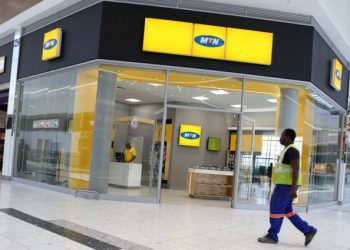




































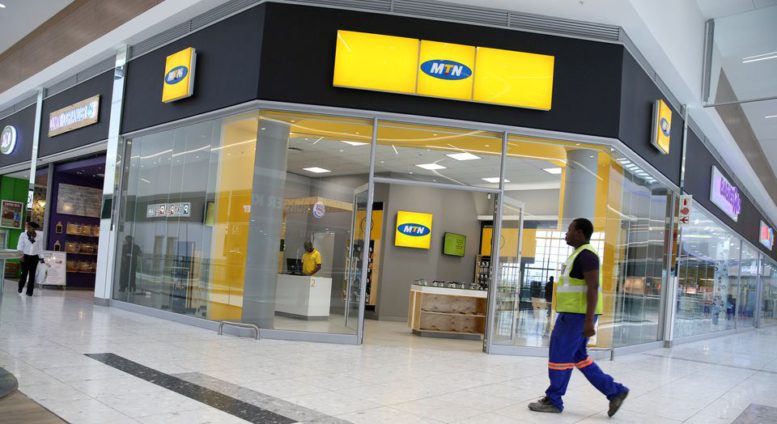
Thirty years after introducing commercial GSM mobile telephony in Ghana, MTN has grown beyond telecommunications into one of the country’s most influential corporate players, reshaping financial services, supporting businesses, investing in healthcare and education, and contributing billions of cedis to public revenue.


When Spacefon switched on its network in Ghana in 1996, mobile telecommunications was largely a luxury. Owning a mobile phone was beyond the reach of many households, and communicating across regions often meant relying on fixed telephone lines or visiting communication centres.
Three decades later, that reality has changed dramatically.
The company, which subsequently became Areeba before adopting the MTN brand, has evolved into a major telecommunications and digital financial services provider, connecting more than 32 million subscribers and supporting economic activities across virtually every sector of the Ghanaian economy.
As MTN Ghana marks 30 years of operations, its contribution presents an interesting case study of how a telecommunications business has become embedded in the country’s economic and social development.
Beyond making telephone calls
Perhaps MTN’s most visible contribution has been the expansion of mobile connectivity.
Its network has helped transform how Ghanaians communicate, access information, conduct business and interact with public institutions.

From small businesses and traders to large corporations, reliable mobile connectivity has become an important part of daily commercial activity.
The company’s investments in successive generations of mobile technology, from 2G through 3G and 4G, have supported the growth of internet-based services, digital commerce and online businesses.
Its infrastructure has also become increasingly important to sectors such as banking, education, healthcare, media, transportation and agriculture.
But it was the introduction of Mobile Money in 2009 that arguably marked one of the most significant shifts in MTN’s contribution to Ghana’s economy.
How Mobile Money changed financial transactions
Before Mobile Money became widespread, sending money across the country often involved physically travelling with cash or relying on informal arrangements.
MTN’s MoMo platform helped change that by allowing users to transfer and receive money through their mobile phones.
What began primarily as a money transfer service has developed into an extensive digital financial ecosystem supporting payments, merchant transactions, bill payments, savings and other financial services.
The platform has particularly expanded access to financial services among people who previously faced difficulties accessing conventional banking.
Its impact extends to traders, market women, small businesses and households that depend on quick and convenient transactions.
By September 2026, MTN Ghana’s Chief Executive Officer, Stephen Blewett, said the platform had approximately 18.9 million active users.
The company’s financial services ecosystem has also created economic opportunities for hundreds of thousands of agents, merchants and other participants.
In agriculture, MTN has extended digital payments into cocoa sourcing through a partnership with Cargill Koko Sourcing. The initiative has onboarded more than 60,000 smallholder farmers across 20 districts in five regions, alongside more than 800 casual workers, allowing participants to receive payments directly into their Mobile Money wallets.
The initiative demonstrates how telecommunications infrastructure can support transparency, payment efficiency and financial inclusion beyond urban commercial centres.
Billions in taxes and investment
MTN’s economic contribution is also reflected in its fiscal obligations and capital expenditure.
The company has consistently ranked among Ghana’s largest corporate taxpayers.
Its 2025 sustainability report disclosed that MTN Ghana paid GH¢8 billion in direct and indirect taxes, fees and levies to government during the year.
The same report indicated that the company invested approximately GH¢4.6 billion in capital expenditure in 2025, largely directed towards network expansion, infrastructure resilience and digital platforms.
These investments support telecommunications infrastructure while contributing to economic activity across the construction, engineering, technology and service sectors.
MTN’s listing on the Ghana Stock Exchange in 2018 also created an opportunity for Ghanaians to acquire shares in the company and participate in its financial performance.
Beyond its direct workforce, its operations sustain a wider network of agents, retailers, contractors, dealers, suppliers and other service providers.
Healthcare and education investments
MTN’s influence extends beyond its commercial operations through the MTN Ghana Foundation, established in 2007.
According to the company’s 2025 annual report, the Foundation had invested more than GH¢219.8 million in over 175 projects, benefiting more than six million people across the country.
Healthcare has been one of its major areas of intervention.
Among its projects are the 60-bed maternity and neonatal centre at Keta Municipal Hospital, an Accident and Emergency Centre at Bawjiase Polyclinic and the construction of an Accident and Emergency Centre at Ho Teaching Hospital.
The Foundation has also supported blood donation campaigns, medical equipment provision and interventions aimed at improving healthcare delivery.
In education, its projects have included ICT centres, libraries, classroom blocks, dormitories and digital learning facilities.
Its Bright Scholarship programme has also supported tertiary students, while initiatives targeting science, technology, engineering and mathematics education seek to improve access to skills needed in an increasingly digital economy.
The Foundation has further supported small and medium-sized enterprises through business development initiatives, grants and entrepreneurship programmes.
These interventions have extended MTN’s presence into communities where commercial telecommunications investments alone might not address pressing social infrastructure needs.
A growing role in Ghana’s digital economy
The company’s evolution has coincided with the growing importance of digital technology to economic competitiveness.
Through its enterprise business services, MTN provides connectivity and digital solutions to businesses, including small and medium-sized enterprises seeking to improve their operations.
Its digital skills initiatives have also targeted young people, women and entrepreneurs, with the objective of improving their ability to participate in the digital economy.
Environmental sustainability has become another area of investment, with initiatives involving solar energy, energy efficiency and efforts to reduce carbon emissions across its operations.
The scale of these interventions illustrates how the company’s activities now extend beyond the traditional telecommunications business.
The next chapter
MTN’s 30th anniversary comes at a time when expectations of telecommunications companies are changing.
Ghanaians increasingly depend on digital networks not only for communication but also for financial transactions, education, healthcare, commerce and access to public services.
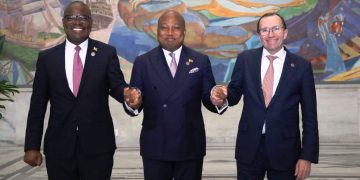
During a meeting with Finance Minister Dr Cassiel Ato Forson on November 18, 2026, MTN Group Board Chairman Mcebisi Jonas and MTN Ghana CEO Stephen Blewett reaffirmed the company’s commitment to long-term investment in Ghana.
Jonas described Ghana as an important market within the Group’s operations and highlighted MTN’s contribution to economic growth and employment creation.
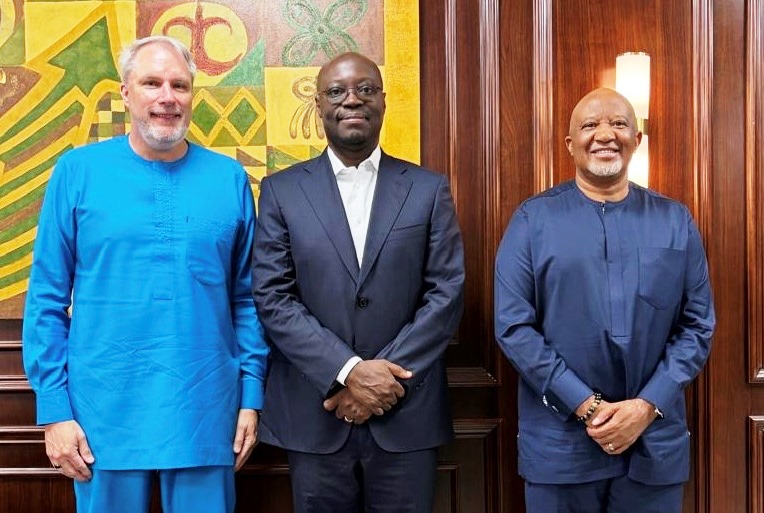
He said: “Ghana has been an important part of MTN’s story for three decades, and our commitment to its future remains as strong as ever. We recognise the progress being made in strengthening the country’s economic foundations and appreciate the constructive relationship we continue to enjoy with Government. Our focus is on translating that partnership into investment that improves connectivity, expands opportunity and supports Ghana’s digital transformation”.
The company has also announced plans to invest US$1.1 billion over the next three years, including the deployment of 500 new network sites in 2026, as it expands its infrastructure and digital services.
However, its next phase of growth will come with significant expectations.
Network reliability, affordable data, improved customer service, protection against digital fraud and the extension of quality connectivity to underserved communities remain important issues for consumers and regulators.
As MTN enters its fourth decade in Ghana, its legacy will be measured not only by the number of subscribers it serves or the revenue it generates, but also by how effectively its infrastructure and digital platforms support productivity, financial inclusion and economic opportunity.
From the early days of Spacefon to the widespread use of Mobile Money and the expansion of digital services, MTN’s 30-year journey has become closely intertwined with Ghana’s economic transformation.
The next challenge is ensuring that the opportunities created by that transformation reach even more Ghanaians.
Source: www.kumasimail.com