




































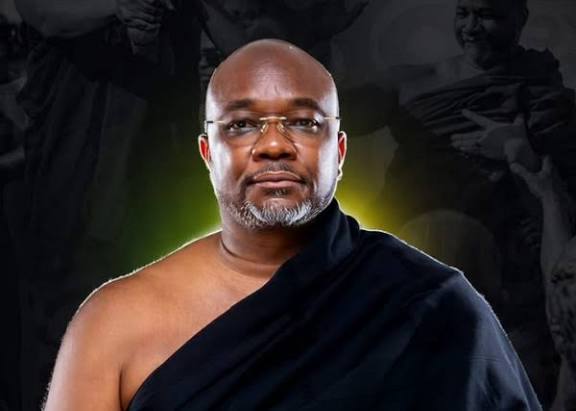
The Asante Kingdom, renowned for its rich history, sophisticated political organisation and enduring traditional institutions, has a system of governance in which authority is distributed among various traditional rulers, royal families, queen mothers and traditional councils.


At the centre of this arrangement is the Asantehene, the occupant of the Golden Stool, who serves as the paramount traditional authority and unifying figure of the kingdom.
However, beneath the Golden Stool is another institution of exceptional historical and constitutional significance: the Asante Mampong Silver Stool, occupied by the Asante Mamponghene.
The position is not simply one of ceremonial prestige. It carries responsibilities rooted in the historical formation of the Asante Kingdom, its military organisation, traditional administration and the preservation of the unity of Asanteman.
The Mamponghene is traditionally regarded as the second-ranking authority in the Asante traditional hierarchy, with a particularly important responsibility in the absence of the Asantehene.
This position makes the Mampong stool one of the most influential traditional institutions in the kingdom.
1. Historical origins of the Asante Mampong stool
To appreciate the importance of the Mamponghene, it is necessary to understand the political and military circumstances surrounding the establishment of the Asante Kingdom.
The Asante political union emerged in the late seventeenth and early eighteenth centuries through the efforts of leading Asante traditional rulers, particularly under the leadership of Osei Tutu I, with the spiritual guidance of Okomfo Anokye.
The Golden Stool became the central symbol of the new political union, representing the collective soul, identity, sovereignty and unity of the Asante people.
As the kingdom expanded, a structured system of administration was established to ensure that the various traditional states and their rulers operated within an organised political arrangement.
Mampong became one of the important constituent states of the Asante Union.
Its traditional ruler was assigned a significant position in the kingdom’s political and military organisation, reflecting the strategic importance of Mampong in the administration and defence of Asanteman.
According to historical accounts preserved by the Manhyia Archives, the Mamponghene was assigned the position of Asante Krontihene and served as deputy commander-in-chief of the Asante army.
This responsibility placed the Mamponghene among the principal military authorities of the kingdom.
The historical position of Mampong within the Asante political arrangement established the foundation for the exceptional status the stool continues to enjoy today. Manhyia Archives+2
2. The Silver Stool: Second in importance to the Golden Stool
One of the most significant features of the Mampong traditional institution is its association with the Silver Stool, traditionally regarded as the second most important stool in the Asante Kingdom after the Golden Stool.
While the Golden Stool represents the collective identity and sovereignty of Asanteman, the Silver Stool represents the historical authority, dignity and standing of the Asante Mampong traditional state within the kingdom.
The distinction is important because the Mamponghene’s position is not merely based on seniority or personal influence. It is attached to an established traditional institution with a recognised place in the political history and governance of Asanteman.
The Asantehene remains the supreme traditional authority, but the Mamponghene has historically been entrusted with responsibilities that make the office particularly significant in maintaining the continuity of traditional leadership.
Indeed, during a meeting of the Asanteman Council in May 2025, Otumfuo Osei Tutu II paid tribute to the late Mamponghene, Daasebre Osei Bonsu II, and acknowledged the distinguished responsibilities associated with the stool.
The Asantehene emphasised that the position accorded the Mampong paramountcy the status of second-in-command in the kingdom and allowed its occupant to assume responsibilities in his absence. Ghana News Agency+2
3. The Mamponghene as second-in-command in Asanteman
Perhaps the most widely recognised responsibility of the Mamponghene is his position as the second-in-command within the traditional leadership structure of the Asante Kingdom.
This role becomes particularly important whenever the Asantehene is absent or unable to perform certain traditional functions.
The Mamponghene is traditionally entrusted with responsibilities relating to the continuity of leadership and the preservation of the kingdom’s traditional administration.
This arrangement reflects the importance Asante tradition attaches to institutional continuity, ensuring that the affairs of the kingdom are not left without recognised traditional leadership.
It is, however, important to understand that the position does not make the Mamponghene an alternative Asantehene or automatically confer the Golden Stool upon him.
Rather, it establishes him as a principal traditional authority with a recognised constitutional responsibility within the Asante traditional system.
The distinction demonstrates the sophisticated nature of Asante governance, where traditional authority is exercised through established institutions, customs and recognised lines of responsibility.
4. Military leadership and the defence of the Asante Kingdom
The historical military responsibilities of the Mamponghene are another important aspect of the stool’s significance.
During the formative years of the Asante Kingdom, military organisation was central to the survival, territorial expansion and political influence of the union.
The kingdom developed an organised military structure with different divisions and commanders responsible for specific operational assignments.
Historical records at the Manhyia Archives identify the Mamponghene as the Asante Krontihene and deputy commander-in-chief of the Asante army.
This placed the Mamponghene in a strategic position within the kingdom’s military command structure.
The position was particularly significant during periods of warfare, when the coordination of military forces and the protection of the kingdom’s territorial interests were essential.
The Asante military organisation was not simply an instrument of warfare. It was also an important component of the kingdom’s political administration, territorial cohesion and central authority.
The Mamponghene’s historical military responsibilities therefore help explain why the stool enjoys such considerable prestige within Asanteman.
Although the military functions of traditional rulers have changed considerably under modern constitutional governance, the historical significance of the office remains an important part of Asante heritage. Manhyia Archives+2
5. Participation in Asante governance and the Asanteman Council
The Asante political system was historically organised around a relationship between the Asantehene and the paramount chiefs of the various traditional states.
These rulers, commonly known as Amanhene, maintained authority over their respective traditional areas while recognising the Asantehene as the central authority of the kingdom.
The Asanteman Council provides an important platform for consultation, deliberation and the consideration of matters affecting the kingdom.
The Mamponghene, as one of the most senior traditional rulers, occupies an influential position in this arrangement.
His responsibilities include participating in deliberations on matters affecting Asanteman, contributing to the preservation of traditional governance and supporting efforts to maintain unity among the various traditional areas.
The historical importance of collective decision-making within Asante governance is well documented.
Historical scholarship on the Asante Confederacy describes the involvement of leading chiefs, the queen mother and other traditional authorities in the kingdom’s political and judicial administration.
This demonstrates that Asante governance was not historically designed around the unrestricted authority of one individual. It involved established councils and traditional institutions that played complementary roles.
The Mamponghene’s position within this structure therefore carries responsibilities beyond the administration of his own traditional area. Cambridge University Press+2
6. Custodian of the Mampong traditional area
Beyond his responsibilities within the broader Asante Kingdom, the Mamponghene is also the paramount traditional ruler of the Asante Mampong Traditional Area.
In this capacity, he provides traditional leadership and exercises customary authority over the traditional area in accordance with Ghana’s chieftaincy framework and established customs.
His responsibilities include:
- Preserving the customs, traditions and cultural heritage of the Mampong traditional area.
- Providing traditional leadership and guidance to subordinate chiefs.
- Supporting peaceful resolution of disputes involving traditional authorities and communities.
- Promoting unity among the various communities and traditional divisions.
- Collaborating with the queen mother and traditional council on matters relating to succession and customary administration.
- Promoting development, education, investment and social welfare within the traditional area.
- Protecting customary lands and supporting responsible management of natural resources.
The Mampong Traditional Area has several divisional and sub-paramount stools, which form part of its traditional administrative structure.
The Mampong Municipal Assembly’s development planning document identifies Mampong as the paramountcy within the municipality, with ten divisional or sub-paramount traditional authorities.
This structure makes the Mamponghene a central figure in coordinating traditional leadership across the area. mma.gov.gh+1
7. The Bretuo royal family and the succession to the Silver Stool
The Mampong stool has a strong historical association with the Bretuo clan, one of the recognised royal clans within the Asante traditional system.
The Bretuo royal family plays an important role in the traditional succession arrangements of the Mampong stool.
As with other Akan traditional institutions, succession is governed by customary procedures involving the appropriate royal family members, kingmakers and queen mother.
The Mamponghemaa, or queen mother of Mampong, occupies an important position in this process.
Her responsibilities within the traditional institution extend beyond ceremonial representation. The queen mother is an important figure in the preservation of royal lineage, customary succession and the continuity of traditional authority.
The relationship between the queen mother, the royal family and the kingmakers is therefore essential to the legitimacy and continuity of the Silver Stool.
The succession process also demonstrates the interconnected nature of the Mampong and Kumasi traditional institutions.
Following the selection of a candidate for the Mampong stool, the customary process includes the presentation of the nominee to the Asantehene and the swearing of an oath of allegiance.
This relationship reflects the Mampong stool’s recognised position within the broader Asante traditional hierarchy. Ghana News Agency+2
8. The modern Mamponghene and the continuation of the institution
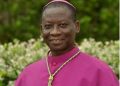
Meet the new Mamponghene, the second most powerful person in Asanteman
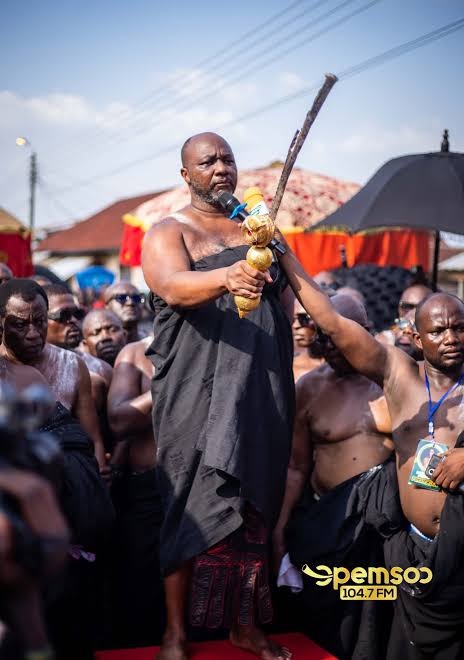
Daasebre Osei Bonsu III enstooled as Mamponghene
The historical significance of the Mampong stool continues to be reflected in its modern leadership.
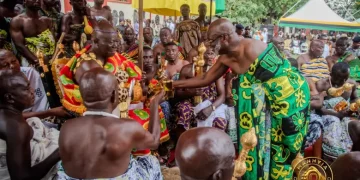
On January 19, 2026, Leslie Nkansah Osei Bonsu was formally installed as the new Asante Mamponghene after swearing an oath of allegiance to the Asantehene, Otumfuo Osei Tutu II, at the Manhyia Palace.
He assumed the stool name Daasebre Osei Bonsu III, becoming the 17th occupant of the Asante Mampong Silver Stool.
His installation followed the death of his predecessor, Daasebre Osei Bonsu II, who passed away on April 20, 2025, aged 86, after a 26-year reign.
The new Mamponghene’s installation reaffirmed the historical relationship between the Silver Stool and the Golden Stool and the importance of the Mampong paramountcy in the administration of Asanteman.
Following his installation, Daasebre Osei Bonsu III pledged to promote peace, unity and development in the traditional area.
He was also urged by traditional authorities to maintain the legacy of his predecessor, particularly in the protection of the environment and the fight against illegal mining.
His emergence represents the continuation of an institution whose responsibilities extend beyond the personality of the individual occupying the stool. MyJoyOnline+2
9. The Mamponghene’s role in modern development and social stability
In contemporary Ghana, traditional authorities remain important partners in national development, particularly at the community level.
Although the 1992 Constitution establishes a democratic system of government and recognises the distinct institution of chieftaincy, traditional rulers continue to exercise significant cultural, customary and community leadership responsibilities.
The Mamponghene is therefore strategically positioned to support development initiatives in education, healthcare, agriculture, tourism, environmental protection and local economic advancement.
His influence can also be instrumental in mobilising traditional authorities and community members around national development priorities.
In an era where illegal mining, environmental degradation, land disputes and social tensions threaten community stability, the role of traditional leadership in promoting responsible resource management and peaceful coexistence is particularly important.
The Mamponghene can also serve as an important bridge between the traditional authorities, government institutions, investors and development partners.
Given Mampong’s historical standing within Asanteman, the occupant of the Silver Stool has an opportunity to influence conversations on the future of the Asante Kingdom and its contribution to Ghana’s national development.
10. Why the Mampong stool matters to the future of Asanteman
The significance of the Asante Mamponghene cannot be adequately understood by considering the position merely as a traditional title or an office of royal prestige.
It represents a historical institution that has contributed to the political organisation, military strength, traditional administration and continuity of the Asante Kingdom.
From its historical military responsibilities as Krontihene and deputy commander-in-chief to its present standing as the second-ranking traditional institution in Asanteman, the Mampong stool has remained an important pillar of the kingdom.
Its relationship with the Golden Stool also illustrates the interconnected nature of traditional authority in the Asante political system.
As the Asante Kingdom continues to navigate the demands of modern governance, economic transformation, cultural preservation and generational change, the Mamponghene’s responsibilities remain relevant.
The challenge for the present occupant, Daasebre Osei Bonsu III, is to preserve the dignity and historical significance of the Silver Stool while ensuring that the institution continues to contribute meaningfully to the welfare of the people of Mampong and the wider Asante Kingdom.
Ultimately, the strength of the Asante Kingdom lies not only in the authority of the Golden Stool but also in the enduring institutions, traditional rulers and customary arrangements that sustain its unity.
The Silver Stool of Mampong remains one of those indispensable institutions.
The Mampong traditional institution
| Subject | Information |
|---|---|
| Traditional title | Asante Mamponghene |
| Stool | Silver Stool |
| Current occupant | Daasebre Osei Bonsu III |
| Personal name | Leslie Nkansah Osei Bonsu |
| Installation | January 19, 2026 |
| Predecessor | Daasebre Osei Bonsu II |
| Royal clan | Bretuo |
| Traditional area | Asante Mampong |
| Historical military office | Asante Krontihene |
| Historical military responsibility | Deputy commander-in-chief |
| Position in Asanteman | Second-ranking traditional institution |
| Queen mother | Mamponghemaa |
Source: www.kumasimail.com / Editor Isaac Justice Bediako