













Upper West Regional Minister Charles Lwanga Puozuing has warned Municipal and District Assemblies against abandoning development projects, insisting that local authorities must be judged by completed infrastructure and tangible improvements in the lives of residents.


He said the performance of Assemblies should not be measured by the size of their financial allocations or the number of projects captured in their annual action plans, but by the actual benefits delivered to communities.
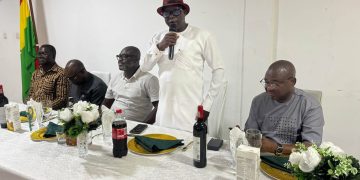
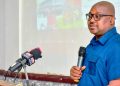
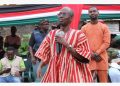
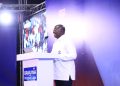
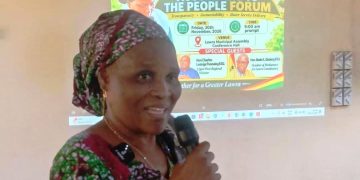
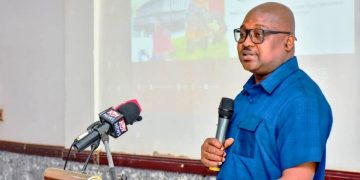
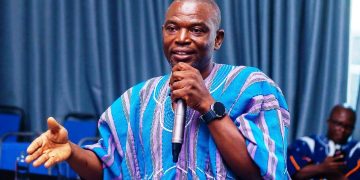
Addressing the opening of the 2026 Accounting to the People Tour in Lambussie on November 19, the Minister described public office as a public trust and called on Assemblies to ensure that every public resource delivers value.
He challenged local authorities to demonstrate how investments in education, healthcare, sanitation, roads and job creation were improving living conditions across their respective districts.
Mr Puozuing was particularly concerned about abandoned and uncompleted projects, describing the situation as unacceptable when communities continue to face the challenges those projects were intended to address.
He urged Assemblies to strengthen contract supervision and ensure that contractors comply with agreed specifications, timelines and quality standards.
“Development is not about the number of sod-cutting ceremonies we organise. It is about the number of completed projects that improve people’s lives,” he said.
The Minister also reminded Assemblies of their obligations under the Public Financial Management Act, 2016 (Act 921), and the Public Procurement Act, 2003 (Act 663), as amended.
He stressed the need for competitive and transparent procurement processes, proper documentation of payments and effective action on internal audit recommendations.
The tour, which runs from November 19 to 30, 2026, covers all 11 Municipal and District Assemblies in the Upper West Region.
At the opening forum held at the Lambussie Library Complex, District Chief Executive Ireneous N. Basingbie presented the Assembly’s development and financial performance for 2025 and 2026.
On education, the Assembly reported the construction of classroom blocks at Kelegan and Nabaala, kindergarten blocks at Tayaguri and Nyubule, and the rehabilitation of junior high school blocks at Dahile-Kunta and Gbingbaala.
It also procured 400 mono desks, 350 dual desks and 50 hexagonal desks for schools across the district.
In the health sector, CHPS compounds at Muoteng and Liero have been completed and handed over, while facilities at Tappumu and Karni Nyanbuli have received furnishing or rehabilitation works. Construction works at the Hamile Polyclinic and Buu are ongoing.
The Assembly also reported the drilling of boreholes at Muoteng, Samoa, Suke, Sentu, Piina, Kelegaun, Busigya and Kocha.
Development partners, particularly SNV, supported additional borehole projects, KVIP toilet facilities and incinerators for health facilities.
On security, vehicles and motorbikes donated by the International Organization for Migration (IOM) and the Community Security and Surveillance Mechanism (CSSM) are expected to strengthen security operations and border surveillance.
The Assembly also identified a proposed model market at Hamile as a long-term investment in local trade and revenue generation.
However, the DCE acknowledged financial and infrastructure challenges confronting the district.
The Assembly generated GH¢301,608.38 in Internally Generated Funds (IGF) against a 2026 target of GH¢566,516.58.
It attributed the shortfall partly to weak databases of rateable items, manual revenue collection systems and delays in the release of central government funds.
Inadequate early childhood education infrastructure and low local economic development activity were also identified as persistent challenges.
To improve revenue mobilisation, the Assembly plans to set revenue targets for collectors and Area Councils, conduct task force inspections and engage taxpayers during consultations on the 2027 fee-fixing resolution.

The Minister’s message also placed responsibility on residents to participate actively in local governance and demand accountability from their elected and appointed officials.
He urged citizens to attend Assembly meetings, participate in community engagements and monitor the implementation of development projects.
Public scrutiny, he said, should not be interpreted as hostility towards public officials but as an essential part of democratic governance.
He said residents must be able to establish what was budgeted, how much was spent, what had been delivered and which projects remained outstanding.
As the tour proceeds to the remaining Assemblies, the Regional Coordinating Council is expected to use the forums to assess development delivery and strengthen public accountability across the region.
“Let every cedi count. Let every project deliver. Let every Assembly account,” the Minister said.
Source: www.kumasimail.com