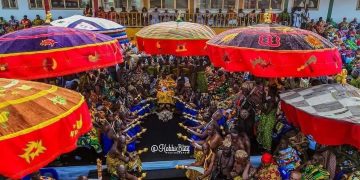


















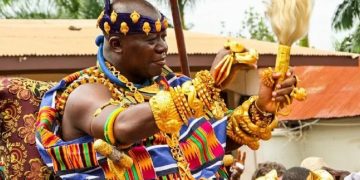










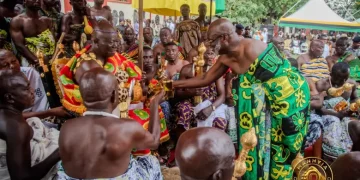






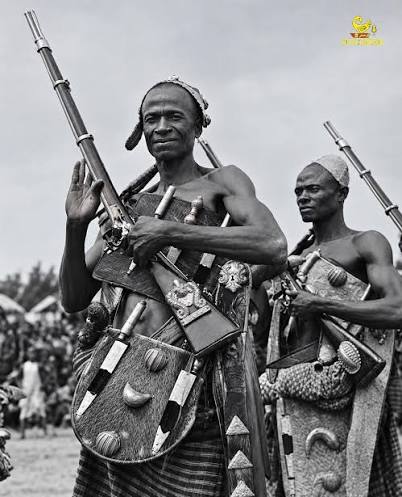
At a traditional gathering in the Asante Kingdom, the appearance of a chief is never simply a matter of clothing. The cloth draped over a shoulder, the position of sandals, the gold ornaments, the ceremonial sword and even the manner of greeting the king can communicate authority, allegiance, history and respect.


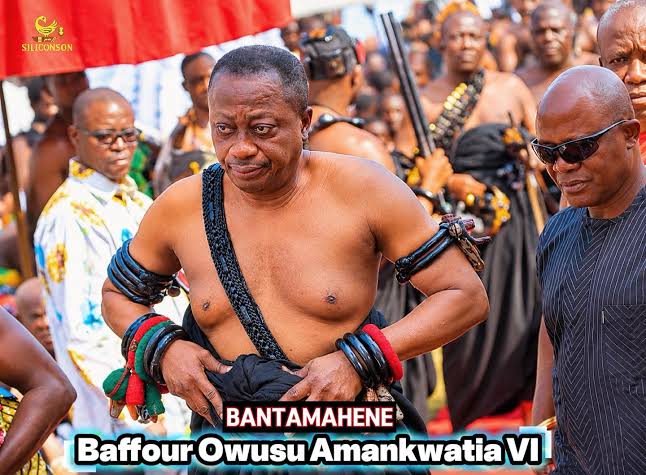
Among the chiefs whose appearance and conduct attract particular attention is the Bantamahene, the occupant of the Bantama stool in Kumasi.
His traditional office is associated with military leadership, the Kronti division of the Kumasi Traditional Council and a close relationship with the Asantehene, Otumfuo Osei Tutu II.
But who exactly is the Bantamahene, why does his stool occupy such an important position in Asanteman, and what explains the traditional etiquette observed when he approaches the Asantehene?
The answers lie in the history of the Asante Kingdom, where military organisation, political authority, tradition and symbolism have been closely intertwined.
The origins of the Bantama stool
The Bantama stool has a history closely linked to the formation and expansion of the Asante Kingdom.
Historical accounts trace the office to the reign of Asantehene Osei Tutu I, who established the stool for Amankwatia, a trusted associate and military figure.
Amankwatia is described in historical accounts as having served Osei Tutu before becoming a military commander, known as the Krontihene, within the Asante military structure.
The stool was created to recognise his service and place him in a position of responsibility within the kingdom’s military organisation.
The Bantamahene’s position was therefore not simply a local chieftaincy. It was an office created within the framework of the Asante state’s military and administrative system.
Historical research by Akosua Perbi, published in the Research Review of the Institute of African Studies in 1991, describes the Bantama stool as a non-ancestral stool with a distinctive history of succession and political mobility.
The study traces its establishment to Anamkwatia Panin, who was elevated to the position of Krontihene and placed at the head of the military structure.
The historical account says the Krontihene had several military officers under his command, including the Akwamuhene, the Benkumhene, the Nifahene, the Adontenhene, the Ankobeahene and the Kyidomhene.
These offices represented different divisions and responsibilities within the Asante military organisation.
The Bantamahene’s authority was therefore connected to a wider system designed to organise, mobilise and defend the kingdom.
Why the Bantamahene is known as the war marshal
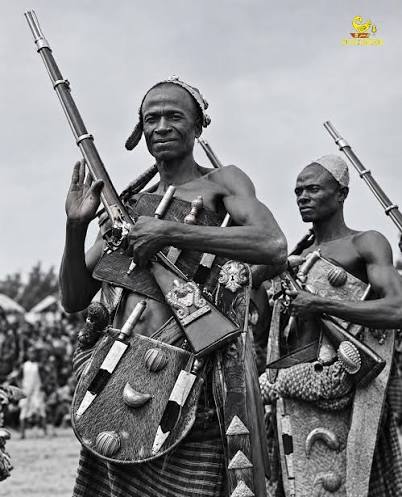
The Bantamahene is widely described as the war marshal of the Asantehene, a title reflecting the historical military significance of the stool.
In pre-colonial Asante, military organisation was central to the kingdom’s expansion, political influence and protection of its territories.
The Kronti division formed part of the kingdom’s military structure, and the Krontihene was a senior figure within that system.
The title of war marshal has survived as an important part of the Bantamahene’s traditional identity, even though the kingdom’s military structures today operate primarily as historical, ceremonial and traditional institutions rather than as a modern standing army.
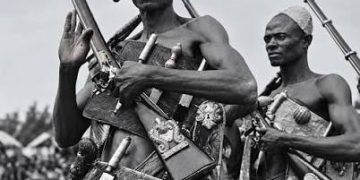
The association with warfare is reflected in some of the chief’s traditional appearances, including the use of black mourning cloth, warrior-inspired regalia and ceremonial symbols of authority.
A report by the Ghanaian Chronicle, republished by Modern Ghana, described the Bantamahene’s appearance at an Akwasidae gathering, noting that he was required by tradition to wear kuntunkuni mourning cloth at such occasions.
The appearance is a reminder that traditional regalia is not merely decorative. It can communicate the history, identity and responsibilities attached to a stool.
The Bantamahene’s role in the Kumasi Traditional Council
The Bantamahene’s influence extends beyond Bantama itself.
He is also the Krontihene of Kumasi and occupies a senior position within the Kumasi Traditional Council.
According to the Manhyia Archives’ research note on the Kumasi Traditional Council, the Asantehene serves as president of the council, while the Krontihene, who is also the Bantamahene, serves as its vice-president.
The council brings together several traditional divisions of Kumasi, each with its own responsibilities and leadership.
This places the Bantamahene in an important position within the traditional administration of the city.
His office is involved in the customary governance of Kumasi, the coordination of traditional authorities and the preservation of the institutional structures through which the kingdom’s customs and authority are exercised.
Academic historical accounts also describe the Krontihene as a senior official who may preside over the administration of Kumasi in the Asantehene’s absence, although the exercise of such authority depends on the established traditional arrangements and the king’s authority.
The Bantamahene is consequently not only the chief of Bantama but also a key figure in the traditional governance of Kumasi.
Why the Bantamahene is so close to the Asantehene
The relationship between the Bantamahene and the Asantehene is rooted in the history of the stool itself.
The office was created to serve the Asantehene, and loyalty to the Golden Stool remains central to the Bantamahene’s traditional obligations.
Historical accounts of the installation of Bantamahene Baffour Asare Owusu Amankwatia V in 2002 provide an illustration of this relationship.
At the ceremony, Otumfuo Osei Tutu II reportedly emphasised the need for loyalty, dedication, honesty and service to the Golden Stool.
The Asantehene also recounted the historical circumstances surrounding the creation of the Bantama stool and its military responsibilities.
The Bantamahene’s position is therefore understood within the broader hierarchy of Asanteman, where the authority of individual stools is connected to their historical relationship with the Asantehene and the Golden Stool.
This relationship is reflected in ceremonies, traditional councils, public appearances and the protocols observed at Manhyia Palace.
Does the Bantamahene remove his regalia when greeting the Asantehene?
This is one of the most interesting questions about Asante royal protocol, particularly for people who observe traditional ceremonies at Manhyia Palace.
The short answer is: not necessarily all his regalia, and the practice of lowering or adjusting a traditional cloth is different from removing all ceremonial attire.
In Asante custom, a man’s cloth worn over the shoulder can be adjusted or lowered when approaching the Asantehene as a demonstration of reverence and acknowledgement of the king’s authority.
However, the Bantamahene’s traditional position has distinctive protocols connected to his historical military office.
A report published by the Ghanaian Chronicle and republished by Modern Ghana in its coverage of an Akwasidae ceremony described Bantamahene Nana Owusu Amankwatia VI greeting Otumfuo Osei Tutu II with his cloth tied around his chest before bowing.
The report also described the chief’s black cloth as part of his traditional attire for the occasion.
This suggests that his greeting attire can be different from the conventional manner in which other male chiefs or visitors approach the Asantehene.
Is he among the chiefs permitted to greet the king with their cloth fully draped?
A report published in October 2025, citing comments by Otumfuo’s Gyaasehene, Katakyie Adubofour Kwaw, on Opemsuo Radio, identified two chiefs permitted to greet the Asantehene with their cloth fully draped rather than lowered:
- The Ekyemhene
- The Bantama Banmuhene
The report attributed the exception to a traditional rule established for those stools.
An important distinction
The Bantama Banmuhene and the Bantamahene are titles that should not automatically be treated as interchangeable. The report specifically identifies the Bantama Banmuhene as one of the chiefs with this cloth-wearing privilege.
The Bantamahene is the occupant of the Bantama stool and the Krontihene of Kumasi. The Banmuhene is a distinct traditional office.
This distinction matters because reporting that the Bantamahene has a special cloth privilege based on the Banmuhene’s exception would risk misrepresenting Asante traditional protocol.
The available reporting does not establish that the Bantamahene must always remove all his regalia whenever he greets the Asantehene.
What can be established is that his attire, greeting posture and ceremonial conduct are governed by traditional rules associated with his stool and the occasion.
The significance of the cloth in Asante royal culture
In Akan and Asante culture, traditional cloth is much more than a fashion statement.
The manner in which it is worn can communicate a person’s status, authority, respect for a superior and the nature of the ceremony being attended.
At royal gatherings, the cloth may be worn over the shoulder, wrapped around the body or adjusted to cover the chest, depending on the occasion and the customary requirements.
The act of lowering the cloth before the Asantehene is widely associated with respect and humility.
In the traditional hierarchy, the Asantehene occupies the highest royal position in Asanteman, and the customs observed when people approach him reflect that authority.
The symbolism extends to other aspects of royal appearance, including sandals, gold ornaments, stools, swords, umbrellas and ceremonial staffs.
These objects communicate the identity and responsibilities of their holders and are part of the kingdom’s broader cultural heritage.
The Metropolitan Museum of Art’s research on Akan royal court traditions explains that royal regalia historically included textiles, staffs, swords, ornaments, stools, crowns and other objects associated with authority.
It also notes that regalia was connected to political status and was carefully controlled within traditional institutions.
This provides an important context for understanding why the attire of chiefs at Manhyia Palace is governed by rules rather than personal preference.
The Bantamahene in contemporary Asanteman
The office continues to play an important role in contemporary Asanteman, particularly in traditional administration, dispute resolution and the implementation of directives from the Asantehene.
The current occupant, Baffour Owusu Amankwatia VI, was confirmed as Bantamahene in 2016 following the death of his elder brother, Baffour Asare Owusu Amankwatia V.
His installation continued a tradition in which the occupant of the Bantama stool serves the Asantehene and the Kumasi Traditional Council.
In recent years, the Bantamahene has also been involved in traditional matters beyond Bantama.
In March 2025, the Asantehene directed him to assist in retrieving a disputed deity from Adanwomase and surrendering it to the Asanteman Sumankwaahene.
The directive, reported by MyJoyOnline and the Ghana News Agency, illustrates the responsibilities traditional officeholders may be assigned in disputes involving customary authority, sacred objects and communities within the kingdom.
Such responsibilities show that the Bantamahene’s office is not simply ceremonial. It remains connected to the administration of traditional affairs and the enforcement of customary decisions within the Asante traditional system.
A stool whose history tells the story of Asanteman
The Bantama stool offers a fascinating window into the history of the Asante Kingdom.
Its origins reflect a period when military organisation, loyalty to the king and service to the state were essential to the kingdom’s growth.
Its position within the Kumasi Traditional Council demonstrates how historical military offices evolved into important institutions of traditional governance.
Its ceremonial practices reveal how authority and respect are expressed through clothing, posture, regalia and ritual.
And its continued involvement in traditional matters demonstrates how the Asante Kingdom maintains its institutions in contemporary Ghana.
The Bantamahene is therefore more than a chief associated with a suburb of Kumasi. He is a custodian of a historic office whose responsibilities and symbolism are connected to the wider story of Asanteman.
Understanding the Bantamahene requires looking beyond the regalia and ceremonies to the history behind the stool, the institutions it serves and the traditional values it represents.
As the Asante Kingdom continues to preserve its heritage, the Bantama stool remains one of the important reminders of the relationship between military history, royal authority, cultural identity and traditional governance.