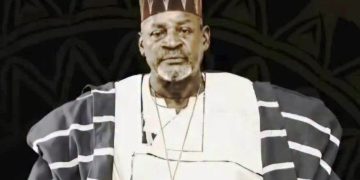
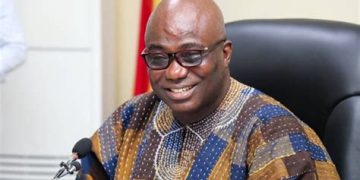
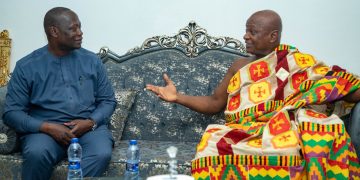
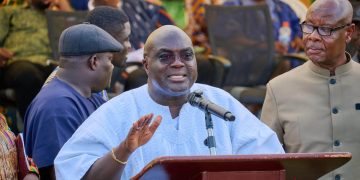










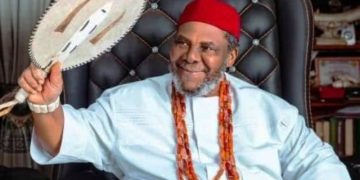















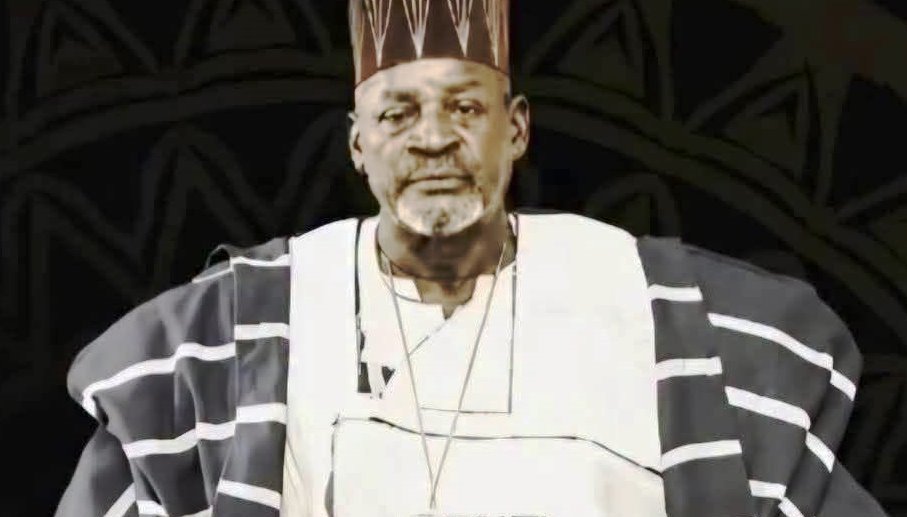
The people of Lawra and the wider Kusiele traditional community are today beginning a solemn journey of farewell to one of the most distinguished traditional rulers in the history of the Upper West Region, Naa Puowelle Karbo III.


The late Paramount Chief of the Lawra Traditional Area, who passed away on April 21, 2026, at the Bank of Ghana Hospital in Accra after a short illness, is being honoured with five days of traditional funeral rites, burial ceremonies and a thanksgiving service.
His death at the age of 79 marked the end of a remarkable chapter in the history of Lawra’s traditional leadership and brought to a close a distinguished public life that combined professional service, traditional governance and commitment to community development.
For Lawra, he was more than a traditional ruler. He was the custodian of a heritage, a symbol of traditional authority and a father figure whose influence extended beyond the boundaries of his traditional jurisdiction.
From public service to the Lawra skin
Before ascending the Lawra skin, Naa Puowelle Karbo III had established himself in public administration, serving as the National Director of the then Town and Country Planning Department.
His professional background provided him with experience in public sector administration and development planning, qualities that would become valuable in his subsequent traditional leadership responsibilities.
He was enskinned as the Paramount Chief of the Lawra Traditional Area in 2007, succeeding to a traditional institution whose significance transcends the customary authority of the paramountcy.
His emergence as Lawra Naa marked the beginning of a period of service in which he would become one of the prominent traditional authorities in the Upper West Region.
A distinguished voice in Ghana’s chieftaincy institution
Perhaps one of the strongest testimonies to his stature and influence was his rise through the ranks of Ghana’s chieftaincy institution.
Naa Puowelle Karbo III served as President of the Upper West Regional House of Chiefs and later became Vice-President of the National House of Chiefs.
He also served as President of the Lawra Traditional Council.
These positions placed him at the centre of traditional governance, giving him opportunities to contribute to discussions and decisions affecting customary administration, traditional authority and the development of communities.
His leadership at the regional level made him an important figure in the collective representation of traditional authorities in the Upper West Region, while his national position brought the concerns and perspectives of traditional governance into the wider national conversation.
His career in the chieftaincy institution demonstrated that traditional leadership could extend beyond the administration of a traditional area to national service.
An advocate for education and community development
One of the more revealing accounts of Naa Puowelle Karbo III’s legacy comes from the Savannah Education Trust, a charity working with communities to improve educational opportunities for children in remote parts of northern Ghana.
In its July 2026 newsletter, the organisation described the late paramount chief as a wonderful friend who consistently demonstrated a strong desire to bring education to the most remote and disadvantaged communities within his traditional jurisdiction.
According to the organisation, he officially opened all but one of its so-called ‘blue schools’, and the ceremonies were often marked by powerful speeches delivered in both English and Dagaare, accompanied by the traditional pomp and ceremony of his office.
His commitment to the organisation’s educational interventions was not merely ceremonial.
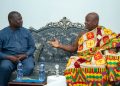
During an audience with trustees of the Savannah Education Trust at the Lawra Palace in March 2025, the late chief described the organisation’s work as the most important and developmentally significant intervention to have taken place in his paramountcy.
He particularly praised its community-based approach, which encouraged local participation and ownership of school infrastructure.
He observed that the approach was unique because it emphasised that the schools were built by the people for their children.
That statement offers an important insight into his development philosophy: communities must not simply be recipients of development but active participants in shaping their own future.
It also provides a glimpse of a traditional ruler who understood the transformative power of education and the importance of extending opportunities to children in underserved communities.
A custodian of dagara heritage and identity
Beyond his administrative and development responsibilities, Naa Puowelle Karbo III occupied an important place in the cultural life of the Lawra Traditional Area.
As Paramount Chief, he was a custodian of the customs, traditions and heritage of the people, with responsibilities that extended to preserving the authority and dignity of the traditional institution.
The family obituary described him as a father, grandfather, husband, brother and son, while also recognising his role as a source of counsel and a unifying presence within the traditional community.
A tribute by former Upper West Regional Minister, Dr Hafiz Bin Salih, similarly described him as a fountain of wisdom, a dedicated custodian of Dagaaba culture and heritage, and a tireless advocate for peace and development.
Such tributes reflect the personal and institutional dimensions of his leadership.
A legacy that outlives the throne
Naa Puowelle Karbo III’s passing was announced on April 21, 2026, with reports indicating that he died after a short illness.
He was survived by four children, including Anthony Abayifaa Karbo, a former Member of Parliament for Lawra and former Deputy Minister for Roads and Highways.
His death attracted expressions of sympathy from traditional authorities, political figures and people from different parts of the country.
In November, the Binne-Karbo Royal Family formally informed the Speaker of Parliament, Alban Bagbin, of the funeral arrangements.
During the meeting, Mr Bagbin reportedly expressed sadness over the death, describing the late traditional ruler as a man of great stature, discipline and exemplary character.
The response reflected the regard in which the late chief was held beyond his immediate traditional jurisdiction.
But perhaps the most enduring measure of his legacy will not be the titles he accumulated or the positions he occupied. It will be the institutions he served, the communities he encouraged and the opportunities his leadership helped advance.

His association with educational development, particularly in remote communities, offers an important reminder that the relevance of traditional authority must also be measured by its contribution to the welfare and future of the people.
Lawra prepares to say goodbye
The five-day funeral ceremonies begin today, Wednesday, November 25, 2026, with the laying in state of the late paramount chief at the forecourt of the Lawra Naa’s Palace, followed by traditional funeral rites.
The programme continues on Thursday, November 26, and Friday, November 27, with further traditional funeral observances.
On Saturday, November 28, the traditional rites will continue, followed by the burial service and interment.
The ceremonies will conclude on Sunday, November 29, with a non-denominational thanksgiving service at the forecourt of the Lawra Naa’s Palace at 1:00 p.m.
The funeral is expected to bring together traditional rulers, members of the royal family, political leaders, government officials and sympathisers from across Ghana and beyond to honour a man whose public service touched several generations.
As the royal drums sound and the people of Lawra gather to bid their leader farewell, the occasion will be more than a customary passage from life to the ancestral world.
It will be an opportunity to reflect on the responsibilities of leadership, the enduring relevance of traditional institutions and the importance of placing community development at the centre of public service.
Naa Puowelle Karbo III has departed, but the legacy of his years of service remains part of Lawra’s history.
May his soul rest in perfect peace among the ancestors.
Source: www.kumasimail.com