















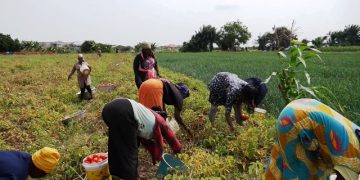























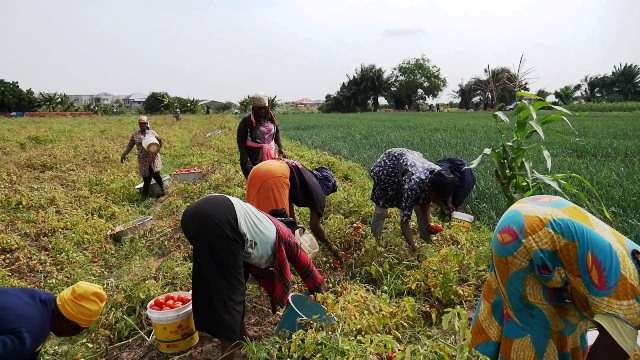
The Peasant Farmers Association of Ghana (PFAG) has criticised the 2027 Budget Statement and Economic Policy for allocating only 3.64 per cent of total government expenditure to agriculture, describing the investment as inadequate to drive the country’s agricultural transformation agenda.


According to the Association, the allocation falls significantly below the 10 per cent commitment under the Comprehensive Africa Agriculture Development Programme (CAADP), reaffirmed in the Kampala Declaration.
In a press statement issued in Accra on Thursday, November 26, 2026, PFAG expressed concern that despite government’s recognition of agriculture as a key pillar of its New Economy, New Ghana: Jobs and Prosperity Programme (2027–2030), the proposed investment does not reflect the importance of the sector to national development.
The Association also disclosed that the allocation to the Ministry of Food and Agriculture (MoFA) had declined by 5.1 per cent, from GH¢3.038 billion in 2026 to GH¢2.882 billion in 2027, representing a reduction of approximately GH¢155.9 million.
It said the reduction was particularly worrying given the challenges confronting farmers, including high production costs, inadequate irrigation facilities, weak market infrastructure, limited mechanisation and the effects of climate change.
Feed Ghana Programme faces significant funding gap
PFAG acknowledged government’s commitment to the Feed Ghana Programme and other agricultural development initiatives, including a proposed US$3 billion commercial agriculture investment programme between 2027 and 2030.
The programme is expected to target key commodities such as rice, sugar, poultry, maize, soybean feed, aquaculture, oil palm and vegetables, alongside cocoa value addition.
Government has also outlined plans to expand rice production by an additional 100,000 hectares, establish 100,000 hectares of oil palm plantations and construct the Pwalugu Multipurpose Dam.
However, PFAG maintained that the proposed allocations were insufficient to achieve the intended transformation.
It estimated that the Feed Ghana Programme required approximately GH¢85.6 billion annually, but said the combined allocation to the programme and complementary agricultural interventions stood at about GH¢2.43 billion.
This, according to the Association, represents only 2.83 per cent of the estimated annual requirement, leaving a financing gap of approximately GH¢83.18 billion.
PFAG identifies critical omissions
The Association further identified several gaps in the 2027 Budget, including the absence of a dedicated Agricultural Development and Emergency Preparedness Fund to respond to climate-related emergencies such as droughts, floods, pest outbreaks and market disruptions.
It expressed particular concern about the lack of preparedness measures to mitigate the potential effects of El Niño on agricultural production and farmers’ livelihoods.
On the ongoing agricultural market crisis, PFAG said the GH¢200 million allocated to the National Food Buffer Stock Company (NAFCO) represented only about 26 per cent of the GH¢770 million requested to enable the company to purchase excess grains from farmers.
It said thousands of farmers continued to struggle with unsold produce, declining farm-gate prices and falling incomes.
Although it welcomed proposed measures such as legislation on local procurement by public institutions, the construction of silos and plans to restrict commercial rice imports by 2030, the Association called for immediate government intervention to purchase and absorb farmers’ existing stocks.
PFAG also raised concerns about inadequate investment in irrigation infrastructure, particularly the stalled rehabilitation of the Kpong, Weta and Vea irrigation schemes and the development of Tanoso inland valleys.
It said more than 3,000 farmers who depended on the affected schemes had been impacted by the cancellation of funding, urging government to restore the necessary resources and provide alternative livelihood support.
Concerns over Farmer Service Centres
The Association also questioned the pace of implementation of the Farmer Service Centres programme, despite the allocation of GH¢800 million for its second phase.
It said government’s target of establishing at least 50 centres by the end of 2026 was unlikely to be achieved, as only 10 centres were currently under active construction.
PFAG therefore called for accelerated implementation to ensure that the facilities became accessible to smallholder farmers.
The Association further urged government to allocate adequate resources to address farmer-herder conflicts, which continue to pose challenges to agricultural production and rural livelihoods.
Calls for increased agricultural investment
PFAG called on government to increase public investment in agriculture towards the 10 per cent CAADP benchmark and establish a dedicated Agricultural Development and Emergency Preparedness Fund.
It also urged authorities to address the market crisis through effective produce purchasing and local procurement mechanisms, restore funding for stalled irrigation projects and accelerate the establishment of Farmer Service Centres.
The Association stressed that the success of the Feed Ghana Programme and the broader agricultural transformation agenda should be measured by improvements in farmers’ productivity, incomes and livelihoods rather than the number of programmes announced or policy commitments made.
Agriculture employs approximately 38.3 per cent of Ghana’s population and remains central to national food security, employment creation and rural economic development.
PFAG warned that inadequate investment in the sector could undermine Ghana’s ambition to achieve food self-sufficiency, reduce its food import bill and create sustainable employment opportunities.
The Association reaffirmed its commitment to working with government and other stakeholders to build a productive, resilient and inclusive agricultural sector that places Ghanaian farmers, particularly smallholder farmers, at the centre of national development.
Source: www.kumasimail.com