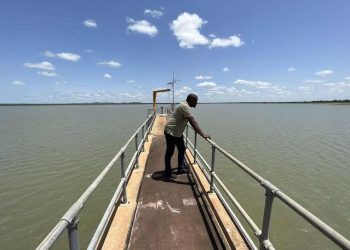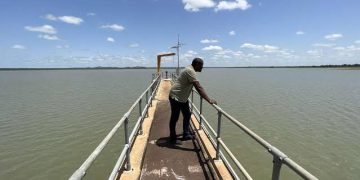




































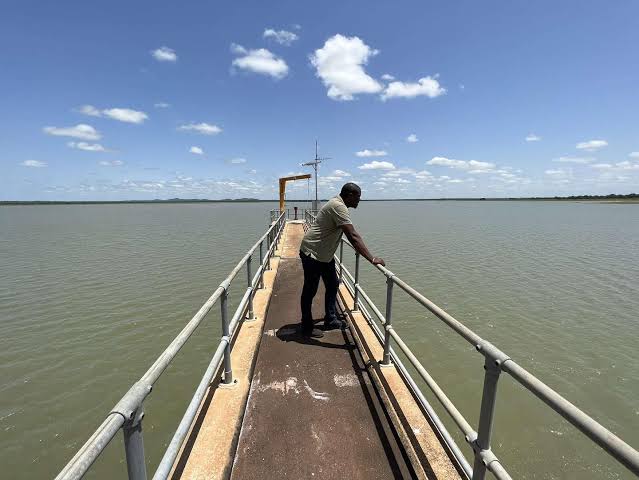
The Upper East Regional Minister, Hon. Akamugri Donatus Atanga, is seeking support from the National Disaster Management Organisation (NADMO) to implement a water harvesting project that could help reduce the devastating effects of the annual Bagre Dam spillage while providing water for irrigation and livestock during the dry season.


The proposed intervention seeks to move beyond the region’s traditional reliance on post-disaster relief by capturing excess water from the White Volta in strategically located storage ponds for productive use during periods of water scarcity.
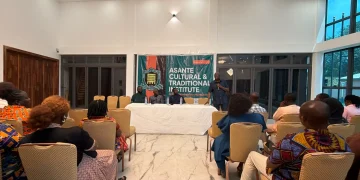
Hon. Atanga made the appeal when NADMO Director-General, Major (Rtd) Dr Joseph Bikanyi Kuyon, paid a courtesy visit to the Upper East Regional Coordinating Council.
The Minister said the Upper East Region continued to suffer recurring floods associated with the Bagre Dam spillage, making it imperative to explore sustainable ways of managing excess water flowing from neighbouring Burkina Faso into Ghana.
“When we talk about disasters in Ghana, everybody knows that the Upper East Region is disaster-prone because of the Bagre Dam. Perennially, we face this challenge every year,” he said.
Under the proposed project, water collection ponds or dugouts would be constructed at strategic locations away from the banks of the White Volta, with channels developed to divert excess river water into the storage facilities.
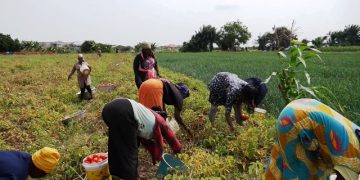
The stored water would then be used for livestock production and irrigation during the dry season, potentially reducing the destructive impact of flooding on communities, farms and property while improving agricultural productivity.
Hon. Atanga said the initiative formed part of the region’s 10-year development framework, known as PEARL, which seeks to address critical development challenges and unlock the region’s economic potential.
He appealed to the NADMO Director-General to help mobilise development partners and donors to finance the project, expressing optimism that its implementation would strengthen food production and create employment opportunities for young people.
Responding, Dr Kuyon disclosed that water harvesting was already among NADMO’s priority interventions, with the organisation pursuing proposals submitted to development partners for financial support.
He described the construction of water reception ponds as an important component of efforts to address the recurring situation in which some communities experience excess water during certain periods and shortages during others.
“Water is supposed to be a blessing, not a curse,” he said, emphasising the need for innovative water management systems that would enable communities to benefit from available water resources throughout the year.
The NADMO Director-General expressed optimism that some of the proposals submitted to development partners would receive favourable consideration, indicating that the Upper East Region could be considered for an initial intervention.
He added that the proposed water harvesting facilities could also contribute to addressing downstream water management challenges while making stored water available for productive community use.
NADMO plans regional emergency warehouses
Beyond the proposed water harvesting intervention, Dr Kuyon disclosed that NADMO was planning to establish strategically located outfield warehouses across the country to strengthen emergency response and improve the distribution of relief supplies.
He said the proposed facilities had been captured in NADMO’s budget, subject to the necessary approvals, and would allow the organisation to decentralise its strategic emergency stocks currently concentrated in Accra.
According to him, positioning relief supplies closer to disaster-prone communities would reduce response times and ensure that affected regions received assistance more promptly during emergencies.

Earlier, the Chief Director of the Upper East Regional Coordinating Council, Mr Bless Kwame Darkey, highlighted the need to strengthen disaster preparedness as the region approaches the dry season, when bushfires and other fire-related emergencies become major concerns.
He also identified logistical constraints as a major challenge confronting NADMO’s regional and district operations, noting that the region often depended on a limited number of private companies for assistance during emergencies.
Mr Darkey, however, expressed confidence in the existing collaboration between NADMO, the Regional Coordinating Council and the Regional Security Council in responding to disasters.
The proposed water harvesting project, if secured and implemented, could offer the Upper East Region an opportunity to convert part of the water responsible for its recurring flood disasters into a resource for agriculture, livestock production and rural livelihoods.
Source: www.kumasimail.com