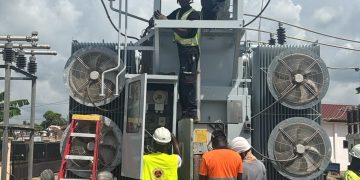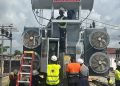































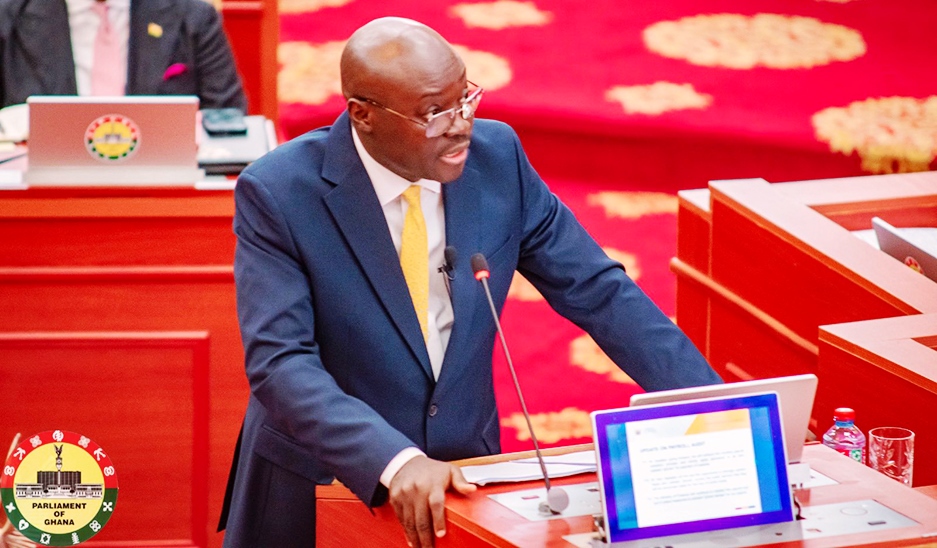
Government has allocated GH¢3 billion to extend its Rural Electricity Acceleration and Urban Intensification Initiative to six regions, including all five regions of Northern Ghana, in a major push to expand electricity access and improve power connectivity.


The allocation, captured in the 2027 Budget presented by Finance Minister Dr Cassiel Ato Forson, will cover the Upper West, Upper East, North East, Northern and Savannah regions, as well as the Western Region.
The initiative is expected to extend electricity infrastructure to underserved communities while improving access in urban areas where existing distribution networks require expansion.
The inclusion of the five northern regions is particularly significant for communities that remain outside reliable electricity coverage, as well as settlements where limited access to power constrains economic activity and the delivery of essential services.
Electricity access has implications beyond household lighting. Reliable power can support small-scale manufacturing, cold storage, agro-processing, irrigation, healthcare delivery, education and the growth of businesses in rural communities.
For agricultural communities, improved electricity connectivity could create opportunities for farmers and entrepreneurs to invest in processing and preservation facilities, reducing dependence on distant markets and helping to limit post-harvest losses.
The allocation forms part of GH¢3.1 billion provided to the Ministry of Energy and Green Transition for electricity access and the development of the energy sector.
Government has also allocated GH¢13 billion separately to address energy sector payment shortfalls and GH¢50 million to support lifeline electricity consumers.
However, the budget does not provide a regional breakdown of the GH¢3 billion allocation or identify the specific communities expected to benefit from the programme in 2027.
It is also unclear how much of the funding will be spent on extending distribution lines, installing transformers, connecting new communities or strengthening existing networks.

These details will be important, particularly for the northern regions, where geographical distances and the cost of extending electricity infrastructure can make rural electrification challenging.
Government will also need to clarify the implementation schedule and the number of communities and households expected to be connected under the programme.
The initiative’s impact should not be judged only by the number of electricity poles erected or communities declared connected. Reliability, affordability and the ability of households and businesses to use electricity productively will be equally important.
The GH¢3 billion allocation offers an opportunity to address some of the infrastructure gaps affecting communities across Northern Ghana. Its success will depend on how transparently the resources are distributed and how quickly the promised connections are delivered.
Source: www.kumasimail.com