




































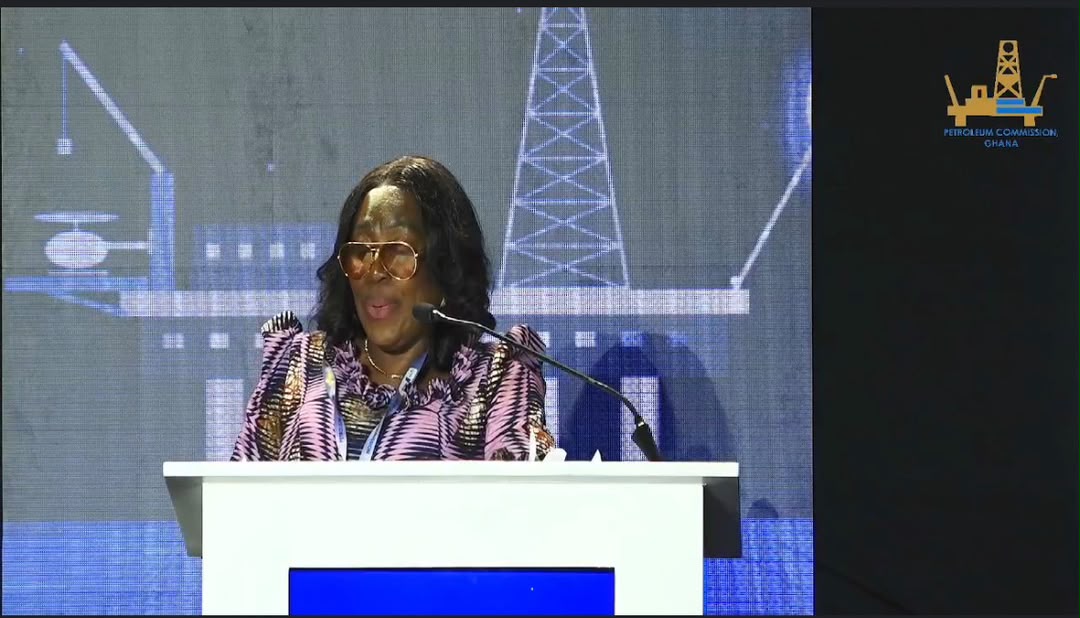
The Chief Executive Officer of Ghana National Gas Company (Ghana Gas), Judith Adjoba Blay, has called on stakeholders in the petroleum industry to move beyond participation percentages and focus on building the technical capabilities of indigenous companies to compete for more complex assignments.


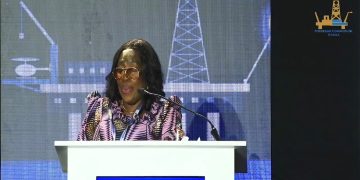
Ms Blay made the call at the Petroleum Commission’s 2026 Local Content Conference and Exhibition in Takoradi, held on the theme: “Enriching Local Content for Sustainable Growth: Building a Resilient Upstream Sector through Reforms and Partnerships to Spur Competitiveness and Investment.”
In her address, she acknowledged the significant progress Ghana has made in local content development, noting that the focus had shifted from creating opportunities for Ghanaian participation to building capacity, competitiveness, sustainability and value creation.
“From the initial focus of creating opportunities for Ghanaian participation to a more deliberate conversation about capacity development, competitiveness, sustainability and value creation”.
She said Ghana’s efforts had become a blueprint for other countries in the sub-region seeking to develop their local content policies and regulations.
“Indeed Ghana’s local content framework and the work of the Petroleum Commission has become an important reference point for other emerging petroleum producing countries including Uganda, Namibia and Liberia”.
She, however, urged stakeholders to ensure that the next phase of local content development focuses on strengthening the gains already made.
Ms Blay also outlined measures being implemented by Ghana Gas to advance indigenous participation in the company’s operations.
She said local participation had become an integral part of the company’s operational policy, highlighting the development of an entirely indigenous workforce responsible for operating and maintaining its infrastructure.
“Today I’m proud to say that Ghana Gas has developed a fully indigenous workforce operating and maintaining our gas processing, distribution and transmission infrastructure which contribute to about 83 percent of thermal power production in Ghana and 30 percent of LPG for domestic and industrial use”.
She further indicated that the company’s next ambition was to deliberately extend opportunities to businesses and individuals within its operational catchment areas and host communities.
According to her, this would be supported by the expansion of infrastructure and operations to meet market demand while creating additional opportunities for indigenous participation.
She disclosed that Ghana Gas was pursuing strategic infrastructure projects to expand its processing and transmission capacity in support of the country’s energy security.
“These include addition of a third train compressor enhance processing capacity as well as proposed construction of approximately 278 kilometers Takoradi to Tema Pipeline to expand our gas transmission network”.
She noted that the projects would strengthen the resilience of Ghana’s gas infrastructure while creating significant opportunities for indigenous businesses to participate in the country’s petroleum industry.