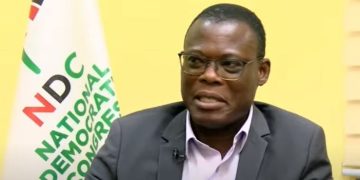

































The National Chairman of the New Patriotic Party (NPP), John Boadu, has signalled support for the party’s proposed candidate search initiative championed by flagbearer Dr Mahamudu Bawumia, hinting that some incumbent Members of Parliament (MPs) could be spared contests in the party’s upcoming parliamentary primaries.


His remarks appear to deepen the debate over the NPP’s candidate selection strategy ahead of the 2028 general elections, following a warning by Nandom parliamentary hopeful Lawyer Sylvester Isang against any attempt to impose candidates outside the procedures prescribed by the party’s constitution.
According to a report by NKilgi FM in Bole, Mr Boadu cited the Damongo Constituency, represented by former Lands and Natural Resources Minister Samuel Abu Jinapor, and the Karaga Constituency, represented by former Finance Minister Dr Mohammed Amin Adam, as examples of constituencies where such arrangements could apply.
He indicated that several other constituencies could also be considered, although he did not name them.
Mr Boadu said the NPP needed to increase its representation in Parliament to improve its position ahead of the next presidential election.
He put the party’s current parliamentary representation at 87 of the 276 seats, arguing that the NPP could not continue doing things the same way while expecting different results.
The National Chairman also referred to the candidate search initiative announced by Dr Bawumia as part of efforts to identify prospective parliamentary candidates ahead of the 2028 elections.
Dr Bawumia announced the initiative on October 4, 2026, proposing assessments across constituencies to identify potential candidates with the capacity to win general elections.
The proposal has, however, raised concerns about the extent to which such assessments could influence the established process for electing parliamentary candidates.
Isang warns against candidate imposition
In a statement issued on October 18, 2026, and reported earlier by Kumasimail.com, Lawyer Sylvester Isang cautioned the NPP leadership against using the candidate search initiative to bypass the party’s constitutional procedures.
Mr Isang argued that neither the National Executive Committee (NEC) nor any individual had the authority to impose parliamentary candidates outside the prescribed process.
He cited Article 12 of the NPP constitution, which outlines the procedures and eligibility requirements for selecting parliamentary candidates.
According to him, the party’s constitution must remain the governing authority in the selection process, regardless of the leadership’s desire to improve its electoral performance.
Mr Isang warned that imposing candidates could undermine internal democracy and expose the party to avoidable legal disputes ahead of the 2028 elections.
He maintained that all qualified aspirants who wish to contest should be allowed to present themselves to delegates for consideration, irrespective of the outcome of any research or candidate assessment exercise.
Boadu questions opponents’ motives
In the remarks reported by NKilgi FM, Mr Boadu suggested that some party members opposing the candidate search initiative might have personal political interests, particularly those planning to challenge incumbent MPs in the upcoming primaries.

His position raises further questions about how the NPP intends to balance its search for candidates with strong electoral prospects against the constitutional procedures governing internal elections.
The key issue is whether the candidate search initiative will serve as an advisory exercise to help the party identify potential candidates or become a basis for limiting competition in selected constituencies.
Although Mr Boadu’s remarks point to the possibility of uncontested primaries in some constituencies, the report does not establish that the party has formally adopted a decision to impose candidates or prevent qualified aspirants from contesting.
The unfolding debate places the NPP’s leadership under scrutiny as it seeks to improve the party’s parliamentary representation while addressing concerns about internal democracy and compliance with its constitution.
Source: kumasimail.com