







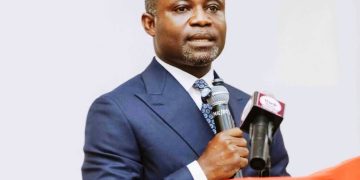


























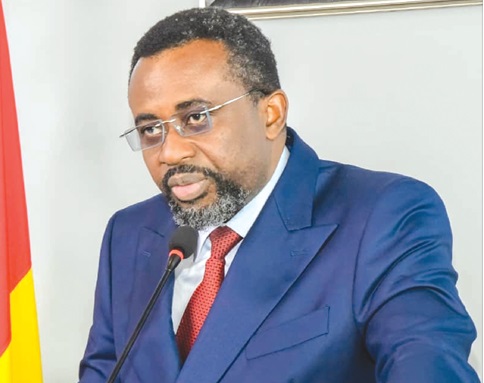
The Governor of the Bank of Ghana, Dr. Johnson Pandit Asiama, has told Parliament that Ghana’s economy is showing strong signs of recovery after a difficult period marked by high inflation, currency depreciation, and debt restructuring.


Appearing before the Parliamentary Committee on Economy and Development at Parliament House on Monday, the governor said inflation had fallen sharply to 3.3 percent as of February 2026, down from 23.8 percent in December 2024, one of the lowest levels recorded in recent years.
He said the improvement reflects deliberate policy measures taken by the central bank to restore macroeconomic stability.
Difficult Starting Conditions
Dr. Asiama said when he assumed office in February 2025, the Ghanaian economy was emerging from one of its most challenging periods in recent history. The country had undergone a sovereign debt restructuring, while inflation and currency depreciation had weakened economic confidence.
The governor noted that the Ghanaian cedi depreciated by 24.8 percent in 2024, contributing to imported inflation and increasing pressure on households and businesses.
At the same time, the financial sector was adjusting to the impact of the Domestic Debt Exchange Programme, which affected the balance sheets of financial institutions and limited credit growth.
The central bank itself also faced financial challenges. The restructuring of government securities resulted in a 50 percent haircut on the Bank of Ghana’s holdings, affecting its equity position.
Tight Monetary Policy
To address these challenges, the governor said the central bank maintained a tight monetary policy stance to bring inflation under control and restore confidence in the economy.
The Bank of Ghana Monetary Policy Committee kept policy conditions restrictive while intensifying open market operations to absorb excess liquidity in the banking system.
“These actions were necessary to ensure that inflation returns to the target range and to restore credibility in monetary policy,” Dr. Asiama told lawmakers.
The central bank also strengthened coordination with the Ministry of Finance to manage government cash flows and reduce unintended liquidity injections into the financial system.
Foreign Reserves Strengthened
The governor said Ghana’s external buffers improved significantly during the period. Gross international reserves rose to US$13.8 billion by the end of 2025, equivalent to about 5.7 months of import cover.
Reserve accumulation was supported by stronger export earnings, remittance inflows, and the central bank’s Domestic Gold Purchase Programme, which increased Ghana’s gold holdings from about 8.7 tonnes in 2021 to more than 40 tonnes by October 2025.
However, Dr. Asiama said the Bank later rebalanced part of its gold holdings after rising global prices increased gold’s share in Ghana’s reserves to about 42 percent.
The central bank converted part of the gold into foreign exchange assets to diversify reserves and improve liquidity.
“This action did not represent a loss of Ghana’s national assets. The gold was simply converted into other reserve assets,” he explained.
Banking Sector Recovery
Dr. Asiama said the banking sector has also shown signs of recovery after the debt exchange programme.
Capital adequacy in the sector improved to 17.5 percent, above the regulatory minimum of 13 percent, while the non-performing loan ratio declined from 21.8 percent to 18.9 percent.
Bank deposits increased significantly, rising from GH₵276 billion to GH₵325 billion, while total banking sector assets grew from GH₵368 billion to GH₵447 billion.
Credit activity has also started to rebound, with gross loans increasing from GH₵95 billion to GH₵111 billion.
Financial Impact on the Central Bank
Despite the positive macroeconomic outcomes, the governor acknowledged that stabilisation measures have had financial implications for the central bank.
He explained that intensified open market operations increased interest expenses, while the domestic gold purchase programme and exchange rate movements also affected the Bank’s financial accounts.
According to Dr. Asiama, liquidity management operations alone rose from GH₵8.6 billion in 2024 to about GH₵17 billion in 2025.
However, he stressed that such costs are typical when central banks implement policies to restore economic stability.
Outlook for the Economy
Looking ahead, the governor said Ghana’s economic outlook remains positive, supported by lower inflation, stronger external reserves, and improving financial sector conditions.
“For ordinary Ghanaians, the real measure of success is simple: prices are stabilising, the cedi is steadier, and the economy is moving back toward normal,” he said.
Dr. Asiama added that the central bank will continue to pursue a disciplined and data-driven monetary policy to safeguard macroeconomic stability while supporting economic recovery.
He concluded by thanking members of the committee and expressed readiness to answer their questions.
Source: www.kumasimail.com